


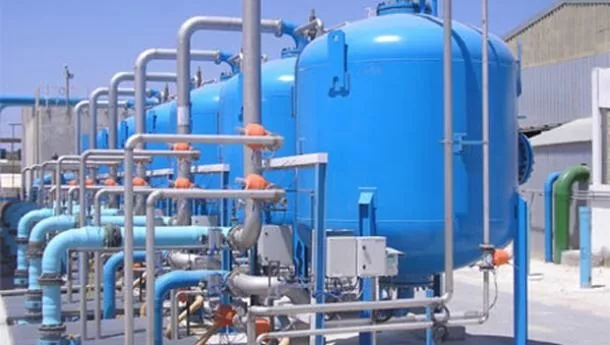
A mobile desalination unit at Limassol port has entered full operation and is now producing 10,000 cubic metres of water a day, the agriculture ministry said, as it outlined its broader plan to tackle Cyprus’s water supply challenge.
In a statement, the ministry said the unit had operated on a trial basis in recent weeks, during which all necessary technical and quality checks were carried out. After those were completed successfully, the unit began normal operation and is now adding water to the national water balance.
The ministry said the development formed part of a wider plan to strengthen the country’s water security.
It said the Limassol port facility was the third desalination unit to enter full operation, after the unit at Moni, with a capacity of about 15,000 cubic metres a day, which began operating in July 2025, and the desalination unit at Kissonerga, with a capacity of 12,000 cubic metres a day, which also entered operation in July 2025.
With the addition of the new units, the number of desalination plants in operation has risen to eight from five in previous years, the ministry said. That number is expected to increase to nine once the unit at Garyllis also comes online.
The Garyllis unit, with a capacity of 10,000 cubic metres a day, is expected to begin operating in the coming weeks after delays caused by geopolitical developments in the region, according to the statement.
The ministry said its 2026-2027 planning also included the completion of a mobile unit at Episkopi with a capacity of 15,000 cubic metres a day, a mobile unit at Vasiliko with a capacity of 20,000 cubic metres a day, a mobile unit at Mazotos with a capacity of 40,000 cubic metres a day, and a floating unit at Germasogeia with a capacity of 20,000 cubic metres a day.
Under the current planning, desalination projects between 2025 and 2027 are expected to add a total daily capacity of 157,000 cubic metres, the ministry said. Combined with the 235,000 cubic metres a day produced by the five existing permanent units, the system’s total capacity would rise by 66%.
The ministry said the five permanent desalination units had covered about 70% of drinking water needs served by the government water supply systems until 2023. That share approached 75% during 2025 and has now reached 80%.
With projects already underway, the ministry said that figure was expected to approach 100% by early 2027 through bridging projects aimed at gradually covering drinking water needs fully through desalinated water, while preserving dam reserves for irrigation.
The ministry said the plan also relied on stronger public water awareness and an end to overconsumption, which it described as another long-standing problem.
It said the programme formed part of a broader strategy aimed at boosting water supply, delivering infrastructure projects and managing demand so that the resilience of the water system could gradually be strengthened with the goal of water sufficiency.

