


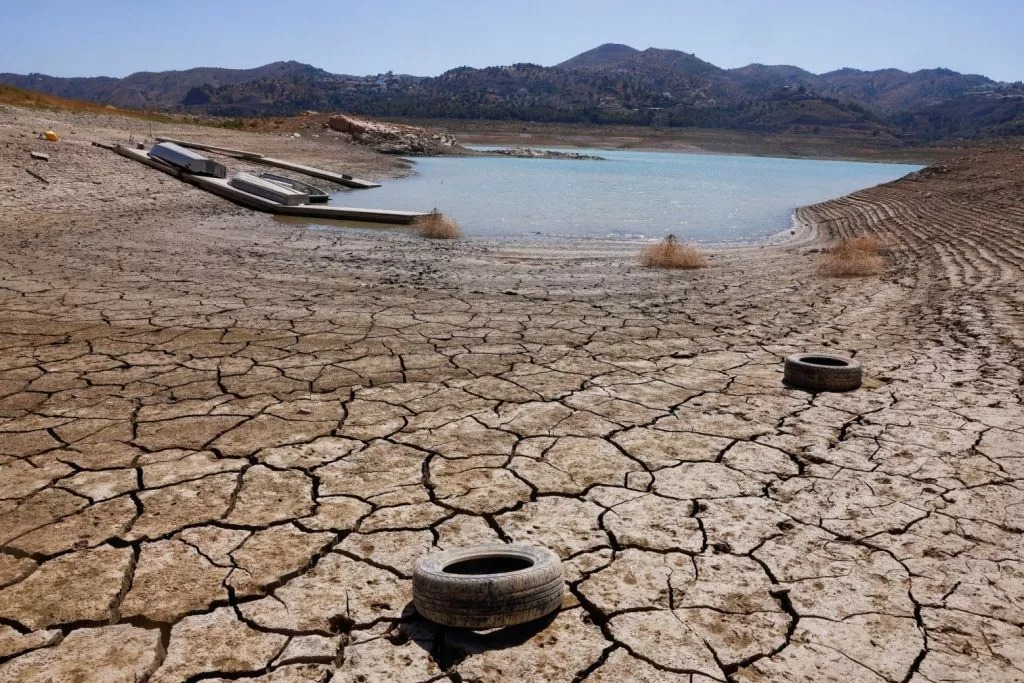
The Water Development Department has called for urgent action to cut water consumption by 10% as Cyprus enters its fourth consecutive year of reduced rainfall, with water reserves at just 14% of capacity compared to 26% last year.
Some areas are consuming more than 500 litres per person daily—over four times the European average of 120 litres—according to the department, which described demand management as extremely urgent and important.
A 10% reduction in drinking water demand compared to 2025 consumption would make the water supply problem manageable, the department said.
WDD Director Iliana Tofa told Phileleftheros that a 10% cut equals 10 million cubic metres of water—the annual production of a 30,000 cubic metre desalination plant.
The severity of the current hydrological year is evident in Kouris dam inflows of just 3.5 million cubic metres, with the dam at 12.5% capacity compared to 21.6% last year. Total inflows to major dams this year reach 18 million cubic metres.
Recent rainfall and snow on Troodos, even in recent days, has not been sufficient to bring water inflows to dams to adequate levels, which remain at worryingly low levels.
Agriculture Minister Maria Panayiotou spoke of overconsumption. Today, she said, there are citizens consuming quantities far exceeding the average, reaching up to 500 or even 700 litres daily per person. If citizens consume 120 litres, she added, it will give all the necessary time for implementing government projects without emptying the dams.
A 10% reduction in drinking water will not reduce quality of life, Panayiotou stressed. “Usage is one thing, abuse is another.” Andreas Grigoriou, general director of the Agriculture Directorate General, called the situation tragic. “We are doing everything as a government. There is nothing we could have done that we didn’t do,” he noted.
Seven desalination plants by end 2026
The government expects to solve the water problem for water supply purposes by the end of 2026 with ongoing WDD projects.
With completion of the proposed new desalination projects, combined with projects either completed or underway, nine mobile desalination plants with total daily capacity of 157,000 cubic metres will have been added.
Together with the daily capacity of five existing permanent plants, which stands at 240,000 cubic metres, this will increase total capacity by 66%, securing water supply safety.
With completion of at least two new permanent desalination plants in 2029 and expansion of existing permanent plants through ongoing negotiation procedures, total island-wide water supply needs will be met.
Seven additional mobile desalination plants are expected to operate by the end of 2026, on top of the seven operating today—five permanent and two mobile.
Cyprus currently has five desalination plants with total capacity of 235,000 cubic metres daily: Dekelia, Vasiliko and Larnaca at 60,000 cubic metres each, Episkopi at 40,000 cubic metres, and Paphos at 15,000 cubic metres (20,000 cubic metres from March).
Construction of two small plants was completed at the end of 2025—Moni at 15,000 cubic metres and Kissonerga at 12,000 cubic metres.
Two more plants are expected to be delivered in March—Garylli and Limassol Port at 10,000 cubic metres each—with all four having total daily capacity of 47,000 cubic metres, contributing approximately 15.5 million cubic metres of water annually.
The total daily capacity of permanent desalination plants (Paphos, Episkopi, Vasiliko, Larnaca and Dekelia) and mobile plants at Kissonerga and Moni, together with Garylli and Limassol Port operating from March, will reach 282,000 cubic metres of water daily—over 92.5 million cubic metres annually.
Medium-term expansion of existing plants and construction of additional mobile plants is planned, with long-term construction of two new plants to bring total island capacity to 400,000 cubic metres.
Specifically, three new mobile desalination plants are planned with capacity of 15,000 cubic metres per day for Episkopi and Ayia Napa, and 20,000 cubic metres per day at the EAC plant in Vasiliko. The target is for these plants to be completed by October 2026.
Work is also underway on two more desalination plants for completion by December 2026: a mobile plant at Mazotos with 40,000 cubic metres capacity, and a floating desalination plant at Germasogeia with 20,000 cubic metres per day capacity.
For the Mazotos plant, the WDD is proceeding initially with a 20,000 cubic metre project, gradually increasing production to reach 40,000 cubic metres. It is proceeding through negotiation procedures with economic operators that expressed interest through the public consultation process.
The floating plant will be installed in the Germasogeia area, where an underwater pipeline was installed in 2008 for transporting water by ships from Greece. In this case too, the WDD will proceed through negotiation procedures.
Three mobile plants dismantled
The possibility of using mobile plants on a permanent basis or the need to expand their capacity will be examined at a later stage within the framework of preparing feasibility studies for desalination projects serving the Paphos, Limassol, Larnaca-Nicosia and Famagusta districts respectively.
The assessment will take into account problems created during the current water crisis following removal of three mobile plants (Moni, Paphos and Garylli) that were installed during 2008-2009 but removed after their contract ended in 2012-2013.
The feasibility studies are at the tender stage and will be completed within 2026, also utilising results from the Water Policy Revision Study, which is being prepared and will be completed in June 2026.
By the end of 2026, Cyprus will have total desalination capacity of 397,000 cubic metres daily across all permanent and mobile plants.
Read more:

