


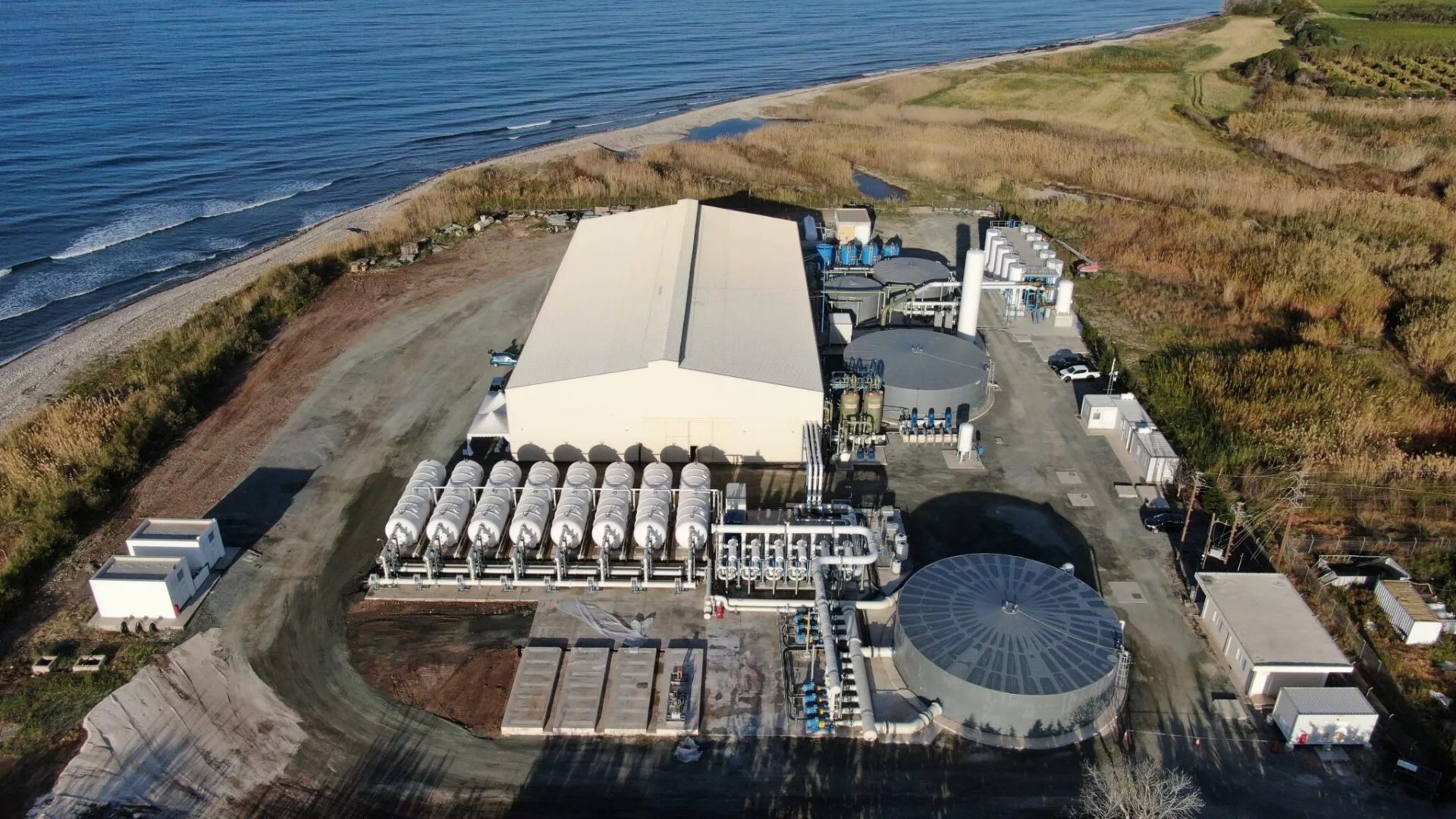
The government is pushing ahead with new desalination projects in Limassol, Larnaca, and free Famagusta to guarantee water sufficiency and strengthen water security amid heightened drought risk in 2026.
The Water Development Department is planning to install three new mobile units in Episkopi, Vasilikos, and Ayia Napa, as well as construct a new permanent desalination plant in eastern Limassol and replace the old Dhekelia facility.
The government aims to ensure an uninterrupted water supply to all districts and shield Cyprus from climate change impacts.
Five permanent desalination plants currently operate—Paphos, Episkopi, Vasilikos, Larnaca and Dhekelia—with a total capacity of 235,000 cubic metres of water daily.
Four other mobile units are operational or nearing completion—Moni, Kissonerga, Garyllis and Limassol Port—with a combined capacity of 47,000 cubic metres per day by January 2026.
Three mobile units by summer 2026
Three new mobile desalination units will be installed before summer 2026 in Episkopi (Kourion), Vasilikos and free Famagusta (Ayia Napa), each with a capacity of 10,000 cubic metres daily. Each new mobile unit is estimated to cost around €3 million annually.
The Episkopi unit will be installed near the existing Limassol desalination plant, within the administrative boundaries of the British Bases. The tender was issued on 30 September 2025, with a five-year operating period.
The Vasilikos unit is being promoted in cooperation with the Electricity Authority at Mari, near the existing desalination plant. The project will be tendered in November 2025.
Mobile units in free Famagusta will be installed on plots already assessed as suitable. Priority will go to Ayia Napa, with a connection to the Kokkinokremmos reservoirs to strengthen water supply security for the area.
Installation will follow in the Paralimni-Deryneia municipality to cover water needs of the Protaras tourist area.
Permanent plant for eastern Limassol
Meanwhile, construction of a new permanent desalination plant in eastern Limassol is being advanced, with a capacity of 60,000 to 80,000 cubic metres of water daily to meet the needs of the rapidly growing urban area.
After multi-criteria analysis of seven potential sites, the Water Development Department favours locating the plant near the Limassol Sewerage Board’s sewage treatment plant, west of the proposed Monagroulli tourist area. The project is estimated to be completed within five years.
Dhekelia plant replacement
The Water Development Department is also proceeding with the replacement of the old permanent desalination plant at Dhekelia, whose contract expires in 2027.
The new plant, with a capacity of 80,000 to 100,000 cubic metres daily, will cover the needs of free Famagusta and part of Larnaca. It will be built next to the existing facility.
To rapidly advance the projects, the Agriculture Ministry secured their classification as projects of exceptionally critical importance and urgent need, with possible exemptions from environmental assessment and planning permission procedures to speed up implementation.
At the same time, amendments to the Forest Regulations are being promoted to allow allocation of coastal state forest land for desalination plant installation.
Water costs surge in budget
According to the Water Development Department’s worst-case scenarios, reservoir stocks in Nicosia, Limassol, Larnaca and Famagusta districts are expected to decline further in 2026, making irrigation restrictions necessary and increasing the risk of drinking water problems.
In contrast, Paphos, which already operates permanent and mobile desalination units, is not forecast to face deficits.
The Agriculture Ministry’s recurrent expenditure budget for 2026 shows a significant increase, attributed mainly to the higher cost of purchasing water due to prolonged drought.
The proposed 2026 budget being discussed today in the parliamentary Finance Committee provides for expenditure of €142.1 million for water purchase, compared with €116 million approved for 2025—an increase of €26.1 million or 23%.
This amount covers the highest cost to date of producing desalinated and recycled water to ensure drinking water and irrigation sufficiency across Cyprus.
Read more:

