


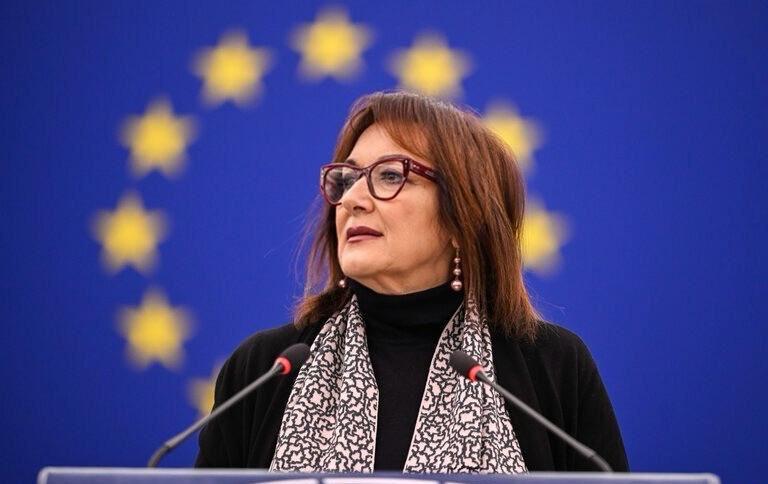
The formation of the new European Commission late last year highlighted the importance of having a Commissioner for the Mediterranean. The region faces significant challenges and grows increasingly vital for the European Union’s security and prosperity.
Last Friday, European Commissioner for Mediterranean Dubravka Šuica visited Cyprus for meetings with President Christodoulides, Foreign Minister Konstantinos Kombos, and Deputy Minister for European Affairs Marilena Raouna.
Speaking to Phileleftheros, the European Commissioner emphasised the need for closer cooperation and greater resource investment, arguing these are fundamental for promoting peace and prosperity.
The Mediterranean faces numerous diverse challenges. From ongoing turmoil and wars in the Middle East to migration issues and growing climate change impacts, the region finds itself in turbulence. Šuica believes the New Mediterranean Pact and Brussels’ planned initiatives for the region will strengthen cooperation between member states and neighbouring countries, bringing positive results for all.
She placed particular emphasis on supporting Cyprus through energy interconnections, aiming to reduce energy isolation and promote renewable energy sources. Developments in natural gas and strategic cooperation with other regional countries present opportunities that can contribute to EU energy security, she explained.
Finally, she acknowledged demographic challenges, such as population ageing and social changes, affecting the Mediterranean. Focus on the new generation and developing cooperation and mobility programmes will play a crucial role in the region’s social welfare and sustainable development, she maintained.
Why should there be a Commissioner for the Mediterranean and not for the Baltic or Central Europe?
The idea behind the creation of this portfolio is less about geography and more about historic ties and strategic relations. By creating a Commissioner for the Mediterranean, President von der Leyen wanted to bring to life to a new vision, an added focus—not because it’s “more important” than others but because it poses distinct, complex external and internal challenges.
What are the main challenges currently facing the Mediterranean region today?
Addressing ongoing conflicts in the Middle East and socio-economic recovery and reconstruction needs, combating terrorism, facing climate change and managing migration effectively, are just a few. It is by investing more and working closer together hand in hand with our partners that we will manage to turn the page of history, addressing effectively our shared challenges and turn them into opportunities. We want to seize and maximise mutual benefits—such as lowering energy costs, unlocking private sector investments and mobilizing large-scale regional projects to create opportunities, especially for young people and our businesses. Investing in the Mediterranean’s economic potential is also an investment in Europe’s own competitiveness and stability.
The goal is ensuring peace, growth and prosperity for people on both shores of our sea and provide a better future for youth.
What new initiatives will the New Mediterranean Pact bring? Will it make a difference for the Mediterranean member states? How can Cyprus benefit from it?
Our action will comprise all tools at our disposal: from legislation to new initiatives, such as the implementation of the Gulf Strategy and the Trans-Mediterranean Energy Clean Tech Cooperation Initiative, to the use of EU programmes such as the broadening the scope of Erasmus + and Horizon programmes to our partners on the other side of the Mediterranean.
The New Pact is one of my key priorities. We will focus on key areas like clean energy, migration, economic development, security, digital and transport connectivity and the blue economy.
Our aim is not to produce yet another paper, but to create a real and concrete impact together with our partners on equal footing – and this is why I launched extensive consultations. Cyprus, being a key actor in the region, will definitely benefit from the stronger partnerships to be build and the stability, growth and prosperity that the New Pact aspires to create jointly. This is why I camehere, to gather the proposals and expertise of Cyprus.
The electricity interconnection between Cyprus and Greece is very important for both countries. What support can and should the EU provide to these two member states? What benefits do you see for the EU itself?
Let me first underscore that energy cooperation will be an important part of the New Pact. We are working closely with governments and the private sector on this front.
We aim to boost renewables and clean tech by further integrating electricity interconnections for more stable and efficient use across the Mediterranean, while also launching the Trans-Mediterranean Energy and Clean Tech Cooperation Initiative to increase renewable energy trading and support clean tech manufacturing.
As regards the specific issue of electricity interconnection between Cyprus and Greece I would like to stress that the Great Sea Interconnector is a project of the highest strategic importance for the Commission as it will allow to connect Cyprus to the European electricity grid, as the last non-connected Member State. It will also be instrumental in allowing Cyprus to decarbonise its energy system and boost renewables. The project has received a grant of €657 million for the construction of the part of the interconnector Cyprus-Crete. It will be a key infrastructure bringing an end to Cyprus’s energy isolation, and effectively making all EU countries physically connected to the EU electricity grid via mainland Greece. By boosting electricity interconnections, it will also help the integration of renewable energy sources in the Mediterranean region.
Could the natural gas reserves in the Southeastern Mediterranean provide a transitional solution for Europe’s gas needs until the energy transition is complete? If so, what should the next steps be to use them so that the EU can start benefiting?
Cooperation with the Mediterranean can bring significant stability and opportunities, including access to natural resources, such as clean energy and critical minerals.
Natural gas is, as you mentioned, expected to play a role in transition to a climate neutral economy. The natural gas reserves in the Eastern Mediterranean are therefore of particular importance for the EU. In this context, the EU fosters cooperation with our partner countries in the region, for instance through a trilateral agreement on natural gas with Egypt and Israel. The EU also explores transport possibilities of energy from the region to the EU be it through electricity cables or LNG shipments.
According to forecasts, the Mediterranean will be one of the regions hardest hit by climate change. What measures should countries start taking to mitigate the impacts?
The Mediterranean region is warming 20% faster than the global average, which brings natural disasters, extreme weather events, drought, and desertification. To address these challenges, enhanced regional cooperation between us and our Southern partners is required to increase the resilience of our societies, ecosystems and infrastructure against the effects of climate change.
Climate action is part of our partnerships and will be part of the New Pact. We are working closely with governments, the private sector, and civil society to ensure a just and inclusive green transition and strong cooperation for climate resilience, energy, environment protection, water management.
We also want to strengthen the Union Civil Protection Mechanism and related climate disaster funds and to contribute to the EU 2040 climate target in the context of reaching neutrality at the latest by 2050.
The Mediterranean is one of the most significant migration rootwith hundreds of deaths every year. How can Cyprus and other countries in the region become a sea of peace, security, and cooperation when faced with uncontrolled migration flows? How can the EU really assist these countries?
I am happy to say that in the first two months in 2025, we saw a 35% decrease in detections of irregular border crossings into the EU via the Eastern Mediterranean route.
With special relevance to Cyprus, the Commission continues to implement the EU Action Plan for the Eastern Mediterranean with an emphasis on stepping up prevention of irregular migration and enhancing management of flows in cooperation with key countries of origin and transit.
Actions taken so far by the Commission have helped to significantly stem arrivals through the Green Line. In 2024, we had 60% arrivals less compared to the year before. However, we need to remain vigilant and continue to closely monitor developments and ensure that we are prepared.
Migration management aspects will figure prominently in the New Pact for the Mediterranean, which will serve as a basis to operationalise external aspects of migration policy. As you are aware the EU’s approach to migration is a whole of route and holistic one. The root causes of forced displacement and irregular migration are many and complex. Wars, lack of economic opportunities, climate change, just to name a few. In this spirit, we will continue supporting partner countries in developing a comprehensive approach to migration and addressing the major root causes or irregular migration. The reduction of irregular migration paves the way for more legal pathways to the EU. Building jointly comprehensive mutually beneficial partnerships addressing all the key challenges forcing people to flee is a key priority for the Commission. Turning the Mediterranean into a sea of peace and prosperity, where people move because they wish and not because they are forced, is a priority for me.
How does the aging population in many Mediterranean countries affect social services and economic productivity, and what strategies are being recommended to address these challenges?
I am also Commissioner for Demography, so my role is to address these challenges as well. Right now, we are implementing the Demography Toolbox, launched in October 2023, to support Member States and regions to turn demographic challenges into opportunities. I also focus on international aspects of demography and work closely with Member States like Cyprus. The Demography Toolbox provides key policy tools in four main areas: supporting families, empowering youth, supporting older generations, and addressing labour shortages also via managed legal migration and by maximising EU talent via Talent Partnerships with third countries. Labour market participation, especially by under-represented groups and intergenerational equity are our priorities. Demographic change can bring opportunities. In a longevity society, older generations can contribute meaningfully. The increase in average life duration is good news: it is the result of our social, economic and scientific progress! We should not be scared but, on the contrary, we should prepare ourselves to this very welcome trend by adapting our social and economic structures to this new reality.
In the Southern Mediterranean, over 50% of the population is under 24, and 63% under 35. The New Pact for the Mediterranean prioritises people-to-people connections, especially for youth. Youth engagement is powerful last week in Spain, I have proposed a Youth Parliamentary Assembly of the Mediterranean to strengthen ties.
I also want to develop our cooperation on expanding people to people relations, so I am advocating the establishment of a Mediterranean University network.
The challenges from the Middle East are huge. In what way can Cyprus become a bridge of communication and cooperation between the region and the EU?
Cyprus is uniquely positioned—both geographically and geopolitically—to act as a bridge between the Middle East and the EU. As a member of the EU with strong historical, political, and economic ties to the region, Cyprus can facilitate dialogue, promote stability, and encourage collaboration on key issues such as stability, security energy and migration. Its expertise and long-standing relations with the countries in the region allows it to serve as a reliable and trusted platform for regional diplomacy, while its EU membership offers a direct channel for conveying the region’s concerns, interests and flagging possible areas of cooperation with the region to Brussels. By flagging and promoting shared challenges, interests and opportunities, by investing in joint projects, and by fostering people-to-people connections, Cyprus can play a strategic role in building trust and cooperation across the Mediterranean and further strengthen the EU’s relations with our partners in the Middle East, and the Gulf adding and increasing the EU’s geopolitical footprint in the region.

