


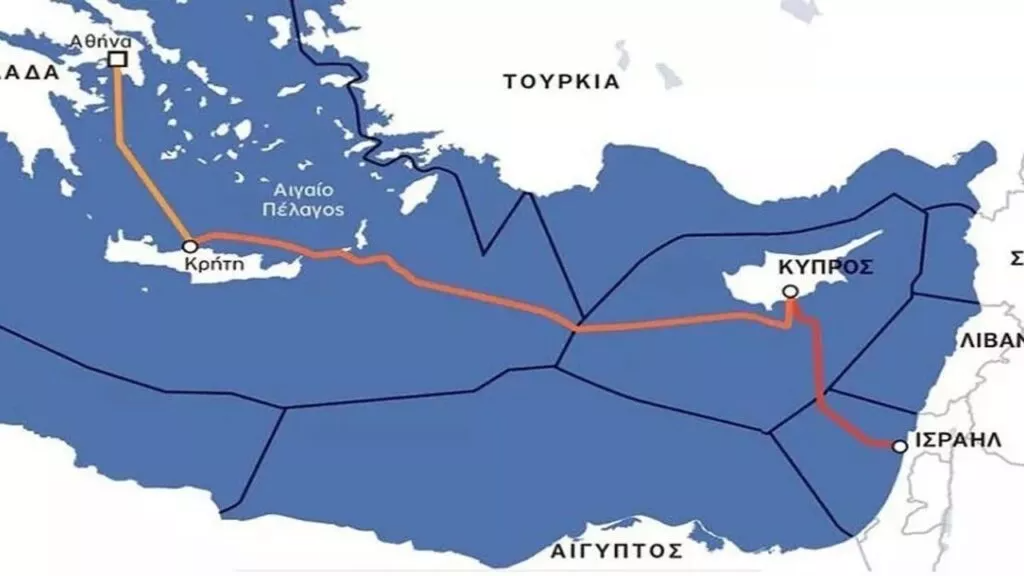
Will the Crete-Cyprus electrical interconnection proceed?
According to reports from Athens, the Greek side appears determined this time to move forward with implementing the electrical interconnection project between Crete and Cyprus. Meanwhile, reports from Turkey suggest the occupying power has warned it will react if the implementation proceeds.
The outcome will ultimately be determined by how each side acts in this specific case, which is not isolated from broader developments in the Aegean and Cyprus. For Greece, the next steps represent a clear imperative. It concerns the exercise of sovereign rights, while the project also has an evident economic dimension.
Under no circumstances should we witness a repeat of last July’s scenario, when research vessels were obstructed by the occupying power and Athens failed to respond. If such events recur, it would constitute a success for Ankara. It would largely replicate the practice of imposition, gunboat diplomacy, and Turkey’s “logic” that “nothing can happen without its participation” or without its “permission.” In that case, Greece’s sovereign rights would be effectively abandoned, and occupying Turkey would impose its expansionist policy. This concerns economic activity in international waters.
It’s clear that significant investment has gone into the Great Sea Interconnector, making it difficult to “freeze” the entire project simply because Turkey is obstructing its implementation. Substantial funds have been committed. Simultaneously, a plan with geopolitical characteristics has been developed, providing strategic depth according to those who conceived the initiative. It represents an energy security matter for participating countries.
Ankara, anticipating Greece’s next moves, has rushed to pre-empt developments. Employing its standard tactics of intimidation and threats, the occupying power has sent, through leaks to Turkish media, a clear message to Athens, claiming it will react to “unilateral provocative steps” and adding that it will “protect its rights in the Aegean and Eastern Mediterranean.”
This was preceded by meetings between the foreign ministers of Greece and Turkey, George Gerapetritis and Hakan Fidan, though no apparent agreement on the matter emerged. Indeed, any discussion would have been misguided as it would send the wrong signals to Ankara, which – given its ill intentions – might conclude that by raising the issue, Athens is seeking “Ankara’s permission” to proceed.
The Greek side cannot back down this time. Current circumstances, considering regional developments and Turkey’s internal situation, may be more favourable for Greece to proceed. Regardless of any geopolitical conditions, Greece must resume research without hesitation or second thoughts. The research vessels should proceed, if necessary accompanied by Naval vessels.
Greece should also respond if Turkey decides to conduct parallel research in maritime areas affecting the Great Sea Interconnector project plans. The message must be clear.
Turkish behaviour represents a manifestation of neo-Ottoman revisionism – an ideology and ambitious plan positioning Turkey as a “regional superpower.” Such behaviour cannot continue unchallenged. When Ankara perceives non-reaction as weakness, it will escalate its territorial claims and proceed with further steps to implement its expansionist designs. The extreme rhetoric of the occupying power and its show of force cannot remain unanswered by either Greece or Cyprus – by both states together.

