


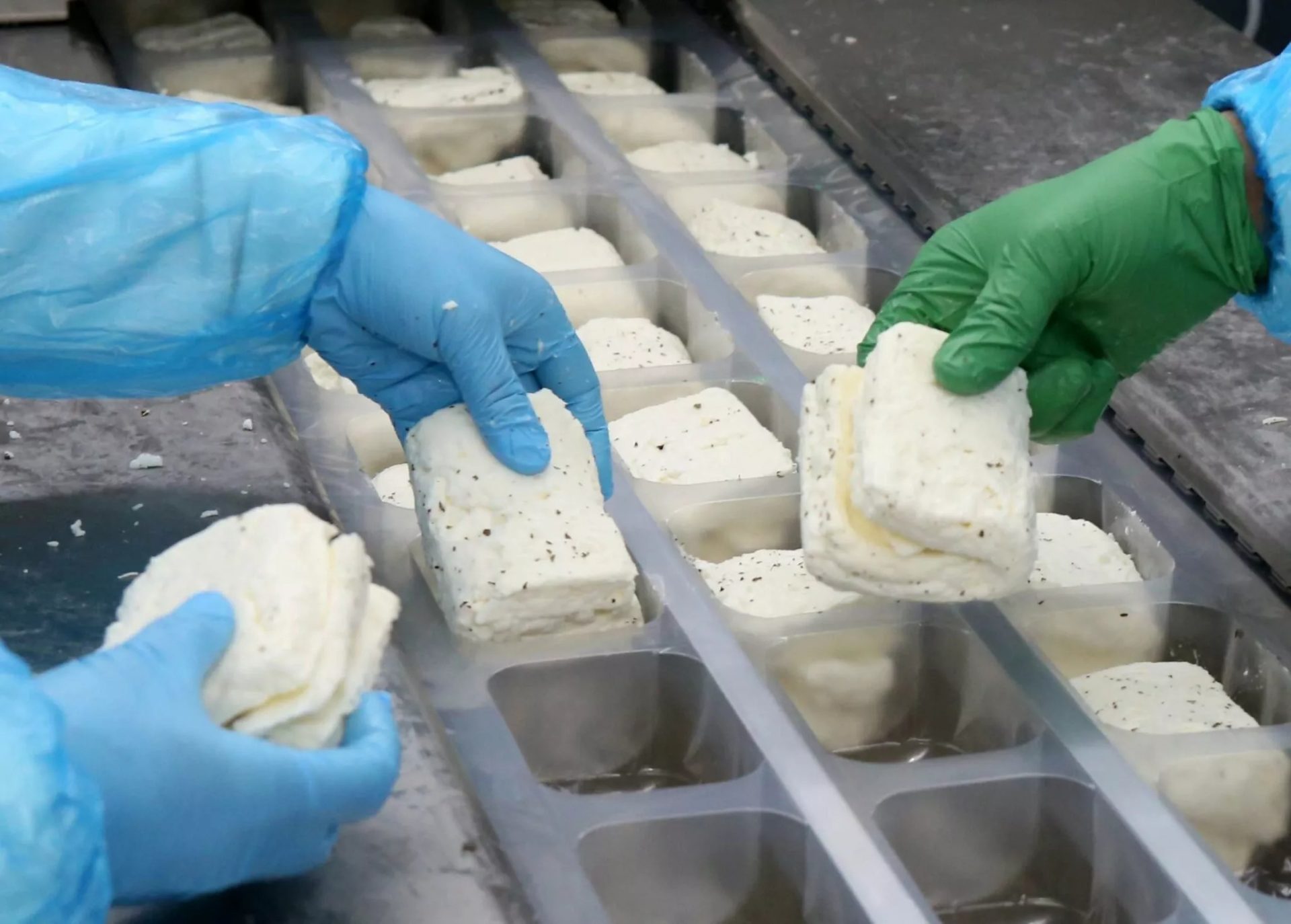
The Ministry of Agriculture has introduced significant changes to the minimum goat and sheep milk requirements for halloumi PDO (Protected Designation of Origin) production, reducing the quota from 30% to 20% despite data suggesting availability could support a higher percentage.
For the first time since halloumi’s PDO designation, the ministry has based its quota determination on a distinction between two types of the protected product: halloumi made with 100% goat and sheep milk, and mixed halloumi produced using a combination of three milk types.
This approach has resulted in the quota being set below the actual available quantity according to the Agriculture Department’s monitoring system.
The ministry has recommended to the Commerce Ministry that the existing decree be modified to establish a 20% goat and sheep milk quota for the period from March 20 to July 31, 2025, dropping further to 15% for August 1 to December 31, 2025.
The minimum requirement had been set at 30% since March 1.
“According to daily declarations recorded in the Agriculture Department’s software, which are indisputable and verified, there is currently only 16.64% availability for mixed goat and sheep milk halloumi production,” said Agriculture Minister Maria Panayiotou.
“This means the current decree does not correspond to the availability of goat and sheep milk, which is much less”.
The minister’s decision appears to represent a reversal in the gradual progression toward the European Commission’s requirement that the minimum ratio of goat and sheep milk used in halloumi production must increase to over 50% by July 2029, when the transition period for compliance with the regulation expires.
According to the Agriculture Minister, of the total 45,000 tonnes of halloumi produced, 41,000 tonnes are exported, with approximately 39,000 tonnes being mixed halloumi.
“The quantitative data alone makes it evident that what supplies our producers is the export of mixed halloumi, and therefore these must be safeguarded,” Minister Panayiotou stated. “Otherwise, the total annual production of halloumi is estimated to potentially decrease by up to 40%, which would call into question the viability of all stakeholders”.
The PDO designation was secured in Brussels after years of effort for a single halloumi product specifying a minimum 50%+ goat and sheep milk content.
This predominance of goat and sheep milk is what gives halloumi its distinctive taste and enhances its traditional origin – key factors in the product’s registration on the EU’s protected designation lists.
In a parallel development, the Agriculture Ministry announced the allocation of 26 government land plots and livestock sites for the construction of new licensed units with capacity for over 800 productive goats and sheep.
This initiative is expected to increase the goat and sheep population by nearly 21,000, accelerating growth in goat and sheep milk production.
The construction of livestock units will be subsidised through the new Strategic Plan for Common Agricultural Policy 2023-2027, providing up to €600,000 for young farmers or €400,000 for existing farmers.
Licensing and securing state land will be completed within three months, while obtaining livestock plots in designated areas will be processed within 15 days.
Minister Panayiotou also revealed changes to the subsidy system for goat and sheep farmers. “Capital subsidies will no longer be given based on the number of animals, as has been the case until now, but based on the productivity of animals that exceed 200 litres each for 2025 and deliver their milk for PDO halloumi cheese-making purposes,” she explained.
The subsidy requirements will increase annually to provide further incentives for productivity growth. “If this year it will be at 250 litres, next year the subsidy will be for 300 litres, and so on,” the Minister added.
“Along with this, farmers will receive subsidies for first-born productive animals that each goat and sheep farmer must maintain to increase production”.
The new subsidy approach will include strict safeguards linked to commitments not to slaughter subsidised animals, with details to be finalised in consultation with industry representatives and Agriculture Department technicians in the coming days.
Makis Avraam, an Agriculture Department official, specified that the available government land plots include 11 in the Athienou livestock zone, 11 in the Xylotymvou livestock zone, and one each in the Ormidia, Kofinou, Choirokoitia, and Kato Moni livestock zones.
Priority for these plots will be given to new farmers under 40 years of age and individuals with training in livestock farming.

