


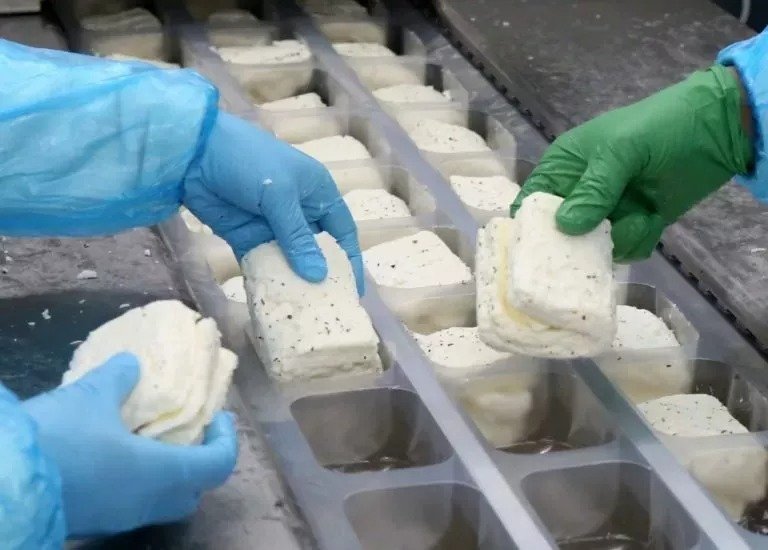
The minimum requirement for sheep and goat milk in halloumi production has returned to 30% as of today, following a one-month temporary reduction that had lowered the threshold to 15%.
The reinstatement of the original quota will remain in effect from 1 March until 31 August 2025, marking a return to the standard requirements for the traditional Cypriot cheese.
According to officials, the temporary reduction had been implemented through a ministerial decree published on 3 February 2025 following a request from the Minister of Agriculture.
That measure, which set the minimum sheep-goat milk quota at 15% between 3-28 February, has now expired.
“The decision to maintain the quota at 30% is part of the broader framework to gradually increase the production of goat and sheep milk,” said a Ministry of Agriculture spokesperson.
“This ensures compliance with the Protected Designation of Origin (PDO) specifications will be achievable for all producers by the end of the transition period”.
The long-term objective is to have sheep and goat milk exceed cow’s milk in halloumi production by 2029, when the new five-year extension granted by the European Commission expires.
Industry observers note this represents a significant challenge for producers, requiring substantial adjustments to the island’s dairy farming sector and established production practices.
Additionally, the Monitoring Committee for halloumi has maintained its 25 January 2025 decision that capitation subsidies will be granted based on productivity, with a minimum threshold of 200 litres annually.
This applies to 2025 production and is intended to serve as an important incentive to increase sheep and goat milk production.
Given that the total annual milk production (1 January – 31 December 2025) will be considered, the capitation subsidy will inevitably be distributed in early 2026 rather than sooner.
The Department of Agriculture has noted that the sheep-goat milk percentage was revised based on results from its software tracking system.
However, officials acknowledge that several producer groups and milk distributors are not reporting their data to the system, resulting in a discrepancy between reported figures and actual production data.

