


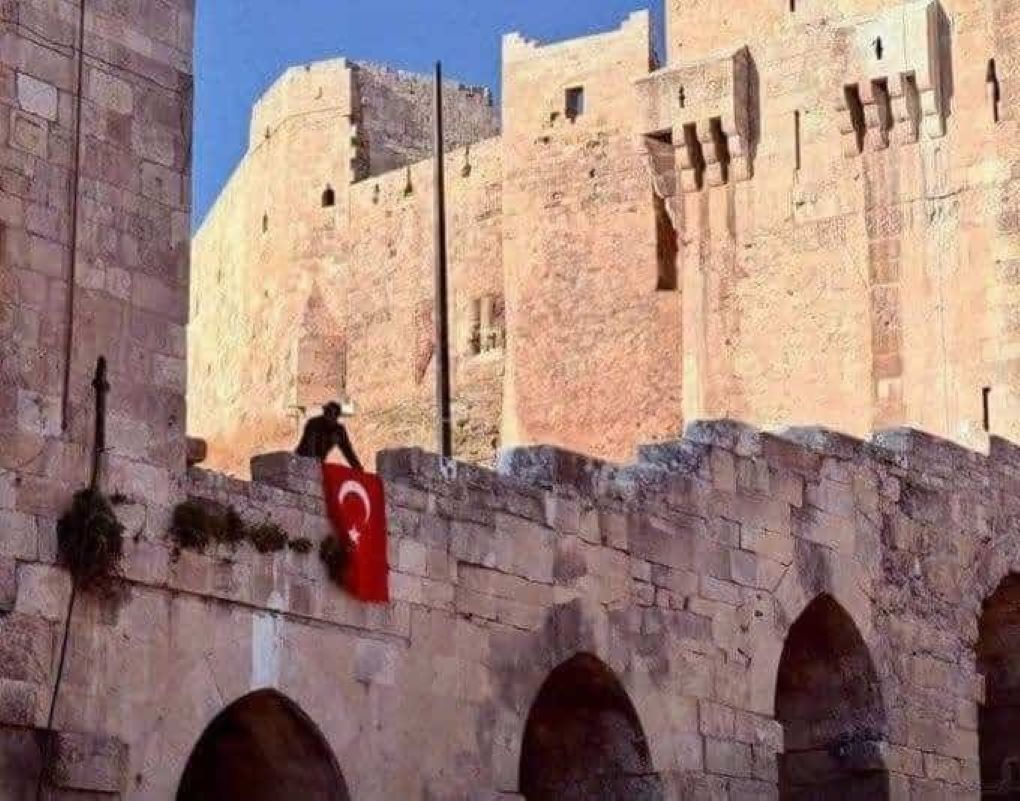
The Middle East has long been an arena where global powers seek to exert their dominance, a pattern that President Recep Tayyip Erdogan appears to be following through Turkey’s strategic engagement in Syria.
This power play, however, has prompted neighbouring countries to take preventive measures against Turkish expansionist ambitions.
Cyprus and Greece, unlike most of their partners, have shown marked caution regarding Turkish officials’ diplomatic activity in Damascus following Assad’s fall. Both governments, drawing from their extensive experience with Turkish regional policy, have approached developments in Syria with heightened vigilance, particularly wary of accepting Turkish control within Damascus.
According to the Israeli research centre Alma, which specialises in monitoring Middle Eastern developments, particularly in regions north of Israel’s borders, Turkey’s three strategic objectives in Syria are:
- Establishing a Sunni Islamist client state aligned with Erdogan’s and his AKP party’s vision of restoring Ottoman influence, including potentially developing Sunni jihadist infrastructure against Israel in southern Syria
- Removing Kurdish SDF (Syrian Democratic Forces) from Turkey’s border and severing connections between the SDF and Kurds in southern Turkey
- Facilitating the return of approximately 3 million Syrian refugees from Turkey to Syria
Analysts Yaakov Lapin and Tal Beeri note that while the Kurds represent Turkey’s immediate target, Ankara’s ambitions in Syria form part of a broader neo-Ottoman influence campaign in the Middle East. Turkey simultaneously seeks to position itself as a mediator in regional conflicts, as demonstrated in Ethiopia and Somalia, whilst maintaining direct involvement in situations like Libya. The analysts note that “in all these cases, there is a recurring pattern where Ankara deploys its military arms and intelligence services (particularly MIT) to influence internal processes in neighbouring or more distant countries.”
The highly publicised arrival of Turkey’s MIT chief in Damascus immediately after Assad’s fall, his prayer at the Umayyad Mosque, and his meeting with Syria’s new leader, Ahmad al-Saraa (Abu Mohammed al-Jolani), sent clear signals in various directions.
Cyprus and Israel have emerged as the region’s two non-Muslim countries most closely monitoring these developments due to their potential direct impact. While their concerns stem from different issues, they share a common source: Turkish ambitions and objectives in the region. Cyprus’s concerns primarily focus on Turkish movements in the eastern Mediterranean, specifically potential EEZ agreements between Ankara and Damascus that could affect the Republic of Cyprus’s interests.
Israel’s concerns focus on the new power dynamics within Syrian territory. While the Iranian-led Shiite axis has been weakened, the rise of radical Sunni groups in Damascus, potentially aligned with Turkey’s regional Islamist agenda, presents new strategic risks. These elements have periodically expressed their desire to “liberate Jerusalem” and could become tools serving Erdogan’s regional Islamist agenda.
According to Alma’s analysis, “Israel is concerned about Turkey’s dominant entry into Syria. From Israel’s perspective, the immediate advantage is the weakening of Iran and Hezbollah along its northern borders. However, the long-term risk lies in the rise of radical Sunni groups supported by Ankara, their proximity to Israel’s borders, and the possibility that the new Syrian system could deteriorate into endless internal power struggles. Moreover, Turkey’s influence in the region, guided by Erdogan, who self-identifies as the ‘protector of Islam’ and as one who wants to ‘liberate al-Aqsa’, does not bode well for Israel. The Turkish President has already stated that in his view, Jerusalem should be the focus of Muslim attention and has not hesitated to defame Israel with harsh and antisemitic characterisations.”
Meanwhile, Washington suggests an intention to withdraw or reduce its presence, potentially giving Erdogan greater freedom to pursue his regional objectives without constraints. As the Middle East faces another period of transformation, Turkey’s initiative under Erdogan explicitly aims to bring about structural change in Syria and, consequently, reshape regional power balances in line with what he views as his country’s historical destiny.
Muslim Brotherhood connection
Turkey is shaping post-Assad Syria with a Sunni-Islamist government linked to the Muslim Brotherhood and Erdogan’s modern vision. Turkey’s involvement in Syria, managed by President Erdogan himself, reflects an ambitious set of goals: eliminating Kurdish influence along Turkey’s borders, geopolitical expansion and transformation of Turkey’s regime into a regional Muslim leader, building alliances and economic influence (with Qatar’s support), establishing a strategic foothold for the future, and removing remnants of Iranian or Russian influence associated with the Assad regime.
Read more:

