


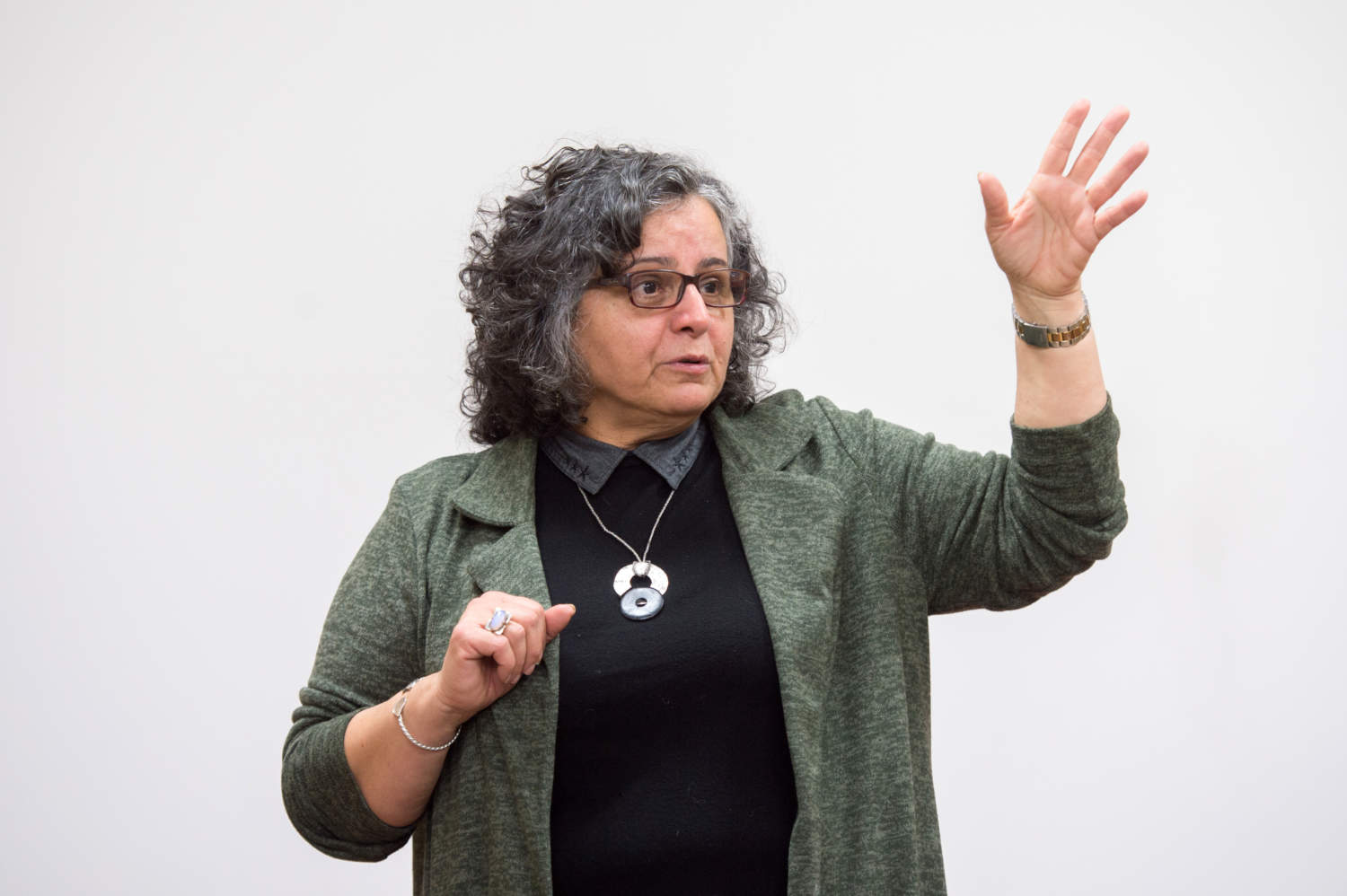
As Israelis prepare to vote, Israeli-Palestinian lawmaker Aida Touma-Suleiman, speaking to en.philenews warns that replacing Benjamin Netanyahu may do little to change the policies driving the Genocide in Gaza and the oppression of Palestinians.
Israelis vote today, 27 October, with official results expected to follow as votes are counted. The main contenders include Prime Minister Benjamin Netanyahu, head of coalition Gadi Eisenkot, and former prime minister Naftali Bennett, while coalition negotiations could determine who ultimately forms the next government.
Israel’s election is being presented as a decisive contest over the country’s leadership and future. After years of Benjamin Netanyahu’s rule, the war in Gaza and Israel’s growing international isolation, his main challenger, former military chief Gadi Eisenkot, offers voters the prospect of a different government. But for Palestinians, the central question is whether a change of leadership would bring any meaningful change to the policies that have shaped their lives.
For Aida Touma-Suleiman, a member of the Israeli Knesset representing the left-wing Hadash political alliance, the distinction is fundamental.
“The election may determine who governs Israel, but it offers little evidence that the country’s mainstream political establishment is prepared to confront the consequences of the war in Gaza, acknowledge Palestinian rights or pursue a different political future,” she told en.philenews in an exclusive interview.
“The war on Gaza is not on the agenda,” she continued, describing a campaign in which “the dominant debate concerns Netanyahu’s responsibility for the security failures surrounding the Hamas-led October 7, 2023 attacks, rather than the devastating consequences of Israel’s military response.”
An election without a reckoning over Gaza
Since October 2023, Israel’s military campaign has devastated Gaza, killed tens of thousands of Palestinians and generated widespread allegations of grave violations of international humanitarian law. The genocide case brought by South Africa against Israel at the International Court of Justice remains a central part of the international legal debate. Israel rejects the allegation that it is committing genocide.
Yet, according to Touma-Suleiman, these questions have scarcely penetrated the mainstream election campaign.
She argues that criticism of Netanyahu has focused primarily on his failure to prevent October 7 and his handling of Hamas and Qatar. The question of whether the subsequent war was justified, or whether crimes were committed during it, has largely been excluded from the political debate.
“There is almost consensus among the Zionist parties that it was a justful war ever for Israel,” she says.
Her criticism is directed not only at Netanyahu and his far-right coalition but also at the opposition seeking to replace him. In her view, the mainstream political contest is less about whether Israel’s approach towards Palestinians should change than about who can be trusted to manage the country’s security and international relations.
This is a crucial distinction. A government can lose public confidence because of a catastrophic security failure without losing support for the military policies pursued afterwards. An election centred on leadership and security, rather than Palestinian lives and political rights, risks leaving that fundamental contradiction untouched.
The future of Gaza is particularly revealing. Touma-Suleiman says the dominant parties are not seriously discussing what political arrangement should follow the war. Her own political camp, she argues, is among the few pushing for a political solution.
Without such a discussion, the election risks treating Gaza primarily as a security problem to be managed, rather than a devastated Palestinian society whose people have rights to safety, political representation and self-determination.
Eisenkot: An alternative to Netanyahu, but to what extent?
Eisenkot presents himself as an alternative to Netanyahu, particularly on leadership, governance and the composition of the next coalition. Touma-Suleiman describes him as representing the “classical Israeli right wing, relatively liberal in some respects, but fundamentally nationalist.”
His military background is central to that image, but it also raises questions about how far his approach would depart from the security doctrine that has dominated Israeli policy.
Touma-Suleiman points to the Dahiya doctrine, associated with disproportionate retaliation and the destruction of infrastructure in areas linked to an adversary, as an indication of the military thinking surrounding Eisenkot. She also recalls that he joined Netanyahu’s government at the beginning of the Gaza war and remained there for months.
Eisenkot’s opposition to serving in a government with far-right ministers Itamar Ben-Gvir and Bezalel Smotrich marks a political difference from Netanyahu. But a different coalition does not necessarily mean a different approach to Palestinians.
Indeed, reporting on the candidates’ positions indicates that both Netanyahu and Eisenkot oppose an independent Palestinian state and insist on continued Israeli security control over the territory between the Jordan River and the Mediterranean Sea. Eisenkot has also pledged to end Hamas rule in Gaza, potentially through military force, while supporting some Israeli settlements provided they comply with Israeli law. These positions suggest substantial continuity alongside differences over settlement expansion and the role of the far right.
Touma-Suleiman acknowledged that Eisenkot might be more willing to curb settler violence in the occupied West Bank, partly because of his desire to present Israel as a liberal democracy but she warns that his security approach would remain aggressive.
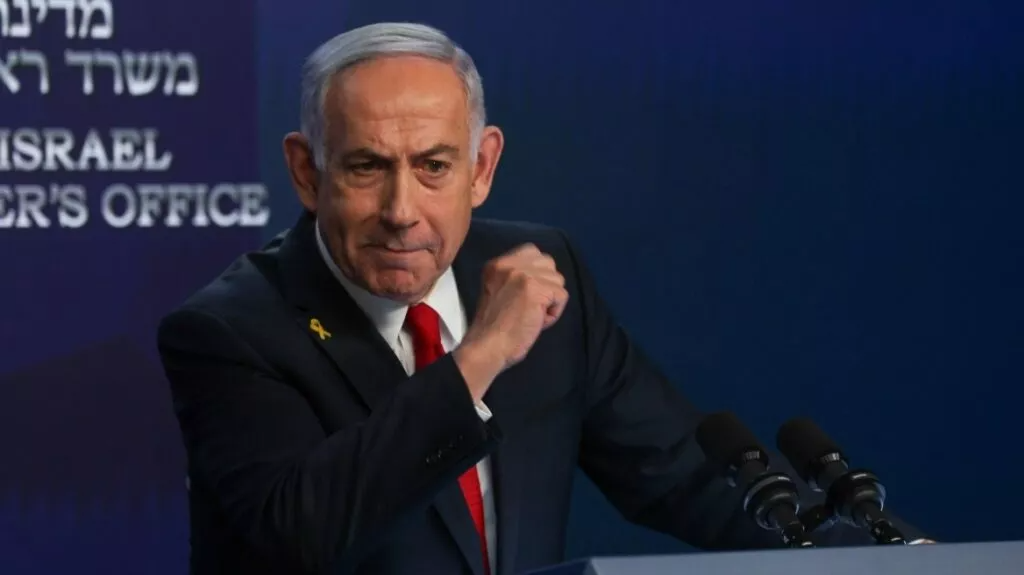
International pressure: Change of policy or change of image?
Netanyahu’s government has shown little concern for international law, sanctions or diplomatic criticism since October of 2023. But would an alternative administration be more sensitive to such pressure because it would want to restore Israel’s standing abroad?
According to Touma-Suleiman a contradiction exist in that much of the opposition criticises Netanyahu for damaging Israel’s international reputation while rejecting the EU sanctions and other measures intended to hold the country accountable.
“International measures are frequently used in domestic political debate as evidence of Netanyahu’s diplomatic failure, rather than as legitimate responses to concerns about international law,” she added.
This is where the election’s international implications become especially significant. Improved diplomatic relations might create opportunities for negotiations and reduce tensions with European governments. But a more acceptable public image cannot substitute for changes on the ground: an end to settler violence, respect for Palestinian rights, accountability for violations of international law and the enactment of policies that have led to the genocide of Palestinians and finally, a credible political future for Gaza and the West Bank.
The Palestinian question beyond the ballot box
Touma-Suleiman’s critique ultimately challenges the assumption that removing Netanyahu would, in itself, represent a turning point for Palestinians.
She describes conditions in the West Bank as “horrible”, warning that violence and clashes could erupt at any moment. Although she sees the possibility that an alternative government might take steps to restrain settler violence, she does not believe its broader approach is clear.
The election’s consequences for Palestinians will depend not only on who forms the next government but also on whether that government is willing to confront settlement expansion, occupation and the denial of Palestinian self-determination.
For now, the dominant political debate appears far more concerned with who can restore Israeli security and credibility than with what justice for Palestinians would require.
Israel’s election may therefore produce a change of leadership without a corresponding change of direction. Netanyahu could be replaced, the coalition could become less dependent on the far right, and relations with international partners could improve. Yet, if the next government continues to reject Palestinian statehood and treats Gaza primarily through a military-security framework, the fundamental political reality for Palestinians may remain largely unchanged.
Touma-Suleiman’s intervention offers a challenge to the terms of the debate itself. The question is not simply whether Israel can move beyond Netanyahu, but whether its political system can move beyond a consensus that places Israeli security above Palestinian freedom and leaves the consequences of the war largely unexamined.
Until the future of Gaza, the occupation of the West Bank and Palestinian self-determination become central questions of Israeli politics, the promise of a new government will remain incomplete. For Palestinians, the test of this election is not who wins power in Jerusalem, but whether that power is used to change the conditions under which they live.
(Sources: Reuters, The Guardian)
Read more:

