


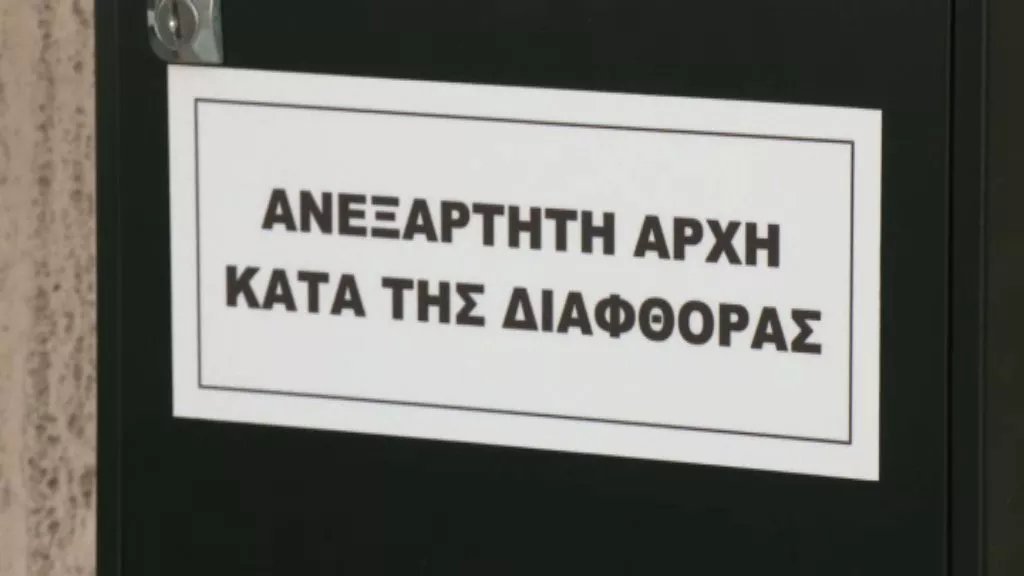
Preparatory work is under way on a bill that the Independent Authority Against Corruption is expected to put forward to give it investigative powers, allowing it to appoint criminal investigators and then pass case files to the Attorney General, authority member Nikos Zambakides told the House Finance Committee.
The authority had received 943 complaints by September 30, 2026, and had carried out investigations into 19 of them, he said.
Zambakides, who was standing in for Transparency Commissioner Haris Poyiatzis during the discussion of the authority’s 2027 budget, said work on the bill was progressing. A first meeting has already taken place between the Law Office of the Republic and the authority, the committee heard, and members will be updated once the preparatory work is complete.
He noted, however, that various people had questioned whether giving the authority such powers would be constitutional.
Answering questions from parliament member Savvia Orphanidou, Zambakides said the authority currently carries out preliminary investigations and refers cases to the Attorney General when it finds that criminal offences may have been committed.
Complaints
Of the total, 673 complaints had been completed and 270 were pending. Of the 19 investigations, 11 had been completed and eight were still under way.
Anonymous complaints outnumber those made by named individuals, Zambakides said, as people remain reluctant to report cases under their own name. Anonymous emails are examined, but where a complaint is entirely anonymous and comes with no supporting information, the authority cannot investigate it substantively.
Witnesses and publicity
Asked whether publishing the authority’s findings had caused problems with witnesses and evidence, Zambakides said some witnesses had shown reticence in certain cases. “We are seeing some concern on the part of witnesses,” he said, adding that where the authority had expected witnesses to speak more freely, it had found some hesitancy.
The authority is certain, however, that publicity has not harmed the process, he said. In cases that have attracted strong public interest, such as the “Mafia State” case, its findings could not have been kept from the public.
Staff and budget
The authority says the steady rise in complaints makes it essential to hire permanent staff. The budget provides for 22 posts, 16 of which have already been approved, Zambakides said, with the remaining six, four for lawyers and two for transparency officers, still awaited.
The authority’s budget for 2027 is 1,924,419 euros, down 73,347 euros from 1,997,766 euros in 2026. Under the Medium-Term Fiscal Framework, spending is projected at 1,876,267 euros for 2028 and 1,939,125 euros for 2029.
The largest item, 960,000 euros or 49.89 per cent of the total, covers service contracts and is down 147,000 euros from 2026. It includes fees for investigating officers and administrative, legal and secretarial staff, as well as stenotyping, serving documents, summonses and translation.
Speaking about public awareness of the authority’s role, Zambakides recounted a story a student had told him at a meeting. As a child, the student had waited a long time at hospital with a broken leg, but was called in after his mother went inside and spoke to someone. Having heard the authority’s presentation, the student asked whether that was a form of corruption. Zambakides said it was.

