


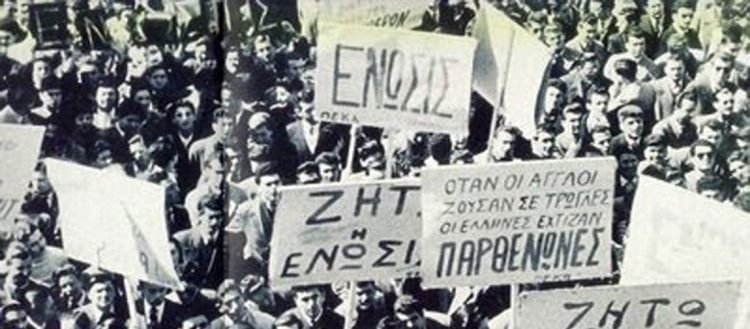
The anniversary risks passing unnoticed, 95 years on. Our collective memory has let it slip, and the state and society are turning their backs on one of the defining moments in Cypriot history, 95 years on. Yet 21 October 1931 remains what it always was: a conscious outburst, a manifesto for national and social liberation, an anti-colonial cry raised years ahead of similar movements across the world.
Make no mistake: the Oktovriana were the broadest, most sweeping popular uprising the Cypriot people mounted before the EOKA struggle. They were a spontaneous, mass and collective outpouring that cut across party, class and local lines and laid bare a people’s pent-up fury at colonial rule. This was not just a protest by politicians or churchmen. It was a whole people rising up.
That is exactly why we must remember it. Not as a box-ticking anniversary, nor as an excuse for cheap patriotic soundbites, but as an event that shows us the social side of resistance, the power of collective action and the Cypriots’ desire to shape their own future.
From 1925, when Cyprus was formally declared a British crown colony, the island lived under an authoritarian regime, with political freedoms curtailed, heavy taxes and widespread economic hardship. In 1931, new taxes imposed by the governor, Sir Ronald Storrs, on top of colonial policy as a whole, lit the fuse on resentment that had been building for years.
The trigger came when the Metropolitan of Kition, Nikodimos Mylonas, resigned from the Legislative Council and called on the Cypriot people to fight for union with Greece. On 21 October, the remaining Greek Cypriot members of the Council resigned too. In Nicosia, crowds converged on Government House, which went up in flames. Similar protests broke out in Limassol, Famagusta, Kyrenia, Pissouri and elsewhere on the island.
Ordinary people made the difference. Workers, farmers, the young, townspeople and villagers from every walk of life poured onto the streets and challenged colonial power not in words but in deeds. This was no carefully managed political project. It was a spontaneous popular revolt, broad in its social reach and national in its purpose, and its anger was aimed above all at the symbols and machinery of colonial rule.
The British response was harsh and vindictive. The crackdown brought live fire, deaths, torture, arrests, exile and sweeping curbs on political freedoms. Fifteen-year-old Onoufrios Kleridis was killed in Nicosia. Loizos Loizides died under torture in Kyrenia. Ioannis Salloumis lost his life at Mandria in the Limassol district after being attacked by a British soldier. Then came press censorship, a ban on elections, the banishment of political figures and a drive to control Cypriots’ education and cultural identity.
Nor did the colonial authorities stop at punishing the uprising’s leading figures. They went further, slapping a special tax on the island’s Greek Cypriot inhabitants to pay for the damage done during the Oktovriana. This was collective punishment, plain and simple. A whole population was treated as guilty of a crime, and resistance to colonialism was answered by tightening a regime that squeezed freedoms even harder.
The Oktovriana changed the course of Cyprus. The colonial administration hardened, ushering in an era of authoritarianism remembered as the Palmerokratia. Political life was drastically curtailed and society lived under persecution and bans. But the revolt did not die. It lived on in people’s memory as a moment when the people challenged power en masse and claimed the right to decide their own future.
Ninety-five years later, the Oktovriana remain one of the most important chapters in modern Cypriot history. Their significance goes beyond the national demand of the day. It lies, too, in their mass character and their social dimension. It lies in the spontaneous involvement of people who did not wait for anyone’s permission to resist, and in their resolve to defy a regime that took their submission for granted.
That is why the memory of the Oktovriana cannot be left to chance. The state has a duty to honour them, and society a duty to know them. History is not a pick-and-mix record of events, nor a tool to be wheeled out only when it suits the politics of the moment. The Oktovriana were the great uprising of an entire people against colonial rule. They were a moment of collective dignity, a challenge to power and a demand for freedom that the colonial regime simply could not contain.

