


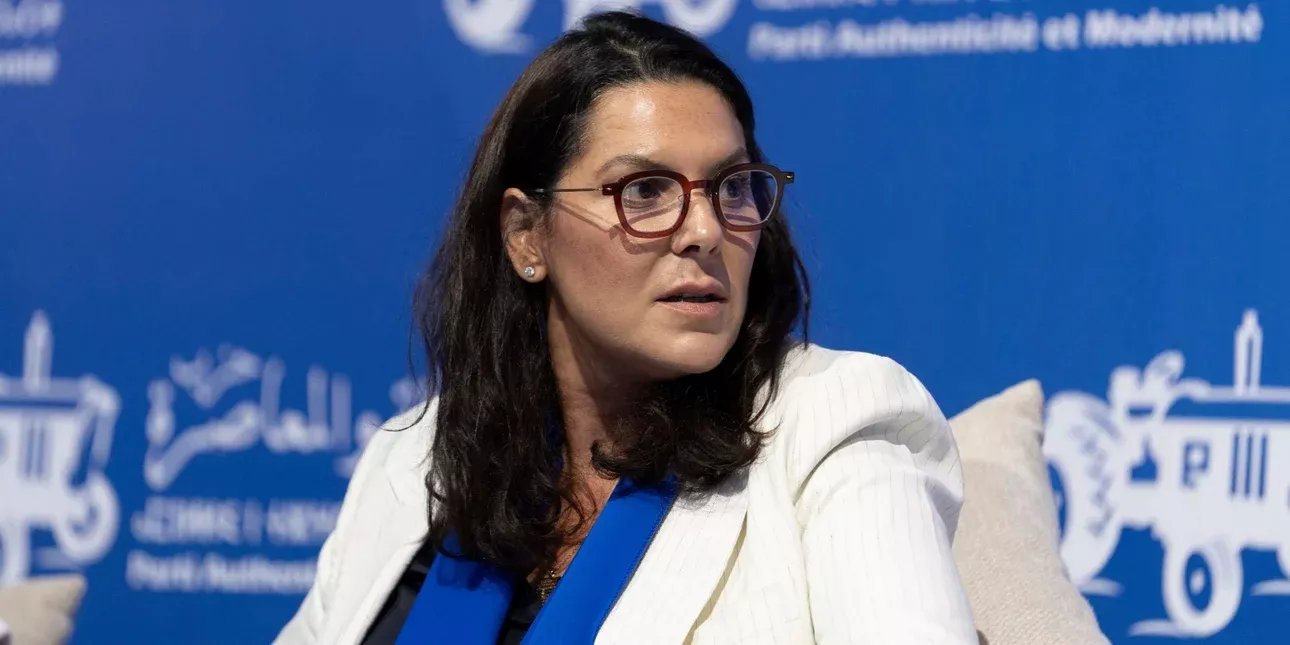
The appointment of Fatima Zahra El Mansouri as Morocco’s first female prime minister has exposed persistent reservations about women holding power in the Muslim-majority country, the BBC reported. El Mansouri has not said whether she will push to reform the country’s family law, which many women’s rights groups see as a key test for the new government.
An Islamic saying that “a people who entrust their affairs to a woman will never succeed” has resurfaced since King Mohammed VI named her. Mustafa Ramid, a former justice minister in an Islamist-led government, cited it earlier this month in a long Facebook post questioning whether a woman should hold the country’s highest political office.
Ramid argued that Morocco had struck a balance between equality and the responsibilities of state leadership, since the highest office, that of the king, continues to be reserved for men.
El Mansouri’s Authenticity and Modernity Party (PAM) won the most seats in September’s parliamentary election and has since announced a coalition with three other parties. Together they hold 207 of the 395 seats in parliament.
Reactions
The day after she was named, local broadcaster Chouf TV asked men in the street what they thought of a woman leading the government. Several, mostly middle-aged or older, hesitated before answering, and some said they accepted the decision because it was the king’s choice. One grey-haired man said: “It feels strange to have a woman as head of government.”
The BBC noted that criticising the monarchy carries legal risks in Morocco, where the penal code criminalises certain forms of offence or insult against the king, the royal family and the monarchy.
Online, the news became material for political satire. A widely shared video of two women pulling each other’s hair carried captions suggesting it showed what parliamentary disagreements between El Mansouri and her colleagues might look like. Many younger Moroccans, especially women, welcomed the move.
Family law
Some of Morocco’s most contentious debates over gender equality concern the Moudawana, the family code governing marriage, divorce and child custody. A package of reforms was announced in 2024 but has yet to become law.
Under existing inheritance rules, a daughter typically receives half a son’s share in comparable circumstances. The Higher Council of Ulemas, the country’s body of religious scholars, has resisted calls for equal inheritance, citing Islamic jurisprudence. It has also rejected proposals to abolish taasib, a rule that can require female orphans without brothers to share their inheritance with male relatives, including distant ones. In a 2022 report, Morocco’s National Human Rights Council said unequal inheritance rules contributed to poverty among women.
Polygamy is legal under certain conditions. Proposed changes have included allowing women to stipulate in their marriage contracts that their husbands cannot take another wife. Exceptions remain, however, including provisions relating to a first wife’s infertility or illness, which women’s rights groups have criticised on grounds of privacy and medical confidentiality.
Some young women also hope the new prime minister will improve girls’ education. The High Commission for Planning, the official statistics agency, found in 2025 that just 55 per cent of girls aged 15 to 17 in rural areas were in school, where poverty, early marriage and dropping out remain key barriers, compared with 100 per cent in urban areas. Chifae Laazouzi, a young Moroccan woman, told the BBC that distant schools, unsafe or unavailable transport, families keeping daughters at home and the cost of sanitary products all push rural girls out of school, adding that “menstrual health is still treated as a taboo” and calling for free menstrual products in schools.
Her role
El Mansouri has spent more than two decades in public life, serving as mayor of Marrakech, holding government posts and sitting in parliament. For the past five years she was minister for national territory planning, urban planning, housing and city policy under the previous prime minister, Aziz Akhannouch.
After being named, she presented the moment as a milestone for Moroccan women and a source of pride “for all the women of the kingdom”. She has made no prominent public statements on women’s rights during her career, even while inheritance, polygamy and family law were widely debated.
Irene Fernandez-Molina, an expert on the Global South at the University of Exeter, said in an interview with the BBC that the appointment could not be understood without September’s turnout, a two-decade low in her words, which official figures put at 38 per cent of registered voters and lower still among all eligible voters.
She described it as an example of “authoritarian state feminism”, arguing that promoting a woman to the highest government office might be intended to project an image of modernisation and progress even when the political system and the pace of social reform remain largely unchanged.
Moroccan women’s rights advocate Yasmina Benslimane said the move broke a longstanding barrier. “But it matters how she got there,” she said.
El Mansouri’s late father was a pasha, a senior local official, and a diplomat. Benslimane argued that her privileged background and access to political networks set her apart from many Moroccan women with fewer opportunities to enter public life.
El Mansouri’s room for manoeuvre is shaped by Morocco’s political system. The country is a constitutional monarchy, but executive power remains with the 63-year-old king, who retains extensive powers over key areas including defence and foreign affairs. The head of government works within a system of shared authority. On family law reform, El Mansouri would also have to contend with the country’s religious scholars, who are mostly men.
Sara Zouiten, a young Moroccan woman, told the BBC that El Mansouri should not be judged on the fact that she is a woman. “Being a woman in power doesn’t automatically make someone a champion of women’s rights,” she said, adding that she wanted to see whether her party’s image as a modernising force would translate into actual change.
(Information from BBC News)

