


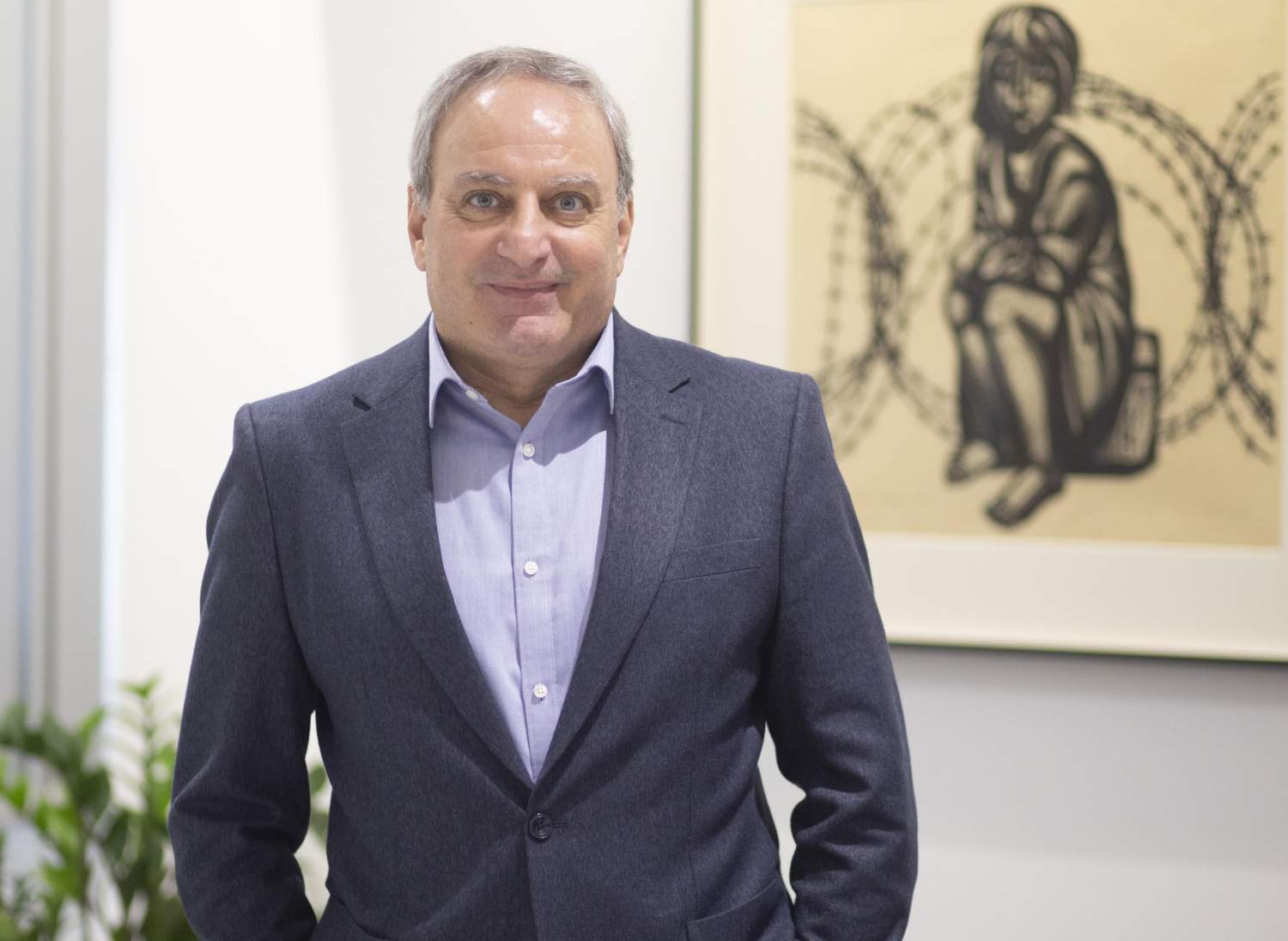
AKEL has warned against proposals that would introduce new ideas on agreed aspects of the Cyprus problem, including changing the system of government from presidential to parliamentary and altering the structure of the federation, as the UN Secretary-General explores the possibility of convening an informal expanded meeting to break the deadlock.
In an opinion piece published in Phileleftheros today, AKEL Secretary-General Stefanos Stefanou said such discussions were unnecessary and would complicate matters further, creating new deadlocks. The competencies defining the character and content of the federation were already agreed, he said, as was the system of government, which the Greek Cypriot side had supported and ultimately agreed upon after serious deliberation. “Any discussion on this will not help,” he wrote. “On the contrary, it will complicate matters and cause new problems.”
Stefanou set out four conditions he said the Greek Cypriot side must meet as potential developments in the Cyprus problem unfold. First, negotiations must resume from where they left off in 2017 and the convergences reached must be preserved. Second, the UN should formally record those convergences so that both sides know precisely what has been agreed and what issues remain open — a practice successfully applied in 2013 by then-UN envoy Alexander Downer. Third, any logic introducing new ideas on agreed issues must be rejected outright. Fourth, the remaining issues to be discussed and agreed were very few — primarily property matters and questions relating to transitional arrangements and the implementation of a solution.
On the guarantee system, Stefanou said the UN Secretary-General’s position was clear: abolish the system of guarantees and replace it with an implementation mechanism, withdraw occupation troops within a short timeframe, and eliminate any right of unilateral intervention. He said that at Crans-Montana, convergence had been reached on terminating the Treaty of Guarantee and on the withdrawal of occupation troops, provided the four internal issues of the Guterres framework were resolved. “The insistence of some on sounding out the retention of the guarantee system, with NATO involvement no less, diverts us from the position for termination of the guarantee system and makes it even worse,” he wrote.
Stefanou welcomed the UN Secretary-General’s initiative, describing it as positive even though it came only months before the end of Guterres’s term. Guterres had said Cyprus was one mile from a solution at Crans-Montana, Stefanou noted, and would not want that distance to grow through the reopening or cancellation of convergences. It was Guterres’s wish, he said, to present an outline of positions to serve as a general framework for negotiations, with his personal envoy Holguin tasked with conducting contacts primarily across the Nicosia-Athens-Ankara triangle.
AKEL’s position, Stefanou said, was that if the genuine political will of all parties was to break the deadlock and achieve a solution, the most direct and effective path was to protect what had been achieved and focus on what remained to be discussed and agreed. “A roadmap with this philosophy would be extremely useful in the effort for a swift and positive outcome,” he concluded.

