


It’s been an eternity since the (cleric) leader of the Cypriot state found it politically and communicatively beneficial to officially meet and happily be photographed with a famous actress and global sex symbol because she was going to shoot a film in Cyprus.
To be precise, it’s been half a century and more. It was August 1970, and just four months earlier, on March 8, Makarios had survived the most spectacular assassination attempt against him when the presidential helicopter was riddled with bullets during takeoff. A week later, his former close associate, Polycarpos Giorkatzis, who was involved in the attempt against Makarios, was murdered.
But why recall these events now? As I said, an eternity has passed since then. A lot of water has flowed under the bridge (almost drowning us), and Cyprus, whether it wanted to or not—and in the harshest way—was forced to mature politically, to grow up prematurely, carrying and bequeathing wounds, scars, complexes, and stumps for decades. It took a similar length of time for another film to be entirely shot in Cyprus, attracting comparable global interest.
This time, the (secular) President of the -now more mature- Cypriot Republic did not deem it appropriate to host the lead actor at the Presidential Palace. Fine, the 55-year-old Harry Connick Jr. is a good and reputable actor, but he lacks the clout, youth, glamour, and certainly the sex appeal of the 30-year-old Raquel Welch.
To preempt any counterarguments, let me say that in 2022, when he came to the island for filming, the President was Nicos Anastasiades, and no one, not even among the crew, could have imagined that the film would become the most popular on the world’s most popular subscription streaming platform for several days.
Did I say “no one”? Scratch that. There is one person who, beyond any talent, capabilities, or experience in her field, possesses a very fundamental trait: the persistence to chase her dreams. She can squeeze blood from a stone under the most adverse conditions to make an unattainable dream come true. That person is Stelana Kliris.
Of course, along the way, she inevitably will have to make some artistic compromises, but we are talking about a field where the scales are tiny compared to international realities. The film industry has exploded globally to unimaginable proportions in terms of budgets and production levels, and the local industry seems to be fighting in vain with wooden swords and paper shields.
If there’s another secret “ingredient” beyond the dream and determination that occasionally results in the small miracles—always relatively speaking—that have emerged for Cypriot cinema in recent years, it’s the proverbial solidarity and mutual support among the members of the film community.
Perhaps it’s the circumstances, perhaps the temperament, but this community in Cyprus is exceptionally loving. Absent are the phenomena of competition, intrigue, envy, and mutual undermining that appear in other artistic fields, such as (even) in theatre.
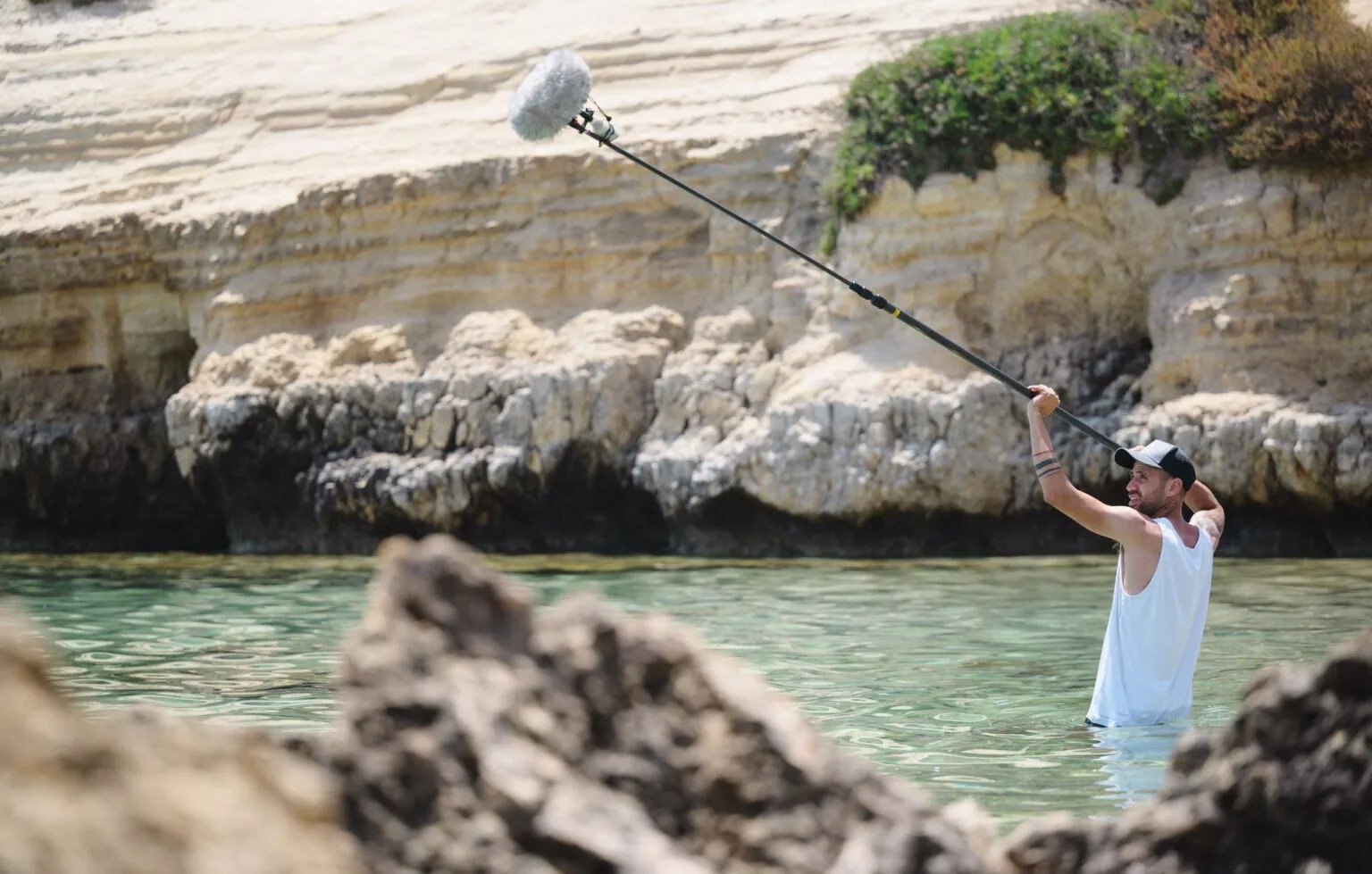
The situation is structured in such a way that filmmakers end up being producers, editors, assistant directors, and even boom operators in each other’s films if needed.
The need to exist and thrive in a very tough and expensive sport has created this lively spirit of camaraderie. The same applies to all crew members and even to those in administrative positions, whether governmental or not.
The hard state has yet to deem it necessary to increase funding to the required levels for such a demanding, challenging, and promising sector, but those managing film production are deeply involved in a process of dedication and contribution beyond their duties.
I still remember 13-14 years ago when Stelana showed us her first “child,” the short film “The Fiddler,” at a press screening, based on a story her grandfather had told her.
Beyond her indisputable ability, what stood out in her artistic vision was an incurable idealisation of Cyprus and its people. Her next film, the feature-length “Committed,” she created almost from scratch without waiting for the required bureaucratic funding. She pursued it, found producers, found the actors she wanted, and made it. It’s that simple.
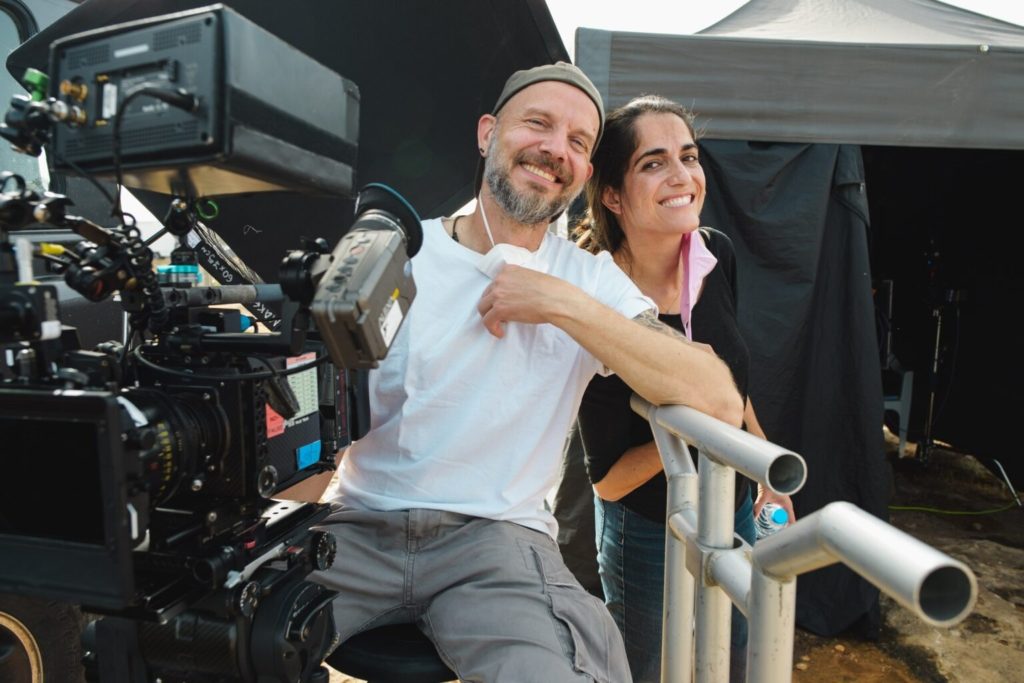
As a Cypriot of the diaspora, born in South Africa and having lived in the UK, Greece, and the USA, her return to her homeland coincided with the most productive period of her life. From the very beginning, she showed through her actions and work that she considers herself a member of the local film community and Cyprus not just as a springboard but a primary field of action.
Much can be said about the result of the film “Find Me Falling” and the script conveniences and leaps one might encounter. But this partly reflects the core of her idealised image of Cyprus, seen through the nostalgic eyes of someone who has repatriated. She sees the island as if through the “tiny planet” app, grand and small, simple and complex, warm and innocent, focusing on its beauties and not its many and irreparable uglinesses.
If she had to make some concessions to reach an audience of tens of millions, I think we can forgive some “naiveties.” Now that she has moved up a level, she will have the opportunity to showcase her real abilities with fewer compromises.
We await with interest the result of her next film, the main part of which is set in South Africa and concerns the image of Cyprus inherited through the eyes of her parents. With wounds, but not just with round edges.
Ελεύθερα, 28.7.2024

