


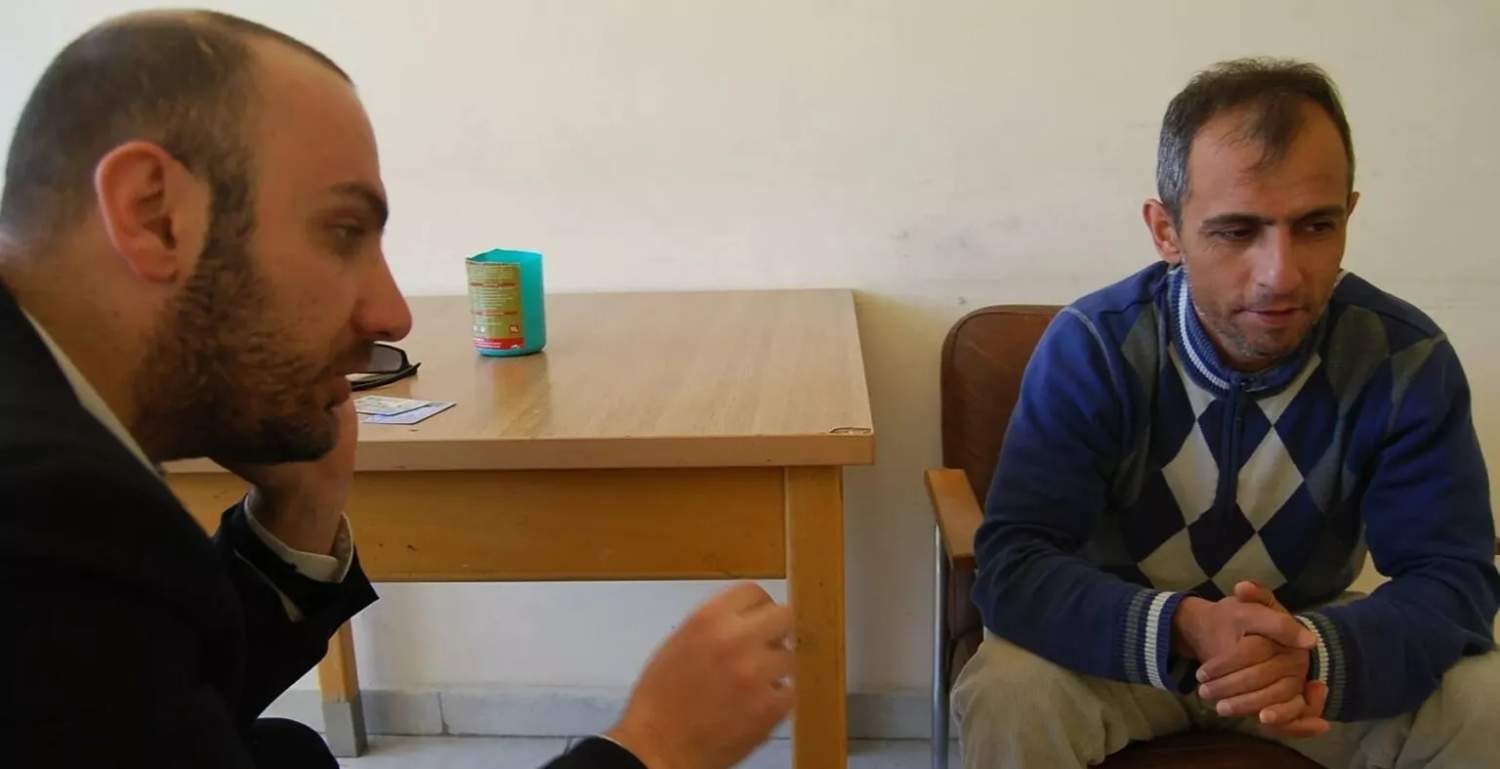
As lawyer Michalis Paraskevas noted in his column published yesterday, Cyprus has in recent years become a refuge for a number of Iranians seeking political asylum — people fleeing the tyrannical clerical regime that rules their homeland.
He added that, as a lawyer, he had personally represented several of them, and singled out what he described as the most emblematic case: an Iranian man who spent years trapped in an exhausting odyssey in search of protection. “This person sacrificed his youth and his very life fighting against an oppressive regime, and continues to this day his own Calvary under difficult conditions in our country,” Paraskevas wrote.
He was referring to Majid Eazadi — a 54-year-old carpet craftsman who fled Iran and arrived in Cyprus as a political refugee in 2001, only to spend years enduring unbelievable persecution and unlawful imprisonment at the hands of the Cypriot state!
I have written extensively about his case. He is the man who once told me that he loves his homeland so deeply that he would walk on water to return to Iran — if only the regime were to change. (I mentioned this in yesterday’s column.)
Eazadi is from the northern Iranian city of Sari. He belongs to the Zoroastrian religious minority, and both he and his family suffered persecution under the theocratic regime.
His is a unique case in Cyprus: the only foreign national whose asylum application was rejected and who then spent almost five years — from 2007 to 2012 — imprisoned in police detention cells and, most notoriously, in the then-infamous Block 10 of the Central Prison, pending a deportation that was not feasible, in violation of every principle of law — as the then-Commissioner for Administration Eliza Savvidou and Judge Myron Nikolatos, who ordered his release in November 2012, both made clear.
In his ruling, Judge Nikolatos described Eazadi’s continued detention pending deportation as disproportionately prolonged and therefore unlawful, given that deportation was not feasible: he held no passport, and the Iranian embassy had refused to issue him travel documents.
Paraskevas concludes his column with a clear moral: “The least we can do as a society is to respect the struggle of these people and never forget why they were forced to leave their country.” Nobody understands that truth more deeply than Majid Eazadi himself.

