


The union leaders’ complaints about the exploitation of third-country nationals in hospitality dug something up from the past. Faces from the long, grinding years I spent reporting on migration.
Faces like that of the Asian man in old Nicosia who owned nothing in this world, not even his own name. They called him “Nikos” at the hotel and at the bakery, where he worked as a labourer, for a crust of bread, as he put it himself. And he worked illegally, because until a few years ago the Labour Ministry only let asylum seekers work in farming and livestock. Never in hotels. Never in food service. Never anywhere that might actually pay a living wage.
He walked into the room of a crumbling old block on Trikoupi Street where I was interviewing the tenants, all students, and sat down beside me. He’d been waiting on his asylum claim for years, and at thirty he looked twice that. His teeth were gone. His cheeks had hollowed out. His cheap clothes hung off a body stripped down to nothing. Only his eyes gave him away: black, burning, still fiercely, stubbornly alive.
The younger men from his country had handed him this strange, unofficial role. Spokesman. Translator. Go-between. Because he was older, because he’d been in Cyprus longer, because someone had to be.
He talked to me in a warm, tumbling mix of half-Greek, half-English, trusting me with people and places back home I’d never heard of. His family, who’d opposed the dictatorship. The ten-year prison sentence for his politics. The escape, the chaos of it, how he’d washed up in Cyprus of all places. The fear, always the fear, of ever going back. We went out and walked towards Onasagorou, him still talking as we passed the shanty huts other migrants had thrown together in the narrow back streets. He counted himself lucky, he said. Two jobs. A roof over his head.
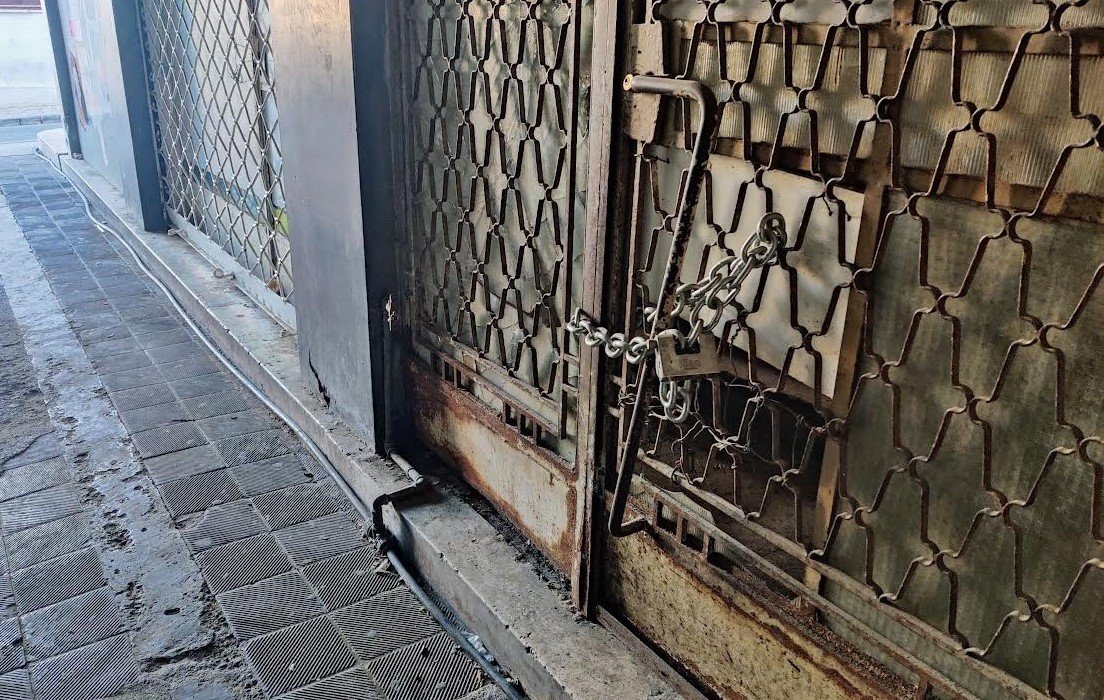
That “roof” was a shared warehouse: one of the city’s old storerooms, built a century ago, the kind with heavy iron doors and rusted metal shutters that make the whole place look like a prison. Cardboard boxes and a handful of cheap odds and ends were his furniture. An old television, his one luxury.
He showed me his passport. His temporary residence permit. Then he asked me not to use his name. Not to photograph him. He wanted, it seemed, to exist only on paper. One more invisible man, erased before he’d even arrived, swallowed by a city as hard as it is deceitful.

