


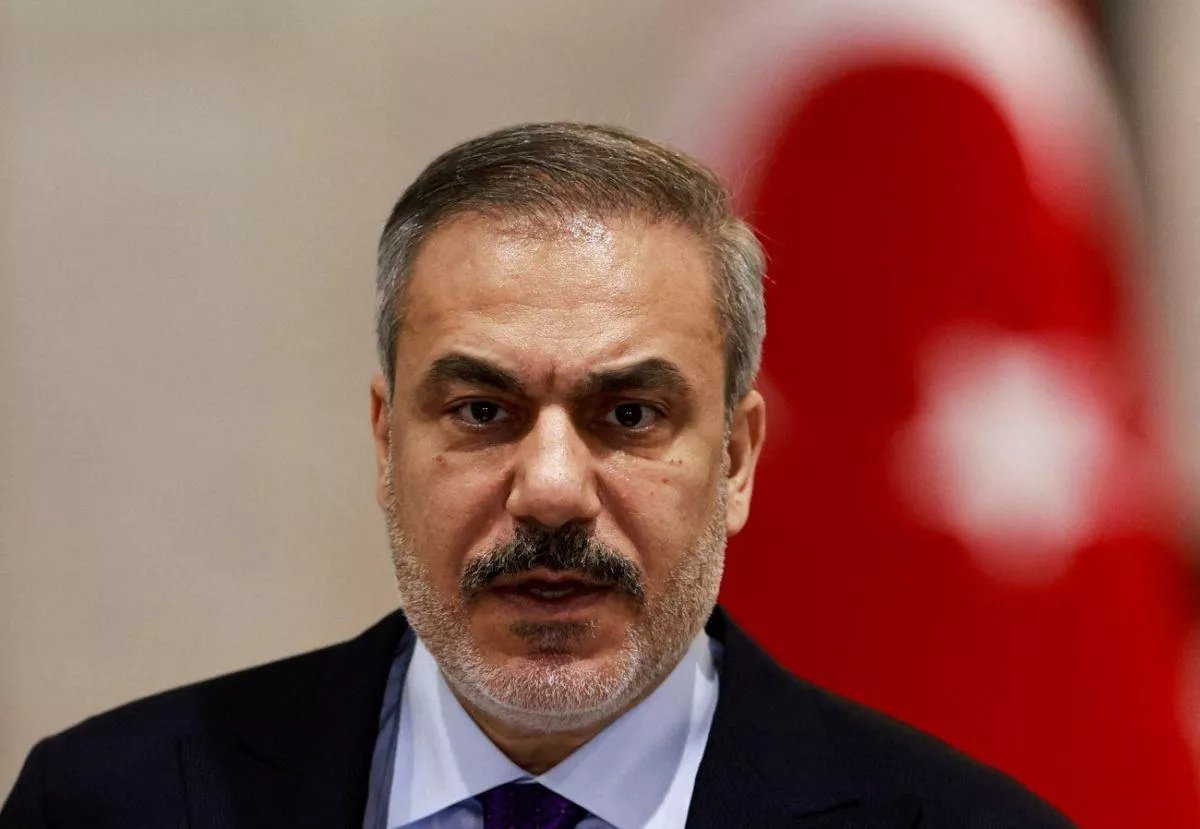
Turkish Foreign Minister Hakan Fidan has again called for a two-state solution in Cyprus, telling a Turkish parliamentary committee that the island has “two separate peoples, two separate democracies and two separate states”, a point he said Turkey stresses at every opportunity. He also warned that Ankara would keep a firm stance against any steps that harmed its national interests and the rights of its kin in what Turkey calls ‘Western Thrace’ and the Dodecanese.
Speaking to the Planning and Budget Committee of Turkey’s Grand National Assembly, Fidan said Ankara would continue its efforts to reach a fair and lasting solution to the Cyprus problem based on what he called the realities of the island, and would defend what he described as the Turkish Cypriots’ just cause at every step.
On Greece, Fidan said Turkey hosted the sixth meeting of the High-Level Cooperation Council in Ankara in February 2026, chaired by President Recep Tayyip Erdogan and Greek Prime Minister Kyriakos Mitsotakis. Ankara’s main aim in its relations with Athens was good-neighbourliness and cooperation, he added, in line with Erdogan’s vision of the Aegean and Eastern Mediterranean as an area of stability and prosperity, not conflict, which required taking into account the legitimate interests of all sides.
According to Fidan, Libya is an integral part of that vision, and under its ‘One Libya’ approach Ankara is actively pursuing dialogue with all sides in the country. He said the unanimous approval on 20 October by Libya’s eastern-based House of Representatives of the 2019 Turkish-Libyan memorandum of understanding on maritime jurisdiction areas showed that Turkey’s principled policy was paying off.
The memorandum was signed in November 2019 by Turkey and Libya’s then Tripoli-based Government of National Accord. After the Libyan parliament’s approval, the EU said the deal violated the sovereign rights of third states and that its position, set out by the European Council in 2019, remained unchanged. Greece, Egypt, Cyprus, Bahrain, the United Arab Emirates and the EU later jointly rejected the approval, saying the memorandum remained null and void under international law.
Turkey’s relations with Egypt developed further in 2026 through high-level contacts and are moving to a strategic level, Fidan added, and Ankara would continue to pursue ties with Cairo based on mutual respect and common interests.

