


The United States and Britain have expressed support for UN efforts to restart Cyprus peace negotiations ahead of informal five-party talks in New York scheduled for late July.
Both countries sent clear messages to UN Secretary-General’s personal envoy María Ángela Holguín, stating they expect the New York meeting to produce concrete steps toward restarting formal negotiations on the Cyprus problem.
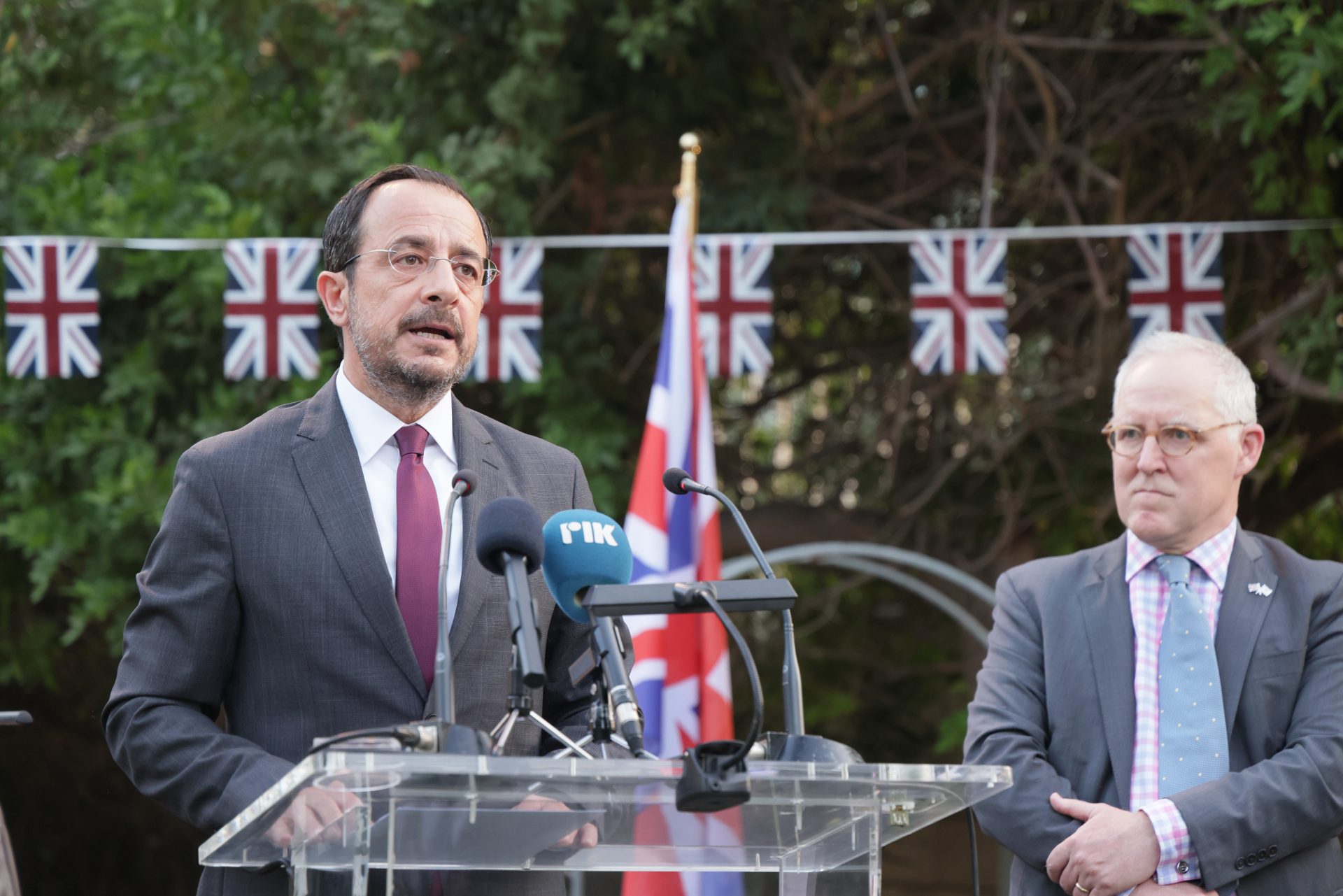
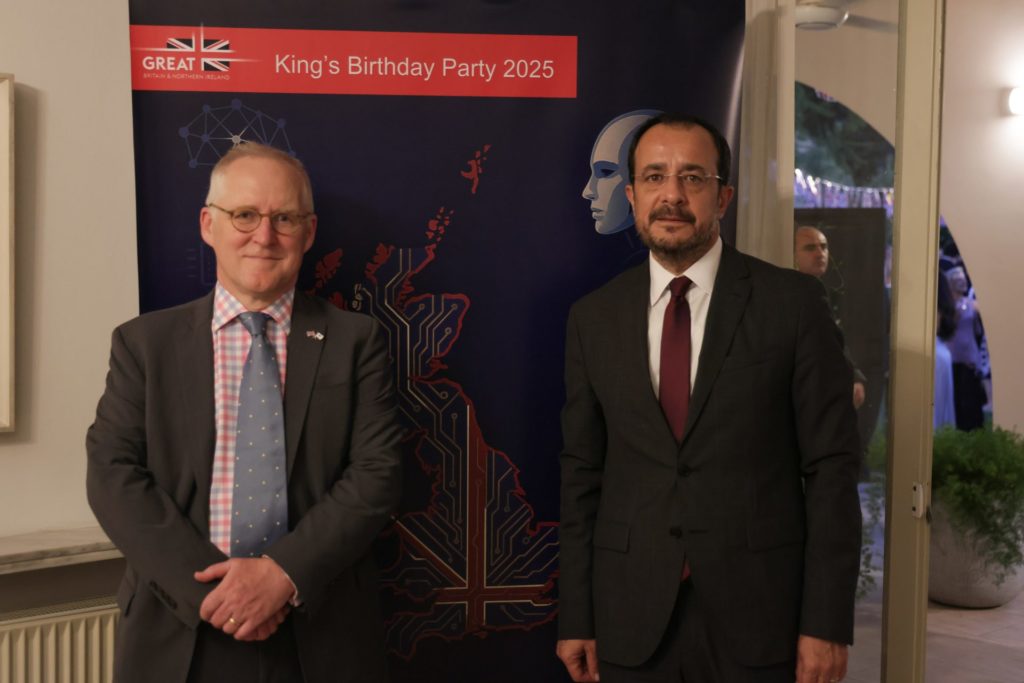
British High Commissioner to Cyprus Michael Tatham told President Christodoulides during King Charles III’s birthday reception on Wednesday evening in Nicosia that the UK “welcomes the fact that we are back in an active phase of UN-led diplomacy aimed at securing a long overdue settlement to the Cyprus issue”. The UK, Tatham said, “will do its utmost to support that process, including at the upcoming 1+5 meeting in New York next month.”
US echoes support for peace process
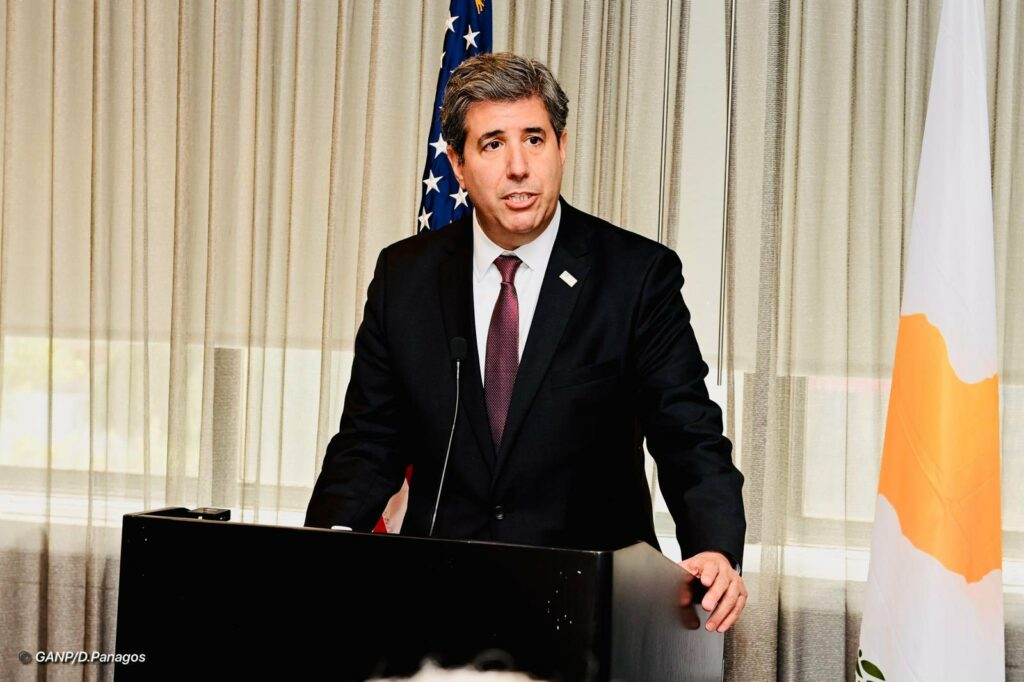
US Deputy Secretary of State Michael Rigas expressed similar sentiments during the 40th PSEKA congress, stating Washington’s hope that “the UN’s Secretary-General’s meeting in July will contribute to a clear path towards a peaceful and prosperous future for all Cypriots”.
The US message that July’s meeting must push Cyprus efforts forward aligns completely with Nicosia’s approach, which has publicly demanded results from Holguín’s mission.
President Christodoulides expressed appreciation for UK support, including through its permanent UN Security Council membership, “in our efforts to restart negotiations for a sustainable, lasting, comprehensive settlement of the Cyprus issue, firmly anchored in the agreed UN framework”.
Objectives outlined
Government spokesman Konstantinos Letymbiotis outlined Nicosia’s clear expectations during the PSEKA event: “We are preparing for the multilateral Summit in July and our goal is clear: to move forward with a decisive step towards restarting negotiations.”
“Restarting negotiations from where they stopped at Crans-Montana remains our primary objective,” Letymbiotis said. “A solution must ensure one sovereignty, one nationality and one international personality, as defined in relevant UN Security Council resolutions.”
He emphasised any solution must guarantee Cyprus’s independence and territorial integrity “without foreign troops and anachronistic guarantee systems” whilst being compatible with EU law and respecting European Union founding principles.
Letymbiotis rejected “any discussion of a two-state solution or outside the UN framework”.
Bilateral relations
Both events emphasised strengthening bilateral relationships between Cyprus and the two major powers. Christodoulides noted that recent months were marked by “Prime Minister Starmer’s historic visit to Cyprus last December – the first by a British Prime Minister in over half a century”.
Tatham highlighted unprecedented high-level contact frequency between the two countries, noting the leaders met three times in nine months.
Rigas emphasised trade and investment as foundations of US-Cyprus relations, mentioning President Christodoulides’s recent US visit and noting issues like digital transformation, artificial intelligence utilisation, and cyberthreat management are vital for both American and Cypriot businesses.
Regional cooperation framework
The US official highlighted the 3+1 scheme connecting the United States, Cyprus, Greece and Israel for strengthening economic ties, particularly in energy and investments.
“Our longstanding position is that resource development in the Eastern Mediterranean must promote cooperation and provide a solid foundation for stable energy security and regional prosperity. The US first joined the trilateral meetings under the Trump Administration and remains committed to advancing this cooperation,” Rigas said.
He cited the CYCLOPS training centre in Larnaca as an example of broader cooperation, which “has trained hundreds of Cypriot officials and thousands from 20 regional countries in border security, non-proliferation, cybersecurity, maritime security and other issues”.
Both officials emphasised that recent diplomatic engagement represents the highest level of bilateral cooperation in decades, providing strong foundations for supporting UN-led Cyprus peace efforts.
Read more:

