


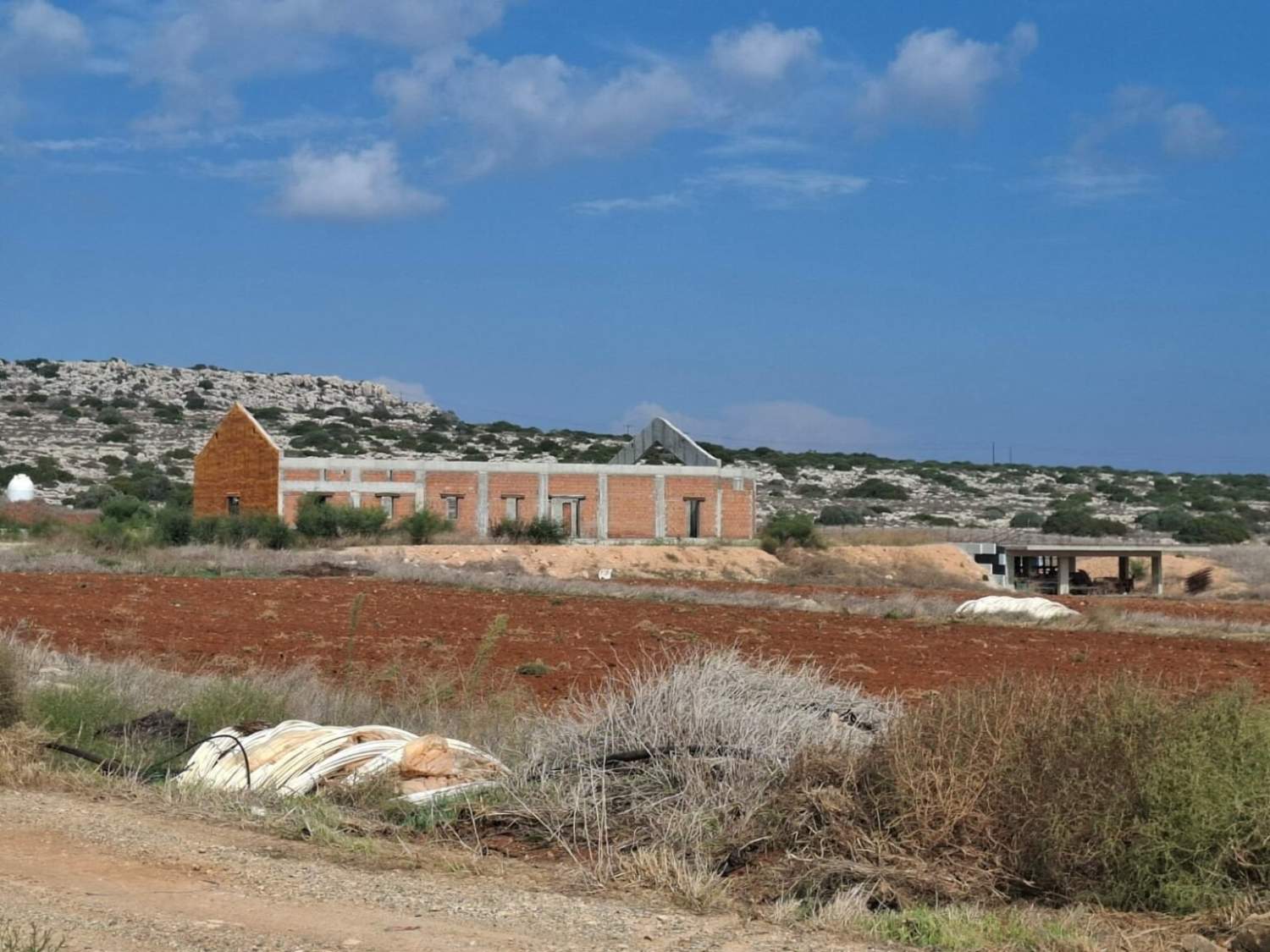
Environmental organisations Terra Cypria and BirdLife Cyprus have urged a planning board to reject an application by the Metropolis of Constantia and Ammochostos to legalise unauthorised works and illegal buildings in the Cape Greco protection zone in Ayia Napa. The board is due to meet on 13 November to take its decision.
In a joint letter dated 29 October, the two groups asked the Interior Minister and the Council for the Study of Planning Exemptions (SYMEPA) to reconsider the case and give the Cabinet a negative opinion. They called on the board to take full account of the facts and the law, and of the reasoned recommendations of the environmental and planning authorities.
The groups said they reserve their rights in any event, as organisations whose founding statutes make environmental protection their main purpose.
SYMEPA voted 4-1 on 16 October to recommend that the Metropolis be granted a planning permit by exemption. The only vote against came from the representative of the Cyprus Scientific and Technical Chamber (ETEK).
The board will meet on 13 November to approve the minutes and take a decision, after the Metropolis asked to submit new evidence. The final decision rests solely with the Cabinet, which is expected to take into account the minutes of the meeting and SYMEPA’s opinion.
Departments opposed
In their letter, which runs to several pages, the groups note that both the Department of Environment and the Department of Town Planning and Housing have firmly opposed the project. The letter says the development conflicts with the general strategy of the Local Plan and breaches nine key planning provisions.
The plot lies in the Cape Greco Landscape Protection Zone (Da1-TKG) and in a Coast and Nature Protection Area, where “absolute protection is required and no development will be permitted”. The letter says the proposed use is incompatible with the zone, is extensive, and does not fall under any of the exceptions that could be allowed. It adds that the development would sit on high natural value farmland within two Natura 2000 sites.
According to the Department of Environment, the intensity and siting of the development, and extensive landfilling on the site, have already caused substantial damage to the natural environment and the landscape.
The application proposes a building ratio of 2,301 square metres and site coverage of 2,529 square metres, against a limit of 127 square metres. It also proposes two storeys instead of one, and a height of six metres against a maximum of 5.5 metres.
It includes a large church of 832 square metres outside the Development Boundary, which the letter says lacks adequate access, does not fit properly into its surroundings and does not meet the zone’s development ratios. Both the place of worship and the social welfare guesthouses are located outside the boundary, which is not permitted, as is providing social welfare services there.
The letter also says the site has no suitable or safe public access, and lies outside the water supply boundary with no adequate private supply secured. No parking is proposed, although 37 spaces for cars and four for people with disabilities would be required.
EU law
The groups argue that legalising the project would be a flagrant breach of the EU Habitats, Birds and Environmental Impact Assessment directives, and of the Cypriot laws that transpose them.
They also point to the case’s history. The Interior Minister had rejected the Metropolis’s hierarchical appeal, upholding the enforcement notice and demolition terms. The Administrative Court then rejected the Metropolis’s interim application to suspend them, finding no irreparable harm or manifest illegality.
Read more:

