


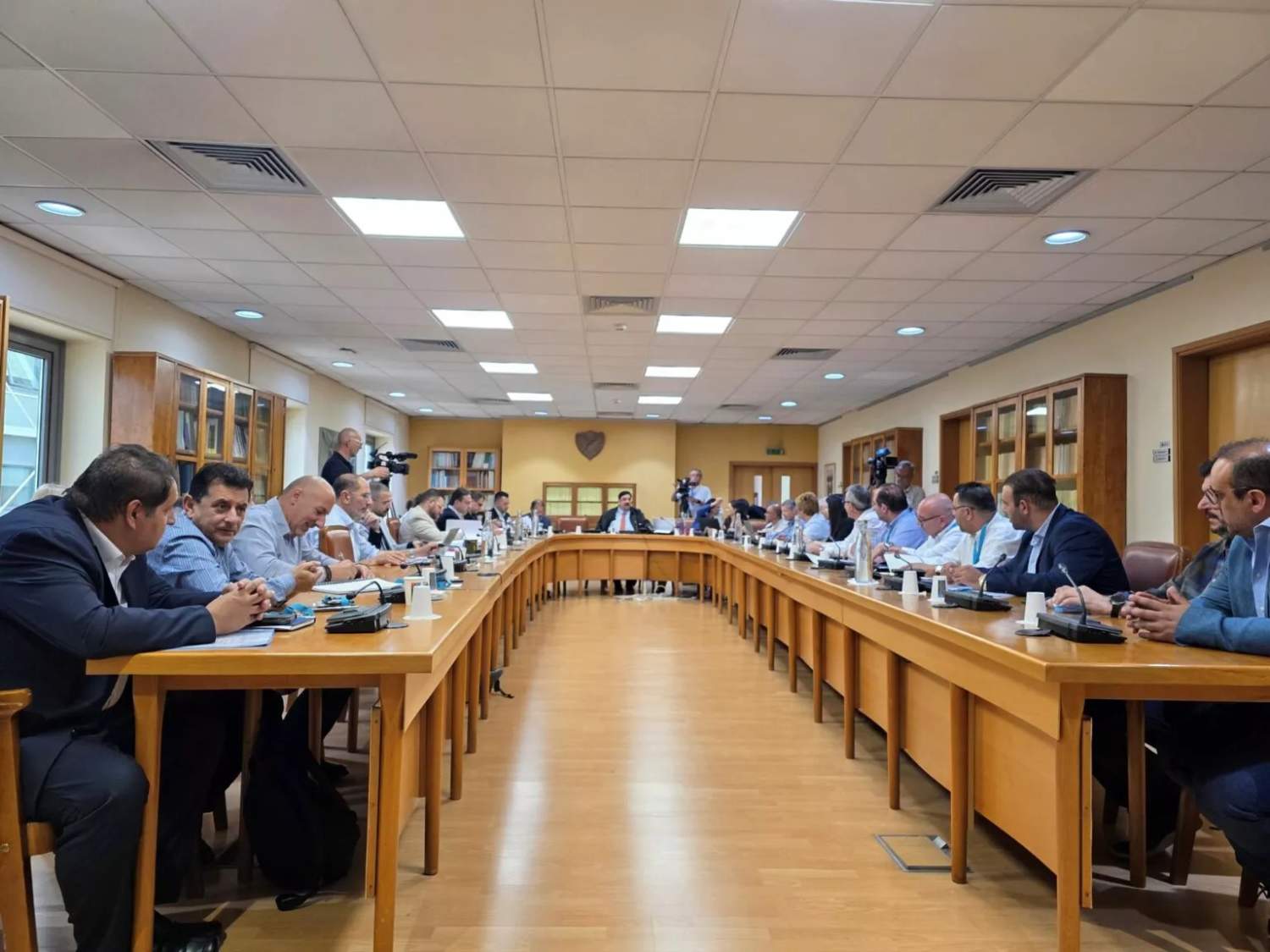
Schools across Cyprus are using about 469 prefabricated classrooms, parliament’s Education Committee heard on Wednesday, as parliament members and other stakeholders raised shortages of sports facilities and problems with accessibility and safety.
They called for more funding, more staff for the Education Ministry’s Technical Services and long-term planning. Ioanna Christou of the Technical Services told the committee they had about 30 staff when they should have 60. AKEL parliament member Christos Christofides said their 2027 allocation was slightly less than in 2011, while construction costs had roughly doubled.
Committee chairman Chrysanthos Savvides of DIKO said three main issues had emerged: a shortage of schools, sports facilities, and access for children with disabilities or mobility difficulties. By a rough calculation, he said, the 469 prefabricated classrooms were equivalent to the needs of about 20 new schools. He said the problem was expected to worsen in pre-primary education as the entry age is lowered further.
Representatives of the Pancyprian Confederations of Parents said there were 69 prefab classrooms in secondary schools and about 400 in primary and pre-primary schools, and that in many cases the temporary solution had become permanent. They said prefabs limited the space children had for play and sport. They also stressed the need for schools to hold the required suitability certificates, and raised funding, school yards, shade canopies, special education and water supply.
Christofides called the prefab classrooms “a scourge”, saying several were problematic or limited pupils’ free space. DISY parliament member Prodromos Alambritis said that in several cases they were meeting permanent needs, and that there had been complaints about rain getting into some of them.
Funding and staff
Christofides said that for years the Technical Services budget had covered only what was absolutely necessary. The problems would continue unless it and funding for school boards were increased substantially, he said, describing the situation as the result of political decisions in previous years.
Christou said the services acted immediately on urgent safety matters, while upgrades and extensions were carried out within the available budgets.
Alambritis said a bigger budget, and more staff for the Technical Services, were key to speeding up construction, maintenance and upgrades. Pupils and teachers needed modern, safe and humane school buildings, he said, from air conditioning and energy upgrades to replacing old or dangerous installations and improving sports grounds.
Safety and certificates
Savvides said the committee had asked the ministry for a full list of schools with suitability certificates, adding that children’s safety was a major issue. Recording the problems was not enough, he said, and clear timetables, programming and planning were needed. Christofides expressed concern at the low percentage of schools that had secured a certificate.
Alambritis asked for updates on seismic upgrades to schools, electrical and fire service inspections, and water quality. ELAM parliament member Polys Anogyriatis referred to Audit Office reports on safety, health and air conditioning in schools, saying problems were still being recorded despite developments and funding since 2024.
Christofides disputed the figure of 95 per cent air conditioning coverage in schools, saying several schools had units that could not be used. He said figures from school boards gave a picture closer to reality.
For the ministry, Ilias Markatzis, head of its Civil Defence, Safety and Health Office, said there were mechanisms to identify risks in schools, and that schools had safety and health committees that were required to carry out checks.
Sports facilities and access
Savvides said even some sports schools lacked the necessary facilities, and some pitches were in effect farmland. He also cited problems with ramps, lifts, accessible toilets and access to all parts of schools.
DISY parliament member Michalis Kounounis said that in several cases schools lacked suitable indoor halls and wooden sports floors, which he linked to pupils’ health and injuries. School sport had stood still while other areas of education developed, he said, and he raised the possibility of involving the private sector in some projects.
Planning
AKEL parliament member Efraim Christou said the ministry’s strategy lacked forecasting, particularly in areas where the population was growing significantly without matching growth in school buildings. He also cited inadequate funding for school boards and work that in some cases amounted to temporary repairs rather than full solutions.
DIKO parliament member Panikos Leonidou said many schools had significant problems. He referred to extensions built without adequate planning, and to areas where the need for new schools had been raised years ago but not yet addressed.
AKEL parliament member Anastasia Chasikou said school visits showed a wide gap between real needs and the pace of upgrades. She asked for a clear picture of which schools urgently needed work and which had been waiting for years, and for the responsibilities of school boards and the Technical Services to be clarified.
DISY parliament member Nikoletta Konstantinou asked how priorities for school projects were set and whether there was a priority list. Her party colleague Andreas Konstantinou referred to growing needs from rising enrolments, and to the changes expected when school boards come under municipalities as part of the 2029 reform.
ALMA parliament member Odysseas Michaelides said it was unthinkable that some private schools were far better equipped than public ones. Public schools that were genuine models showed that, with political will, the state could raise public schools to the standard they deserved, he said. He said what was missing was vision, and asked how many schools met the standards set by the ministry.
Direct Democracy Cyprus parliament member Dimitris Baros spoke of a “fear of responsibility”, saying responsibility had to be taken so that problems were solved quickly.
Unions and school boards
Representatives of school boards raised inadequate funding for maintaining and upgrading buildings and sports facilities, and called for projects to be clearly ranked by risk and urgency. They also raised maintenance costs, progress on suitability certificates and the inspections required for air conditioning units, and said available resources were not always enough.
Myria Vasiliou, president of the primary school teachers’ union POED, said school buildings and equipment needed upgrading, and raised special education, accessibility, overcrowding and prefab classrooms. Classrooms and laboratories were being turned to other uses to meet needs, she said, and prefabs had in several cases reduced the space where children could play. She said the air conditioning target was still pending and that public schools should be models.
Konstantinos Konstantinou, president of the secondary school teachers’ union OELMEK, said the safety of pupils and staff was the most important issue. The union could help record the problems, he said, but the process should not stop there.
Lenos Loizou, general secretary of the technical school teachers’ union OLTEK, said the problems were common to all schools and called for a bigger state education budget, particularly for technical education.
(Information from Cyprus News Agency)

