


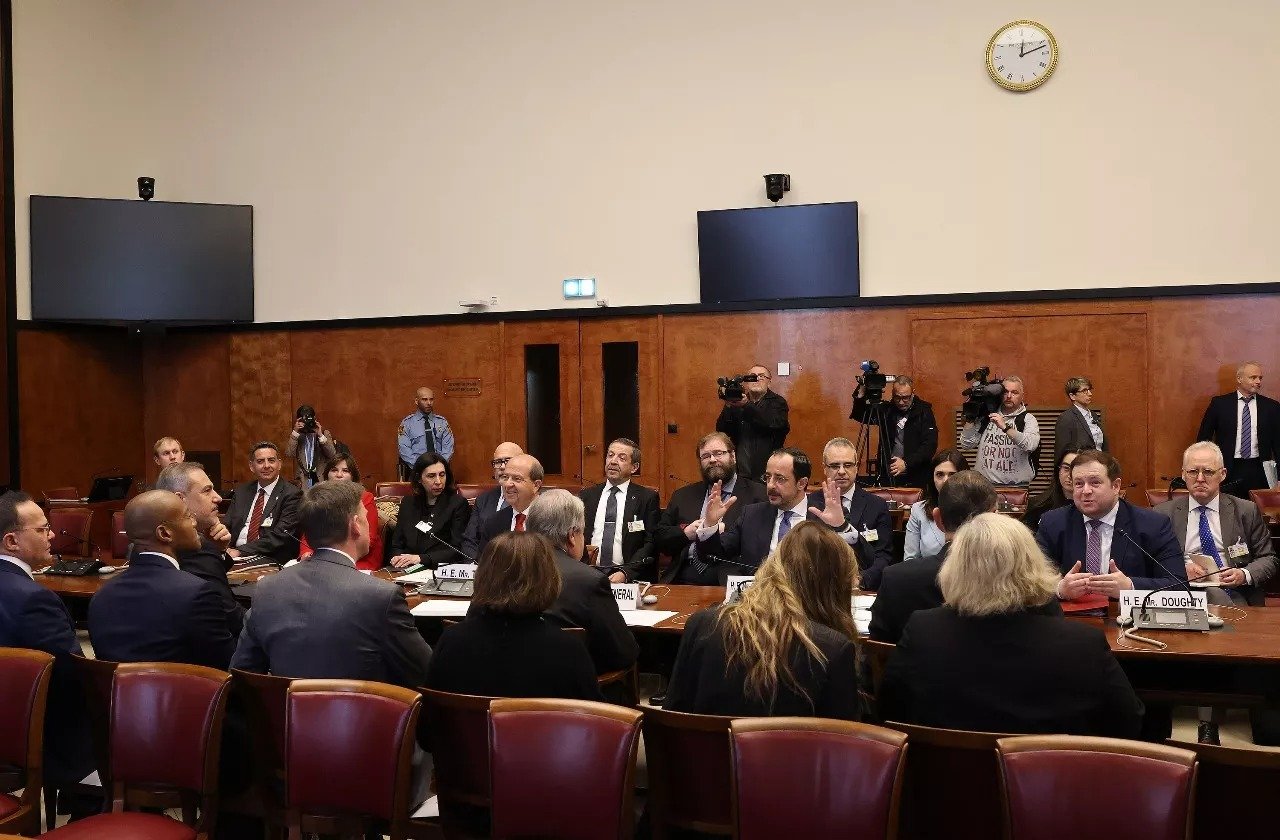
The United Nations has achieved its first positive outcome in Cyprus reunification efforts since talks collapsed in Crans-Montana eight years ago, as the two leaders agreed on confidence-building measures and committed to further negotiations.
UN Secretary-General Antonio Guterres announced on Tuesday that Greek Cypriot and Turkish Cypriot leaders, alongside representatives from guarantor powers Britain, Greece and Turkey, had agreed to open four new crossing points and implement several other initiatives during intensive two-day talks in Geneva.
“Discussions were held in a constructive atmosphere – with both sides demonstrating clear commitment to achieving progress and continuing dialogue,” Guterres told reporters following the plenary session.
The breakthrough represents the most substantial diplomatic progress on the divided island since negotiations collapsed in 2017, with Guterres describing the development as “a new atmosphere” in the Cyprus issue.
Key outcomes from the meeting include agreements on:
- Opening four crossing points at Mia Milia, Louroujina, Kokkina-Pyroi and Athienou
- Establishing a technical committee for youth engagement
- Demining operations
- Environmental initiatives including addressing mining area impacts
- Developing solar energy production in the buffer zone
- Restoration of cemeteries
The UN chief also announced he would appoint a personal envoy to prepare further steps and confirmed a follow-up meeting with the same participants would take place in late July.
When asked if the developments would lead to substantive reunification talks, Guterres highlighted the significance of the current progress: “It’s important to note that from Crans-Montana in 2017 until now, there was no real progress on any aspect, while today substantial progress was made”.
President Nikos Christodoulides’ constructive approach, alongside the engagement of guarantor powers, played a decisive role in the positive outcome, according to diplomatic sources.
Attempts by Turkish Cypriot leader Ersin Tatar to derail the talks reportedly proved unsuccessful.
Tatar’s proposal for a “Cyprus Cooperation Council” – which implied recognition of two separate states – was rejected as outside the agreed framework, with Christodoulides clarifying such a structure could not be discussed.
During the meeting, Tatar reportedly consulted with Turkish Foreign Minister Hakan Fidan after facing resistance to his two-state solution approach.
President Christodoulides told the National Council during a briefing that the period until July would serve as a test for all parties involved.
He also revealed that the European Investment Bank has expressed interest in investing in Turkey, which would signal confidence in the Turkish government – a matter on which Nicosia’s view had been sought.

