


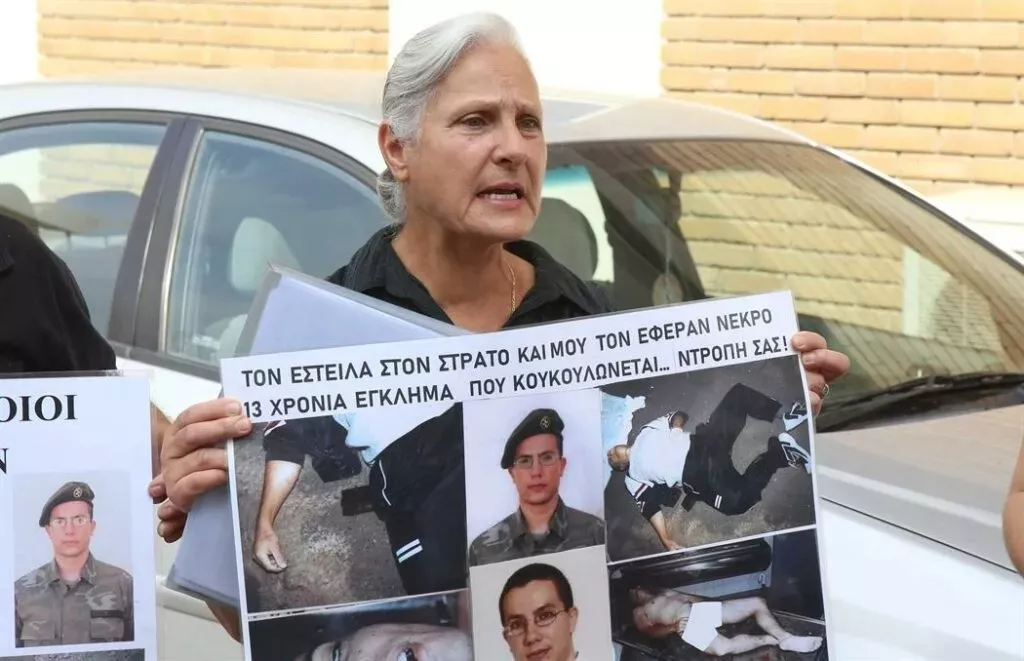
The mother of slain conscript Thanasis Nicolaou has accused the state’s former chief pathologist of orchestrating a criminal cover-up.
Adriana Nicolaou made the allegations against forensic examiner Panicos Stavrianos during a television appearance on Tuesday, following the dismissal of Judge Doria Varoshiotou, who had ruled her son’s death was murder rather than suicide.
“Stavrianos covered up the crime from the first moment,” Nicolaou stated on Sigma TV. “There is testimony that he received a telephone call from an officer to cover up the crime.”
The accusations centre on the September 2005 death of 26-year-old Thanasis Nicolaou, an Australian-Cypriot architect who returned from Melbourne to complete mandatory military service. His body was found under a bridge in Alassa village near Limassol.
Stavrianos initially ruled the death suicide in 2005, a conclusion that remained official for 19 years despite persistent challenges from the victim’s family and criticism from the European Court of Human Rights, which condemned Cyprus for inadequate investigation. The case transformed in 2020 when authorities exhumed Nicolaou’s remains following years of legal pressure from his mother. Forensic analysis revealed a fractured hyoid bone at the neck’s base, indicating strangulation.
In May 2024, Judge Varoshiotou delivered a landmark ruling accepting findings by Greek forensic pathologist Dimitra Karagianni, whom she described as providing “irrefutable” evidence of strangulation. The decision overturned nearly two decades of official suicide determinations.
However, Varoshiotou was dismissed by the Supreme Judicial Council in June 2025 after completing her two-year probationary term, reportedly following disputes with Limassol District Court leadership over separate death inquests.
A March 2025 investigation by lawyer Thanasis Athanasiou and retired Greek police lieutenant Lambros Pappas identified seven individuals bearing responsibility for Nicolaou’s death: Stavrianos, two military officials, and four police members.
Despite these findings, Attorney General Giorgos Savvides rejected calls for criminal prosecutions, citing insufficient evidence. “We recognise the validity of the conclusions of Matsas-Alexopoulos and Pappas-Athanasiou, as well as the report of Mr Koutsaftis and, of course, the conclusion of the honourable, incorruptible Mrs Varoshiotou,” Adriana Nicolaou stated.
She criticised Stavrianos’s continued involvement in subsequent investigations, questioning “what business did Stavrianos have to do? He is supposedly a forensic examiner, not a criminal investigator.” Nicolaou demanded systemic reforms, arguing the Attorney General “should be elected by the people every five years and his officials should also change.”
Regarding Varoshiotou’s dismissal, she asked: “Do you believe the fraudsters who covered up this obvious crime from the first moment? A body intact from a 30-metre fall?” The case has drawn parallels to broader concerns about institutional accountability in Cyprus.
Former investigator Savvas Matsas, who was removed from the case by the attorney general, previously told courts the investigation was “filled with lies, omissions” and represented “an ongoing conspiracy seeking to cover up the case.” Cyprus News Agency reported that judicial dismissals after probationary periods are rare, with Varoshiotou’s case generating significant public attention and calls for transparency from government officials.
Adriana Nicolaou concluded by alleging her son “was killed by drug dealers and traffickers inside the camp and transferred to the bridge,” maintaining her 20-year campaign for justice continues despite institutional resistance.
Read more:

