


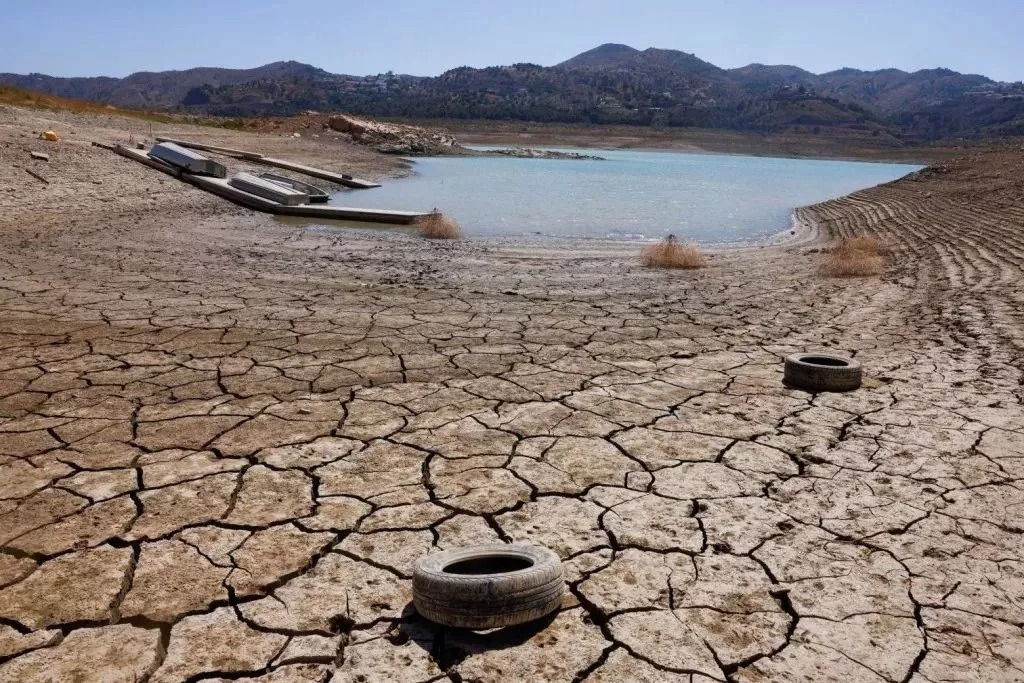
Cyprus is living through its worst water crisis, now staring directly at the threat of desertification. The numbers are merciless and the images from the dams are depressing.
The five desalination plants can’t meet consumption, let alone during the summer months with 4 million tourists.
Government announcements about new desalination plants, the cloud seeding study, major projects planned for water recovery from sewage treatment plants, and the agreement signed with the United Arab Emirates, which the president recently announced when speaking to Phileleftheros, sound promising.
But there’s one gaping wound in the water situation that’s off the table for discussion: major developments and the construction sector. Despite the tragic conditions, securing water doesn’t come before development but after it—usually with emergency measures and expensive panic solutions.
Major developments are licensed and implemented without their water supply being a prerequisite, a criterion for viability.
An average apartment block needs two to four thousand tonnes of water to construct before the building is even inhabited. An average hotel consumes 20 to 30 tonnes of water daily, covering tenants’ needs, swimming pools and gardens.
Add marinas, spas, golf courses, luxury villas, and we’re talking about a development model that in every way dangerously burdens the environment and natural resources.
Meanwhile, agriculture—the sector we supposedly want to support to ensure our food security, and an industry that keeps rural life alive—pays the heavier price. For 2025, the Council of Ministers approved 32.5 million cubic metres of water for irrigation, meaning 37% less than 2024, with the government following EU guidelines, giving priority to households and livestock.
And whilst farmers are being told to become “more efficient”, to change crops and invest in technologies, facing losses every year from catastrophic fires, the question remains: how much development can Cyprus sustain with its available water reserves?
And if all these investments are deemed essential for the economy, what water supply solutions are being built into their construction and operation? How’s the plan progressing, for instance, for installing desalination units in every hotel? We read that just 13 hotels responded and submitted applications for the scheme.
The radio advert explaining how much water we’d save if we reduced our showers by one minute appeals to citizens’ conscience. But at the same time, the water problem won’t be solved by making consumers feel guilty—consumers who, for drinking water, are forced to lug bottles and jugs about or buy extortionately priced water filters.
Without making investments mandatory and water supply plans binding in the tourism and construction sectors, “conservation” will remain a token narrative that masks waste.

