


The parents of a 15-year-old boy who died after being coerced online for 50 days are travelling the world to warn children and families about the dangers of social media — and say their campaign has helped push the British government into banning minors from social media platforms.
Giorgos and Areti Nicolaou lost their son Christoforos after unknown individuals targeted him through a series of escalating online challenges, threatening him and his family if he refused to comply. The couple, who live in London, have since founded the Christoforos Charity Foundation, which now includes 31 families who have lost children in incidents linked to social media and the internet.
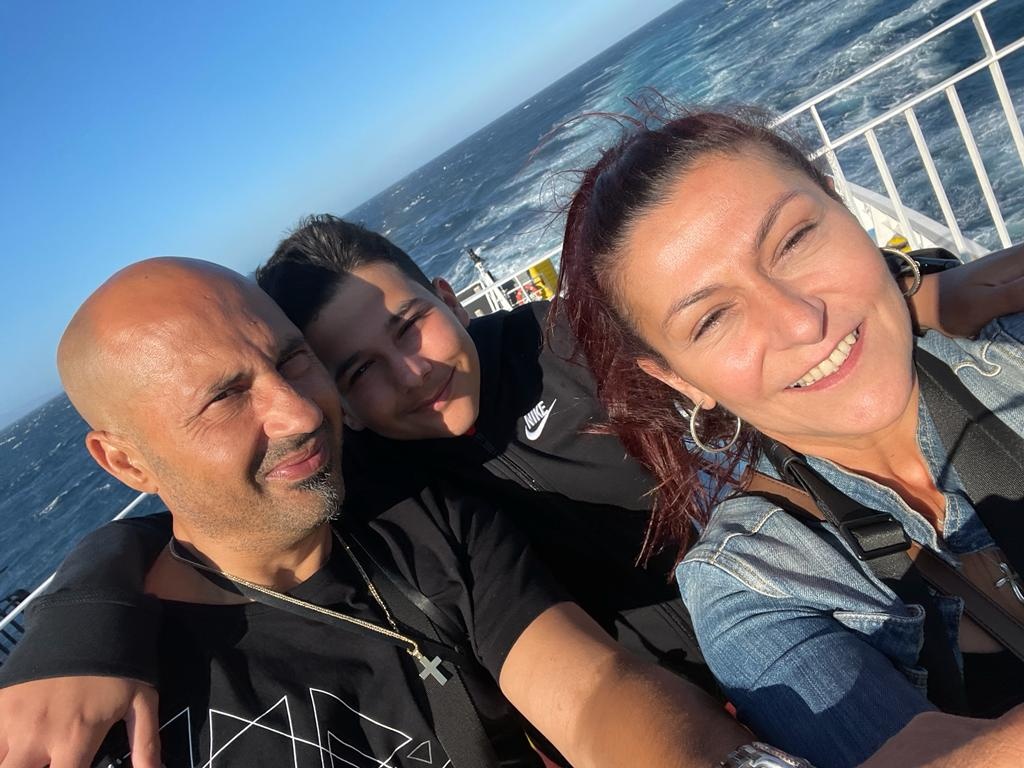
The 50-day nightmare
Giorgos Nicolaou, a Greek Cypriot born in London, told Phileleftheros that the ordeal began when Christoforos clicked on a pop-up offering a free game download while playing online. He was redirected to a site requesting personal details, including his name and address. The boy also asked his father for his passport, saying he needed to fill something in. “Why would I not believe him?” Nicolaou said, explaining he had no reason to suspect what would follow.
He described his son as exceptionally gifted and kind. “Christoforos was our 15-year-old angel. His manner, his character, his behaviour were perfect in every way. He was the best student — smarter even than his teachers,” he said. He added that Christoforos had an IQ of 140, dreamed of becoming an architect, and played video games only on Friday afternoons and Saturdays.
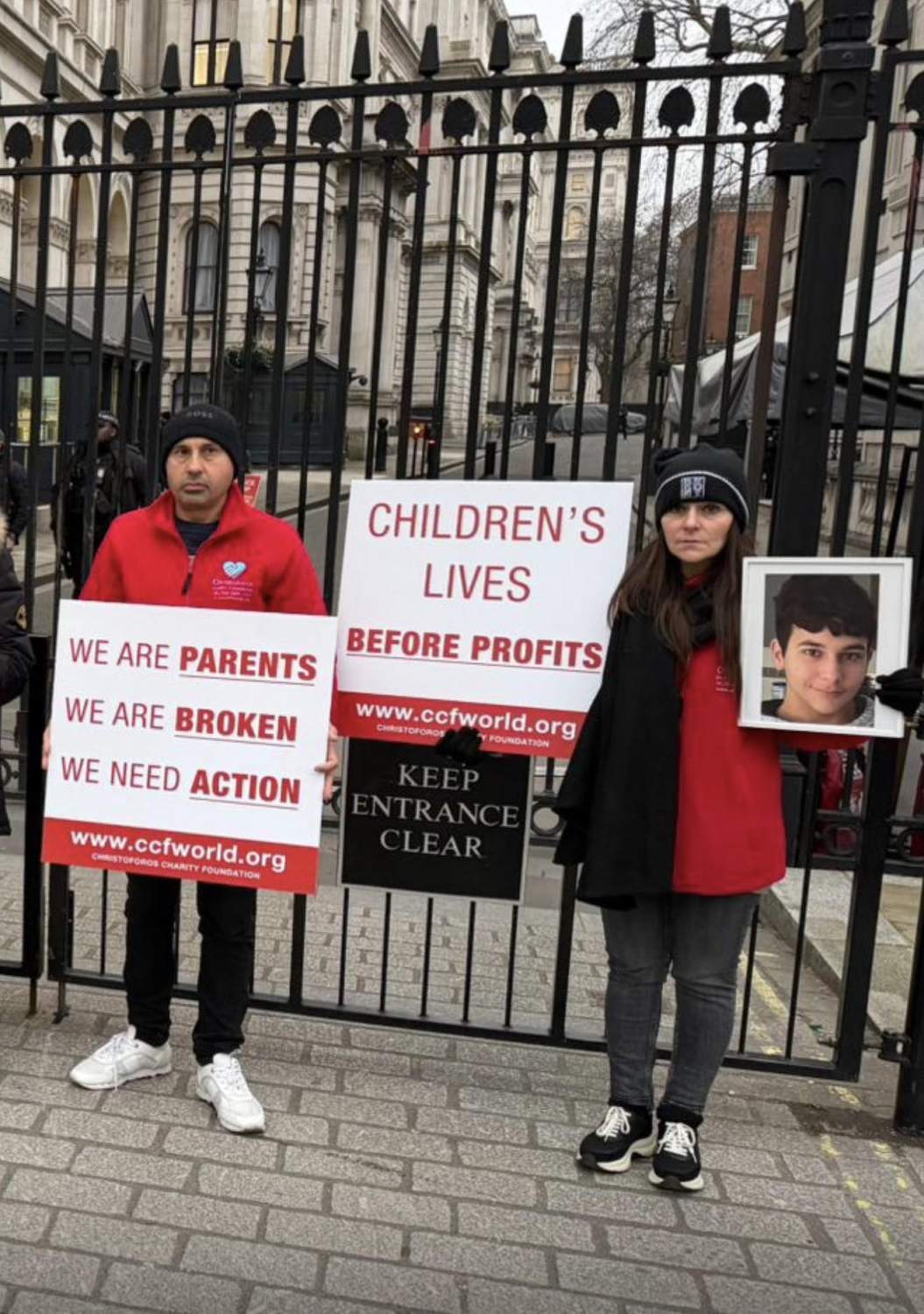
Once the boy had submitted his details, threats began. Unknown individuals told him they would harm him and his family if he did not follow their instructions. “Which child wouldn’t be frightened?” Nikolaou said.
He said Christoforos had been playing Roblox at the time and described the game as, in his view, the most dangerous in the world, saying it contained hundreds of entry points through which, he alleged, predators could access a child’s session without warning. “We do not know why they do it. It is the same as someone going out to stab a stranger in the street. They do not know them, but they stab them. That is what these perpetrators do,” he said. The individuals then contacted Christoforos through the Discord platform.
Escalating demands
The challenges began with seemingly minor demands. “For example, they forced him to eat his cereal in two and a half minutes. I watched him and asked: ‘Christoforos, why are you eating so fast?’ And he replied: ‘Dad, I’m sorry, but I have to,'” Nicolaou recalled.
The demands grew more severe, with the boy ordered to stay awake all night watching horror films and given constant new instructions. “They gave him 50 days to complete them. They threatened him. How could a 15-year-old not be frightened? They told him that if he spoke out they would find out. They made him believe he was being watched at every moment — that they knew where he was and what he was doing at all times. They forced him to disconnect the alarms and cameras in the house, and made him keep his phone on with an earpiece in his ear 24 hours a day. They tormented my child terribly. The challenges kept getting worse. They told him that if he completed the final challenge within 50 days, they would leave him and his family alone. He believed he could save himself — but that challenge took his life,” he said.
Nicolaou said his son appeared on Discord to be communicating with four different individuals, but it later emerged there was only one person behind all four accounts. “They were never identified. How could you find them? It is all on the dark web,” he said.

‘They murdered him’
“Christoforos did not die by himself. They murdered him. That is something the whole world needs to recognise. I am not saying this only for my child. I am speaking for all the children who are lost because of social media,” Nicolaou said.
The foundation
After Christoforos’s death, the family established the Christoforos Charity Foundation. Its 31 members — all parents who have lost children in social media-related incidents — visit schools, give presentations, and organise trips and phone-free activities to help pupils experience social interaction and recreation away from screens.
Nicolaou said the foundation had taken him to Australia, New Zealand, India and the United States. He said many children had told him the talks had helped them understand how dependent they had become on the internet and video games. He described the silence that falls in school halls when bereaved parents speak. “In English we say ‘you can hear a penny drop,'” he said.
Push for a ban
One of the foundation’s central aims is a ban on social media use for children under 16. Nicolaou said the campaign in the United Kingdom had led to a significant decision in recent days. “We managed to persuade parliament to take the decision to ban it. This happened because of us and we are very proud,” he said.
He said implementation was expected to take at least 15 months and that the foundation was pushing for meaningful age verification — not simply date-of-birth entry but stricter identification processes, including facial recognition. “The important thing is that the decision was taken and we will save lives,” he said.

Nicolaou urged parents to speak to their children calmly and in a way that encourages openness, saying it was vital that children feel they can talk about anything happening to them. He also called on parents to set an example by putting their own phones away at mealtimes, during films, and when spending time with their children.
His closing message was stark: “However much we do not want to believe it, harm can happen to any child. That is why changes must be made — right now, this very second.”
Tips from the Christoforos Charity Foundation
The foundation offers the following practical advice for reducing social media use:
- Track your time: use an app to monitor how long you spend on social media each day and set a reduction target.
- Switch off at set times: turn your phone off during family meals, when spending time with friends offline, or when with your parents. Do not take your phone to the bathroom.
- Keep devices out of the bedroom: leave phones and tablets in another room overnight to charge.
- Turn off notifications: constant alerts make it harder to resist checking your phone. Disabling them helps you regain control of your time and attention.
- Reduce how often you check: if you check your phone every few minutes, try cutting back to once every 30 minutes, then 40, then once an hour. Apps are available that can restrict access automatically.
- Remove social media apps from your phone: this forces you to check platforms such as Facebook only from a tablet or computer. If that feels too drastic, try removing one app at a time to see how much you actually miss it.

