


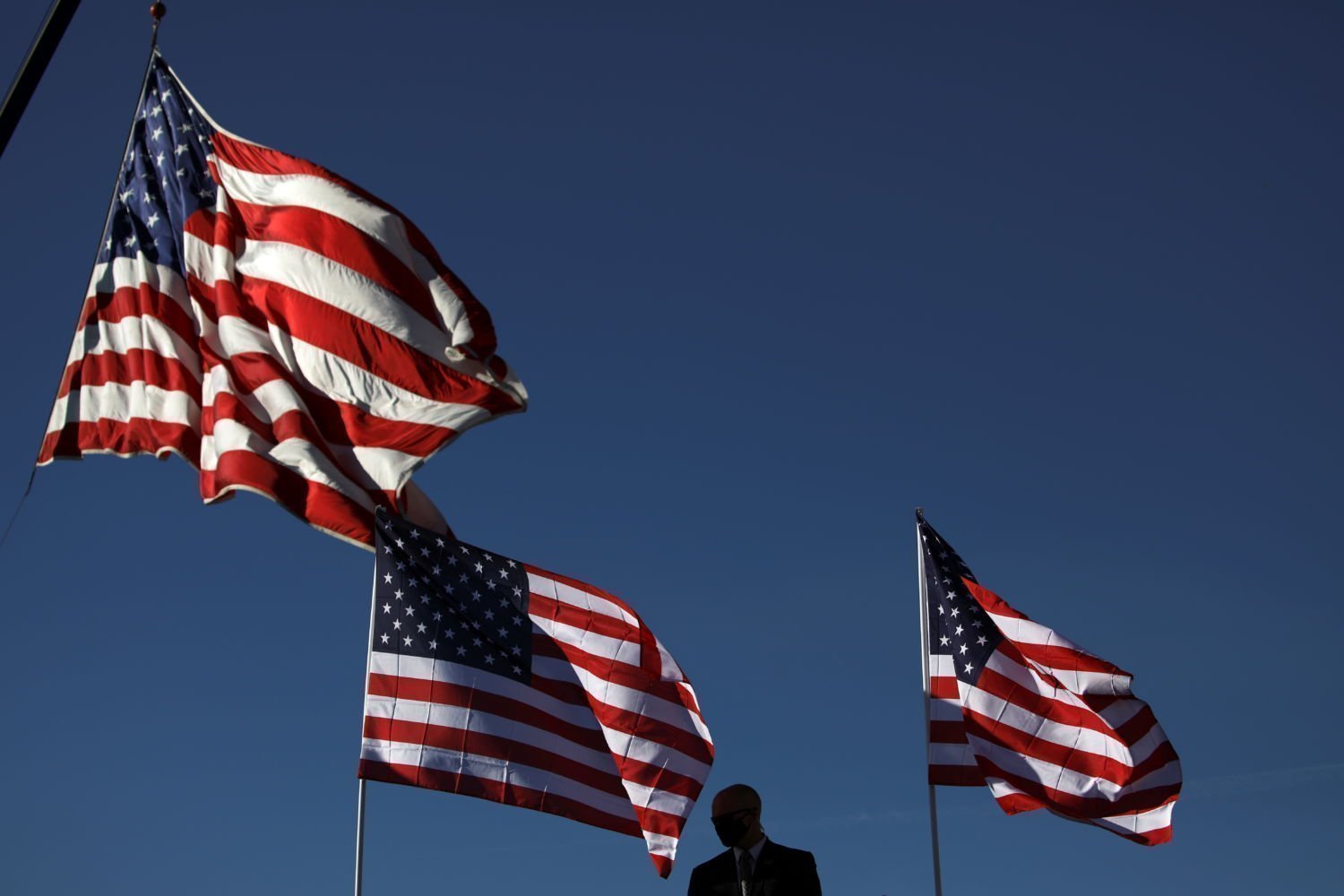
The US midterm elections on November 3, 2026, will determine control of Congress, with all 435 House seats and 35 Senate seats contested. Held halfway through a presidential term, the elections could shift the balance of power in Washington.
Dr. Roberta Haar a political scientist at Maastricht University and Piers Ludlow, a historian at the London School of Economics (LSE) spoke to en.philenews about the deteriorating relationship between the EU and the United States, and how this relationship could unfold in the coming weeks.
Congress, comprising the House of Representatives and the Senate, passes laws, approves spending and oversees the executive branch. A split Congress occurs when the two chambers are controlled by different parties.
For Europe, the central question is whether a Democratic victory could constrain Donald Trump and ease tensions in an increasingly strained transatlantic relationship.
A partnership losing its familiar foundations
Haar stated that, “Europeans are extremely concerned over commitments made by the United States after the Second World War.” The unease, she argues, extends beyond disagreements with the current administration. Europe is finally being forced to confront its own structural weaknesses.
“But I do think that Europeans are running into the same difficulties which are rooted in their own vulnerabilities.” In that sense, Trump’s presidency has accelerated a debate that European governments have struggled to resolve for years.
Ludlow shared Haar’s assessment of a deteriorating relationship. Asked to describe the current state of affairs, he responds with a slight laugh: “I’ll say they are very difficult.”
He argues that European discomfort with Trump has become increasingly widespread. “It has become quite clear that the EU and its member states have collectively and independently become extremely uncomfortable with Trump.”
“They find him erratic,” he added.
Ludlow points to several sources of frustration: Trump’s approach to Ukrainian President Volodymyr Zelensky and the war in Ukraine, his actions concerning Greenland, tensions surrounding NATO and the links between members of his administration and far-right political movements in Europe, including Germany’s Alternative for Germany (AfD).
The result is a transatlantic relationship in which longstanding political and security commitments are increasingly being questioned, even as European governments remain dependent on American cooperation.
The limits of a Democratic comeback
If Democrats manage to regain control of Congress, the implications for Europe may depend less on the scale of their victory than on which chambers they manage to win. For Haar, the distinction is important. A Democratic victory does not necessarily mean a fundamental change in Washington’s approach to Europe.
The Senate is particularly significant in foreign policy, overseeing the confirmation of senior diplomatic and national security appointments, approving treaties and exercising its constitutional role in authorising war.
However, “if the Democrats win all 6 Senate seats up for grabs, then they will certainly have more power” Even then, Haar questions how far that influence would extend, given Trump’s willingness to act independently of Congress.
Ludlow is considerably less convinced that the election will bring meaningful change to the transatlantic relationship, regardless of the outcome. “Even if Democrats get both houses, Trump will probably continue working under executive orders,” he said.
Although Congress can pass laws, control government funding and investigate the executive branch, the president retains significant authority over the conduct of foreign policy and serves as commander-in-chief of the armed forces.
The Trump effect beyond US borders
Ludlow, focuses more closely on the domestic political consequences of Trump’s influence in Europe. He acknowledges the ideological links between American Trumpism and European far-right movements, but says the extent to which this translates into electoral support remains uncertain.
For Ludlow, the relationship between American politics and European voting patterns is also shaped by economic developments. He points to the war on Iran and its consequences for European citizens as a more direct influence on domestic political choices.
“What is clearer is the war on Iran’s direct impact on the economic situation of European citizens, influencing their voting patterns and pushing some towards the far-right or, in rarer cases, the left.”
The distinction, therefore, is between the ideological influence of Trump’s political movement and the economic consequences of international developments under his administration.
Both, in different ways, are becoming part of Europe’s domestic political landscape.
Strategic autonomy: Europe’s unfinished business
Beyond the outcome of the American elections, both interviewees return to a question that has become increasingly prominent in European politics: how can the continent prepare for a United States that may no longer offer the same level of security commitment?
For Haar, the answer begins with overcoming divisions within the European Union. European leaders need to overcome forces that fragment them and finally find a formula that unites them.”
At the centre of this is the development of a European defence structure that would reduce the continent’s reliance on American military support one which could relieve reliance on the United States. Haar pointed to the fact that “it does not make sense for 300 million Americans to pay for the defence of 500 million Europeans.”
Furthermore, the question of strategic autonomy, meaning Europe’s ability to act independently in matters of defence, security and foreign policy, has become increasingly important as confidence in the durability of US commitments has weakened.
Ludlow agrees that Trump has helped stimulate the debate, but draws a distinction between discussing European independence and actually achieving it.
“The EU is still has a long way to go when it comes to durable actions and the enforcement of legislation,” he said.
For Ludlow, the difficulty lies partly in the economic circumstances facing European governments. Building independent defence capabilities requires significant financial resources, while several member states are already struggling with domestic economic pressures and competing spending commitments.
He points to France as an example of the difficulties involved. President Emmanuel Macron has “repeatedly advocated greater European strategic autonomy,” but Ludlow argues that the “country’s dire economic position complicates its ability to deliver on those ambitions.”
For both interviewees, the midterms therefore sit within a much broader discussion about Europe’s future relationship with Washington. A Democratic victory could alter the political balance in Congress, but neither sees it as a guarantee of a fundamental shift in American foreign policy.
Haar’s concerns centre on Europe’s ability to overcome its internal divisions and establish a more independent defence structure. Ludlow, meanwhile, questions whether the continent has the economic and political capacity to turn its ambitions for strategic autonomy into concrete action.
The November elections may change the balance of power in Washington, but the questions they raise for Brussels, about security, political influence and Europe’s dependence on its closest transatlantic ally, seem unlikely to disappear with the results.
Read more:

