


By Matthew N. Hannah, Associate Professor of Rhetoric, Politics and Culture, University of Wisconsin-Madison
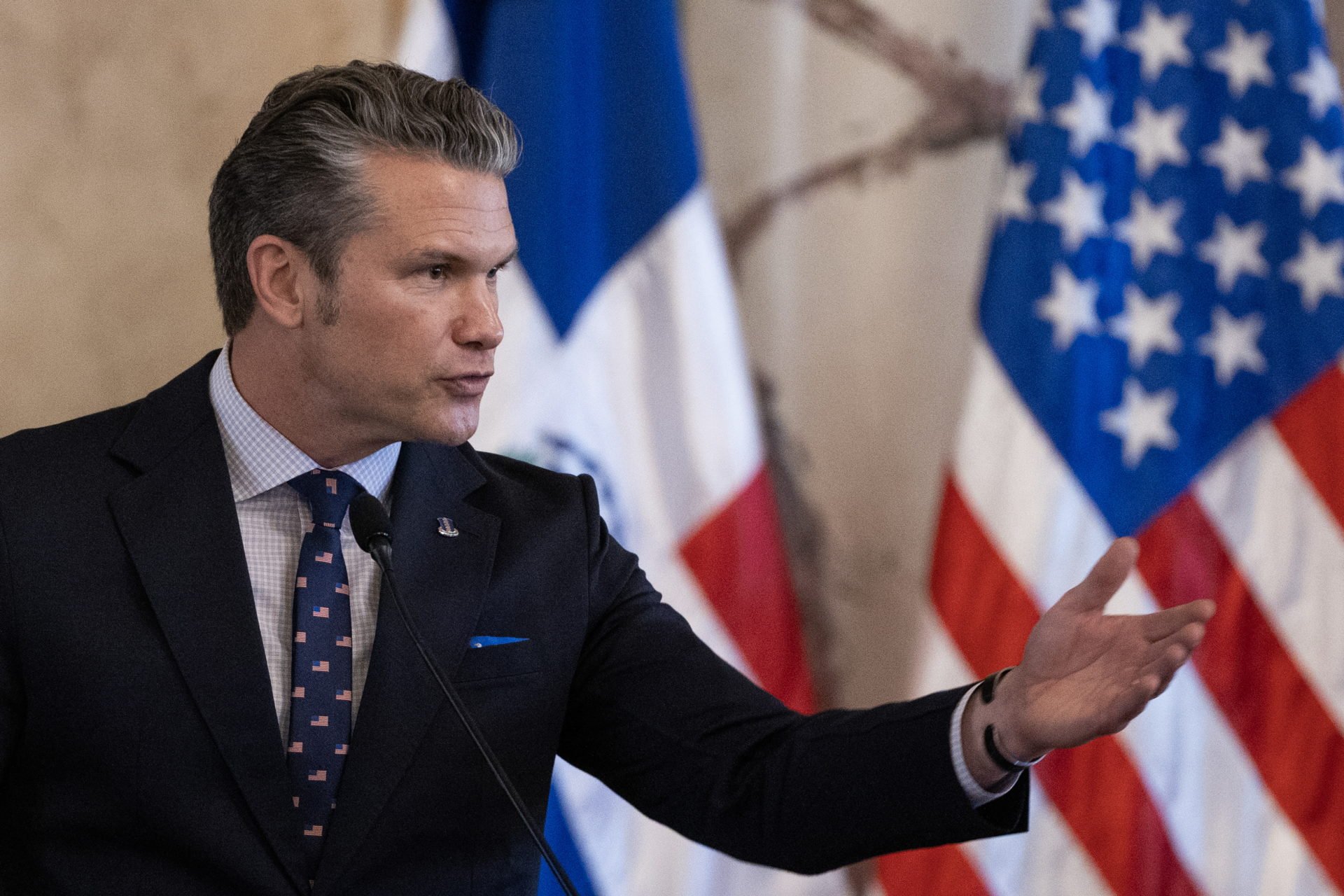
Against the backdrop of an unpopular war in Iran, Secretary of Defense Pete Hegseth announced on July 15, 2026, that the Pentagon would begin testing male service members 30 and older for low testosterone. That, the department later said, would include assessing symptoms of low testosterone such as “reduced libido, loss of spontaneous morning erections, erectile dysfunction, diminished energy and physical performance, impaired concentration, reduced muscle mass, and depressed mood.”
The combination of aggressive masculinity and militarism with the implications of testing for something like “spontaneous morning erections” as necessary for war fighting is emblematic of the administration’s tendency to combine fascist ideas and symbols with outright embarrassing messaging, or what I call “cringe fascism.”
For some time there’s been a contentious debate among writers, historians and public intellectuals over whether Donald Trump’s presidency could be considered “fascist.” Some have argued that such claims are hyperbolic or inaccurate, while others say it is a useful and accurate ideological label.
Either way, it would be difficult to deny that the Trump administration frequently draws from the well of fascist imagery and symbolism in its official messaging.
And that’s where the concept of cringe fascism fits in. In online parlance,“cringe” is a kind of embarrassment by proxy when someone posts something that should be embarrassing but which doesn’t seem to be to them.
For their part, members of the Trump administration have relied on language and symbolism that borrows from the fascist or authoritarian playbook while doing so in a way that commenters often mock as patently ridiculous or embarrassing – or cringe.
But the purported silliness of these ideas, as with Hegseth’s testosterone policy, hides a much more serious – and to some critics, fascist – reality. That, moreover, is why the deployment of cringe can be effective: It can generate enthusiasm among conservative voters by trolling the left while reducing deadly serious policy debates to the level of online memes.
As Americans prepare for the midterms and a surely contentious presidential election in 2028, such considerations of Trump’s authoritarian tendencies are being put to the test. That’s especially true as he consistently threatens the integrity of elections, deploys immigration and other federal law enforcement officers on American streets in a highly contested manner, and attempts to target the press and restrict its access.
Recasting fascist iconography in the internet age
As a scholar of conspiracy theories, I have been amazed at some of the more blatant efforts to repurpose fascist imagery by members of Trump’s inner circle.
Consider, for example, the use of ethnonationalist and fascist imagery of “blood and soil” in sloganeering by the Department of Homeland Security, or encouraging U.S. Immigration and Customs Enforcement recruits to “Defend the Homeland.”
And then there are the attacks on the press as the “enemy of the people,” echoing past totalitarian leaders, followed by Trump’s banning of mainstream media from the White House and the launch of Trump TV as the state channel. Critics view such moves to attack and restrict the press as hallmarks of fascist methods.
Borrowing more obviously from fascist tropes was Trump posting on social media a mock-up of a potential new Space Force uniform. The post claimed to draw inspiration from Paul Verhoeven’s “Starship Troopers,” in which the soldiers are deliberately modeled on the fascist aesthetic and ideology of the Nazis.
The rise of cringe fascism
Alongside the authoritarian and fascist tropes, the Trump administration cannot seem to avoid “cringe.”
Recent examples include the White House tweeting images of Trump as a videogame character on a select screen with sleeveless blue suit and bulging muscles, or sharing an AI parody of the new Legend of Zelda: Ocarina of Time game with an awkward video of a pixelated Trump running around the White House lawn. Or consider the post depicting Trump as Green Lantern, using his magic ring to raise a spectral border wall, launch a military attack and fix American industry.
On the one hand, the Trump administration seems determined to keep his party in power and enact a transformative MAGA policy agenda. On the other hand, Trump seems incapable of avoiding cringey riffs such as his digressions on men’s bodies in ways that seem strikingly at odds with his tough-guy persona. To see the commander in chief waxing poetic about Ohio Sen. Jon Husted’s rear feels deeply surreal.
Trump’s seemingly incongruous comments occur at the same time that the secretary of defense is advocating hypermasculinity in the military through testosterone testing, reflecting a heady mix of masculinity and military supremacy that has long been a hallmark of fascism. Such a policy is also at odds with how the professional military has presented itself under previous administrations.
Cringing our way to the midterms
The mixture of fascist aesthetics with cringe posting underscores the internal contradictions of the Trump administration.
It is difficult to see critics’ view of Trump’s second term as “fascist” when observers get such awkward online displays of silliness. And when official communications from the White House and federal agencies are equal parts tough talk, trolling and cringe, the underlying policies can get lost in the shuffle.
Is is hard to know whether this flood of cringe is always intentional, but it is certainly confusing and hilarious to both Trump’s supporters and his opponents. But that belies what many critics have decried as authoritarian actions by this administration, and these comparisons with fascism continue to animate public discourse.
Masked ICE agents continue to operate with some legal protections from the White House in their sometimes-deadly efforts to pursue and round up people it broadly accuses of being in the country illegally.
Likewise, the DHS announced that ICE agents could be deployed to polling locations, while the agency has reportedly attempted to get access to voter information to investigate alleged voter fraud through increased surveillance.
The deployment of cringe might seems like a ridiculous, even unconscious, exercise by an administration that – as with the five-day tenure of former press secretary Katie Zacharia shows – regularly exposes itself to derision and satire. Yet that’s why the use of such a concept can be so strategically effective: It turns potentially deadly serious policy consequences and ideological choices into a game of memes and online gamesmanship.
(The Conversation via Reuters Connect)
Read more:

