


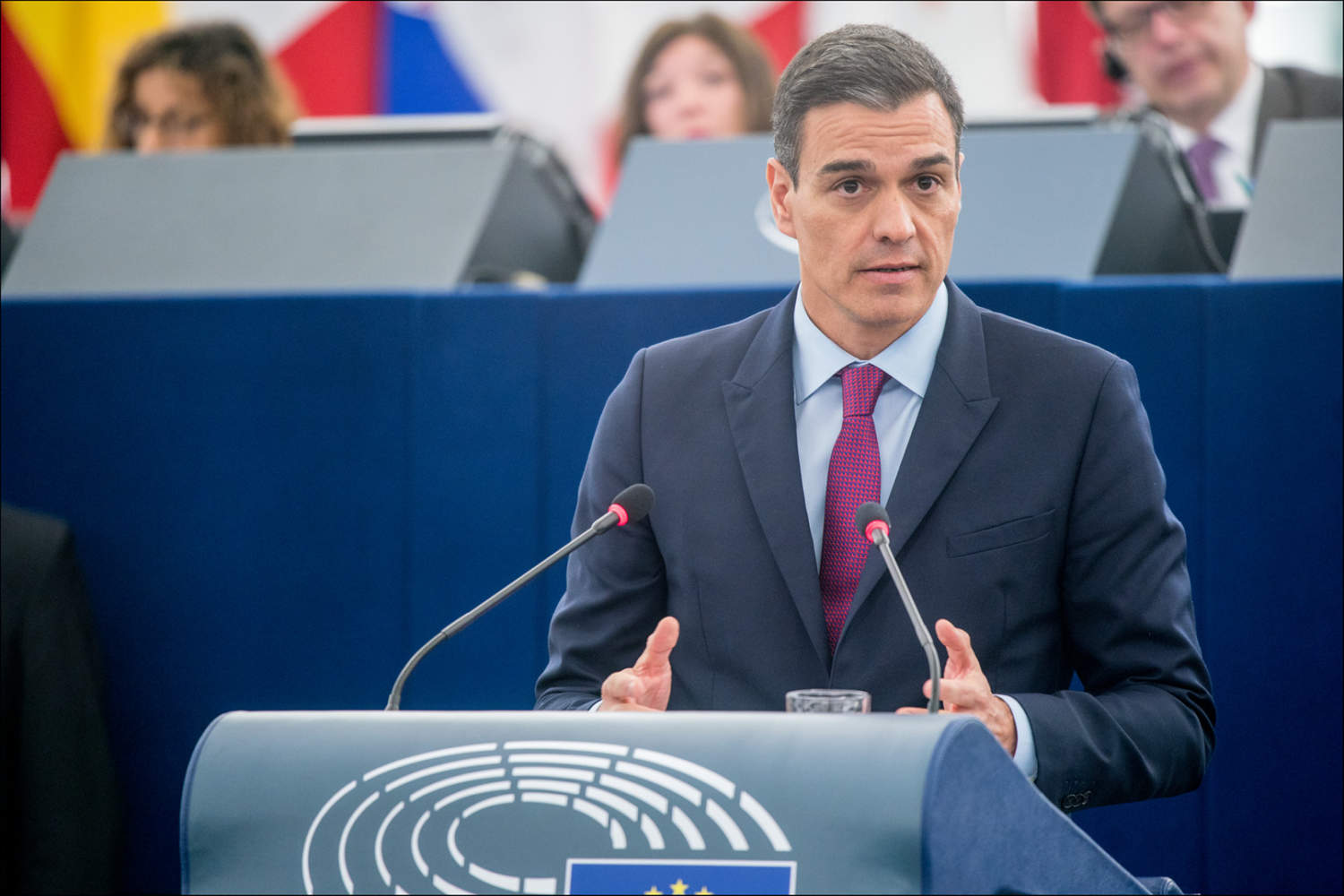
The November 29 vote could bring the far-right and eurosceptic Vox into national government for the first time since Spain’s return to democracy. Housing unrest has given Pedro Sánchez a chance to rally the left, but the coalition of the right with the far-right remains favourite to win, Javier Carbonell, director of Spanish think-tank Future Policy Lab.
However, Carbonell, speaking to en.philenews highlighted that “Sánchez is a master at turning his weaknesses into strengths.”
But as the country heads towards a snap general election on November 29, even Sánchez’s ability to turn adversity to his advantage may not be enough to prevent a shift to the right.
What is at stake?
The election, called by Sánchez on October 5, comes after his minority government failed to secure parliamentary backing for emergency housing measures, exposing its legislative weakness. The prime minister is also facing corruption allegations involving figures close to his administration and renewed scrutiny over public infrastructure following a deadly train disaster.
The vote, originally expected in 2027, could reshape Spanish politics and bring the far right into national government for the first time since the restoration of democracy.
At stake is not simply whether the conservative Partido Popular (PP), led by Alberto Núñez Feijóo, can defeat Sánchez’s Socialist Party (PSOE). It is whether the PP will govern alongside Vox, led by Santiago Abascal, whose growing electoral strength reflects a wider European shift towards nationalist and anti-immigration politics.
For Carbonell, the broad electoral picture has changed less than the fragmentation of the left. The PP and Vox remain the principal forces on the right, while the PSOE is showing some signs of recovery. But parties to the left of the Socialists are struggling to unite, threatening to split the progressive vote.
“The real problem is to the left of the Socialist Party, which is extremely weak,” he told en.philnews. Podemos, once a major force in Spanish politics, has fractured, while competing left-wing formations are failing to coordinate effectively across constituencies.
Even if the PSOE emerges as the largest individual party, Carbonell believes the “combined strength of the PP and Vox is likely to give the right a parliamentary majority.”
Vox’s moment
The prospect of a PP–Vox government would mark a significant departure for Spain, where the radical right has remained outside national executive power since the end of Franco’s dictatorship.
Yet Carbonell argues that such an outcome would also reflect a political normalisation already taking place among Spanish voters as the possibility of Vox entering government is no longer an extraordinary scenario for much of the right-wing electorate.
“The most probable thing is that VOX are going to be part of it,” he states, while cautioning that “the precise balance of power would depend on the election result and negotiations between the two parties.”
According to the recent polling average, the conservative Partido Popular (PP) leads with 31.4% of voting intentions, followed by Prime Minister Pedro Sánchez’s Socialist Party (PSOE) at 27.1%, while the far-right Vox has climbed to 18.9%. The combined support for the PP and Vox stands at approximately 50.3%, potentially translating into around, 195 seats in the 350-member Congress,comfortably above the 176 required for an absolute majority.
Vox’s rise follows a familiar European pattern: dissatisfaction with established political parties, growing concern about immigration and a sense among some voters that mainstream politicians have failed to respond to everyday economic pressures. Immigration, in particular, is becoming a more powerful political dividing line.
Spain has traditionally maintained a relatively positive approach to migration, but public attitudes are shifting and Vox has capitalised on this change, turning immigration into a central element of its political message.
“Nationalism, once another major driver of the party’s support, has become less prominent. Vox initially benefited from opposition to Catalan separatism and demands for greater centralisation of the Spanish state. But Sánchez’s agreements with Catalan political forces have helped reduce the immediate political salience of the independence question, something which could change if Vox enters government,” Carbonell warns.
A PP–Vox administration would therefore represent both a generational change in Spanish political leadership and a potentially more profound ideological shift on a broader European level, as Vox is among the EU’s most vocal critics.
Housing becomes the battleground
Sánchez’s attempt to make housing the defining issue of the campaign offers the clearest example of his strategy to mobilise an otherwise demoralised left.
Spain’s housing crisis has become a major source of social discontent, with soaring rents, evictions and the growing difficulty of buying a home hitting younger people and working households particularly hard. The eviction and subsequent death of an elderly woman, Maricarmen Abascal, became a symbol of the crisis and helped trigger weeks of protests.
On November 11, millions of workers joined Spain’s first nationwide general strike in 14 years, backed by trade unions and tenants’ organisations demanding action on housing costs, wages and living standards.
The mobilisation has given the government an opportunity to shift the campaign away from its vulnerabilities and towards issues that resonate with progressive voters. Parliament subsequently approved a package of housing protections, although its future remains uncertain, with the PP promising to repeal key measures if it takes power.
Carbonell sees the protests as politically important because they mobilise voters who might otherwise stay at home.
“Spain’s right-wing electorate is already highly motivated, while a potentially larger pool of left-wing voters remains disengaged and dissatisfied with Sánchez and the available political alternatives,” he says.
The housing crisis has therefore offered the prime minister an opportunity to bring these voters back into the political process with some early signs suggestive that the strategy is working, with the PSOE recovering some support in the polls.
Carbonell however expects that even if the Socialists finish as the largest party, they could still lack the parliamentary numbers to form a government.
There is another complication: a deadly train disaster, which killed at least 69 people, has shifted attention towards infrastructure, state capacity and the government’s record reinforcing the opposition’s argument that Spain’s institutions are failing to deliver.
A European turning point?
The implications of a right-wing victory would extend well beyond Spain’s borders.
Under a PP–Vox government, Carbonell expects “tougher migration policies, a retreat from some of the PSOE government’s social measures and a less enthusiastic approach to European integration.”
Spain has also been an outspoken voice within the EU on issues including Gaza, relations with China and opposition to Donald Trump’s policies.
A new government could move closer to the emerging European consensus on stricter migration controls, increased defence spending and tighter social expenditure.
For the European socialists, a Sánchez defeat could carry a particular symbolic weight since his government has represented one of the few remaining examples of a centre-left administration willing to pursue a more confrontational, interventionist political strategy.
Carbonell believes the result could intensify an already difficult debate within European social democracy: whether to move towards a more explicitly anti-establishment position or reconsider the political model that has left mainstream centre-left parties losing support. He describes European social democracy as being in a process of “slow death”, gradually losing electoral ground without developing a convincing strategy to recover it.
Spain could become another chapter in that decline, which has been commonplace in recent European politics.
A Vox presence in government would test the PP’s commitment to European integration and reveal how much influence a radical-right coalition partner can exert over national policy.
For Sánchez, the final weeks of the campaign are therefore about more than survival. Housing has given him an opportunity to reconnect with voters who feel economically insecure and politically abandoned. More broadly, the Spanish election may ultimately confirm a familiar European pattern: a mainstream conservative party returning to power with the support of a radical-right partner.
(Source: Democrata)
Read more:

