


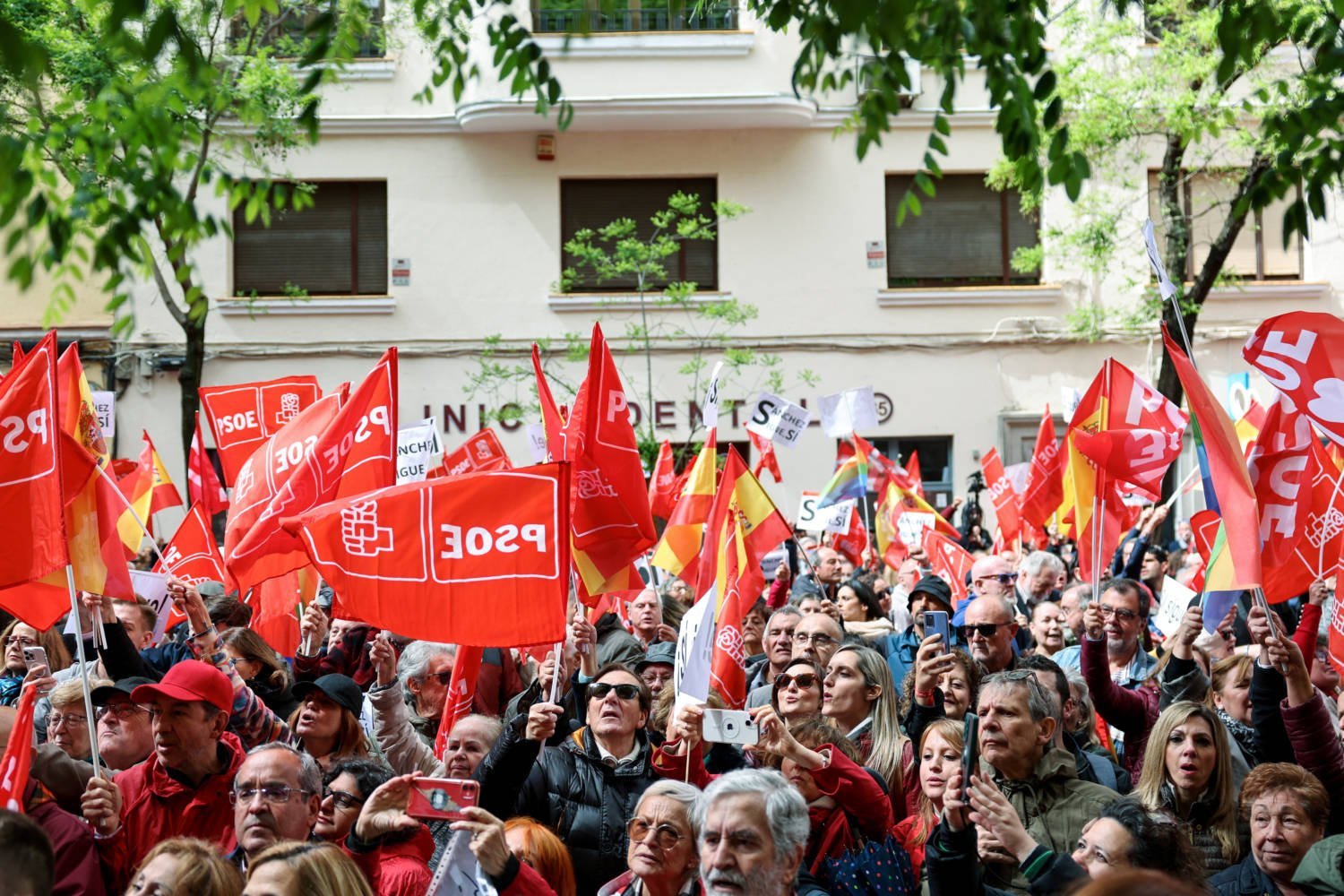
Spain votes on November 29 in a snap election that could bring the conservative Partido Popular (People’s Party, PP) and far-right Vox to power.
With housing costs soaring, public frustration mounting and the opposition gaining ground, the prime minister is betting that the cost-of-living crisis can still save his government.
The result could end one of Europe’s remaining left-led governments and strengthen the position of the populist right across the continent.
With the official campaign beginning on November 13, the latest polling presents a difficult picture for Sánchez. A Reuters report on November 9 found the PP leading the Socialists, with several surveys projecting a combined parliamentary majority for the PP and Vox. One SocioMétrica poll estimated the two parties could secure around 200 of the 350 seats in Congress, compared with 108 for Sánchez’s PSOE.
Although Spain’s economy has consistently outperformed its major eurozone counterparts, with GDP growing by 2.8 per cent in 2025, employment expanding, the headline figures mask a more complicated reality for households.
GDP per capita growth continues to lag, real wages remain below pre-pandemic levels and the cost of essentials, particularly food and housing, continues to put pressure on household finances.
Housing crisis puts Sánchez under pressure
In September, the eviction of 87-year-old Maricarmen Abascal from her Madrid apartment triggered nationwide demonstrations and renewed scrutiny of the government’s record. Tens of thousands protested in Madrid, while tenants’ organisations established encampments in Puerta del Sol and other cities.
Rental prices have increased by approximately 87 per cent over the past decade, significantly outpacing wage growth and placing increasing pressure on younger people and lower-income households.
According to a YouGov survey published on October 30, 53 per cent of Spaniards identified housing as one of the country’s two most important issues, ahead of immigration at 35 per cent and corruption at 28 per cent. Among PSOE voters, 69 per cent identified housing as a major concern.
Sánchez has attempted to place the issue at the centre of his electoral strategy.
Following parliament’s rejection of government housing proposals, he called an early election and subsequently approved new decrees proposing rent caps, temporary eviction protections and restrictions on corporate purchases of residential property.
However, the measures have also exposed the limits of his parliamentary position as the government remains dependent on a fragmented Congress, while opposition parties have challenged the proposed interventions in the property market.
Vox turns immigration into an electoral advantage
While Sánchez is seeking to make housing the defining issue, the opposition is attempting to broaden the campaign around immigration, national identity and government credibility.
The PP, led by Alberto Núñez Feijóo, remains the main opposition force. But Vox, under Santiago Abascal, has become an increasingly important political actor, with its electoral growth raising the prospect that the party could exercise substantial influence over Spain’s next government.
Vox secured 12.4 per cent of the vote and 33 parliamentary seats in the 2023 general election. Current polling places its support at approximately 18–20 per cent, potentially translating into a significant increase in parliamentary representation of almost 200 seats according to Reuters estimates.
Its growth has been fuelled by a combination of anti-immigration politics, opposition to progressive social policies and dissatisfaction with the established political parties. The party has also sought to expand its appeal among younger and male voters, while increasingly using social media to reach audiences beyond its traditional conservative base.
The migration crisis in Ceuta when the arrival of tens of thousands of migrants from Morocco in July intensified debate over border management and immigration policy. Vox used the episode to reinforce its argument that the government had lost control of Spain’s borders.
Abascal has also made clear that support for a PP-led government would come with conditions, including policies of national preference, tighter immigration controls and forced deportations under the party’s so-called remigration agenda.
Vox is represented in the European Parliament through the European Conservatives and Reformists (ECR) political group, placing it within a broader European parliamentary bloc of conservative and nationalist parties.
Its electoral trajectory reflects a wider trend across Europe, where far-right parties have increasingly converted dissatisfaction over migration, living standards and political institutions into support at the ballot box.
A difficult choice for Spanish voters
For Sánchez, the political calculation is becoming more complicated as his international profile has been strengthened by his positions on Gaza, his criticism of Israel’s military campaign and his confrontations with technology executives. On the domestic front, however, corruption controversies and difficulties securing parliamentary support have weakened his position.
The opposition is also benefiting from a broader demand for political change as among PP voters, 22 per cent identified the need for a change of government as their principal consideration.
The November 29 election will therefore be shaped by competing priorities: housing and affordability on one side, immigration, corruption and political change on the other.
For Sánchez, the immediate challenge is to demonstrate that Spain’s economic progress can translate into more affordable lives even though the latest polls suggest the right has the advantage. Whether that translates into power will depend on turnout, the final movement of undecided voters and the ability of the competing parties to mobilise their electoral bases.
(Sources: European Commission, European Parliament, Reuters, Euronews, Datos Espagna)
Read more:

