


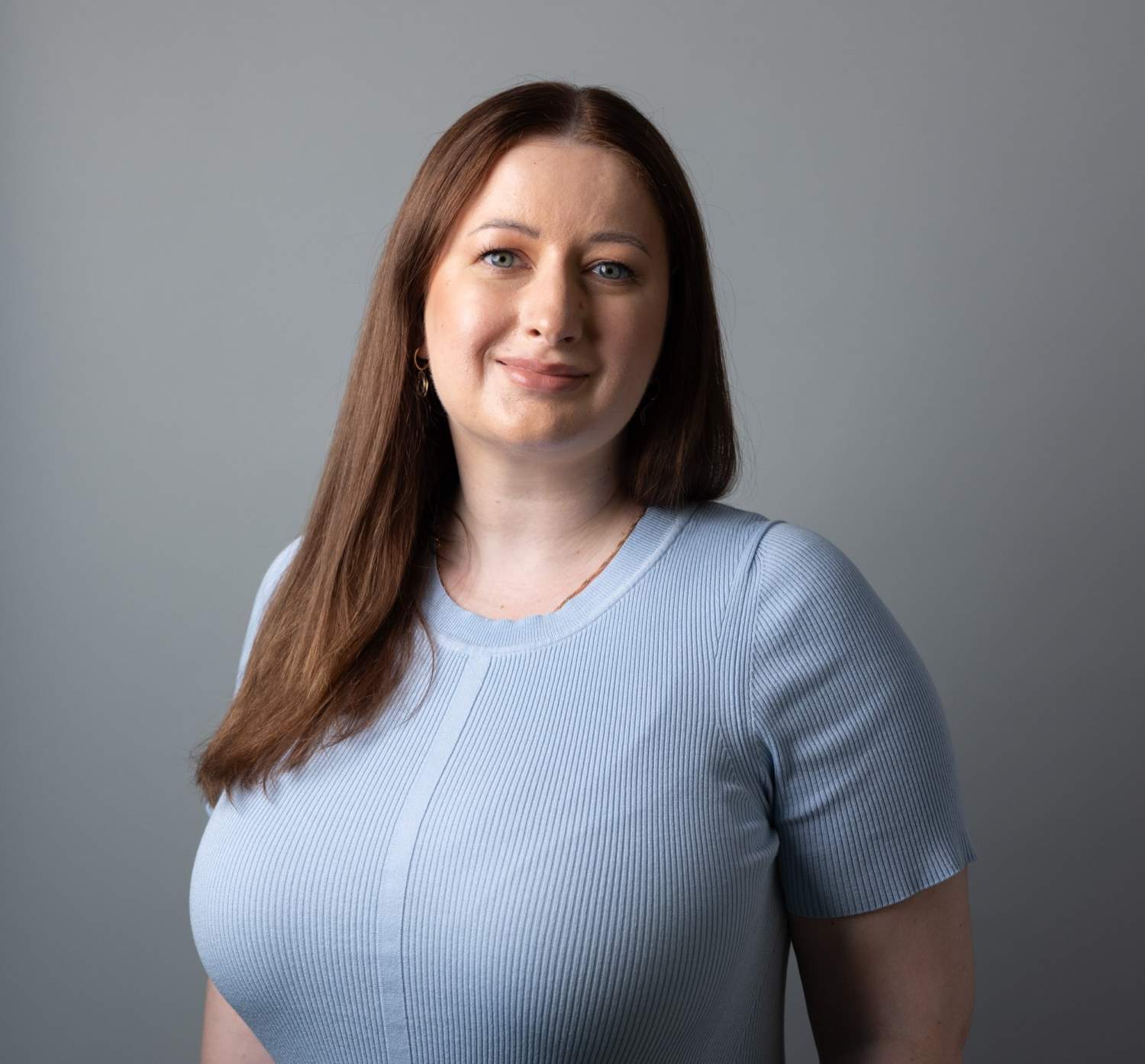
An interview with Valentina Rzheutskaya, Executive Director of Capital.com.
You’ve built a career in a sector that’s still, in many markets, dominated by men. What first drew you to financial services, and to Capital.com specifically?
I came to financial services from a mix of different industries, ranging from real estate and construction, to legal services, media and IT. What Ι kept noticing across all of them was how people actually think when they’re making decisions with money on the line, and what drives them to make the calls they make. That’s what pulled me toward this sector, more than the markets themselves. Capital.com attracted me because of its ‘do the right thing’ culture, which matters to me both as a lawyer and as someone who believes a client-centric approach isn’t optional, and because that same instinct is what shapes how trading itself is designed here, to feel more considered rather than exciting.
How would you describe your role at Capital.com, and what does a typical week actually look like for you?
As Executive Director, I lead the teams that keep us licensed, accountable and growing across more than 15 licences today, from day-to-day governance to the bigger calls on where we expand next. A typical week might mean calls with regulators, scoping out new offices, or sitting in on a hire for a market we’re setting up, It’s less about any single big decision and more about a lot of smaller ones, made consistently, across the team. That’s genuinely close to how we think about trading itself, decision quality compounds over time far more than any single call does.
Capital.com talks about being ‘built for better decisions’ rather than built for faster trading. What does that distinction mean to you personally, not just as a company line?
For me, a good day is measured by whether the people around me, and the traders using our platform, made decisions they can stand behind later, regardless of how the outcome landed, rather than by how much happened. Markets are uncertain by nature, and no one, including us, can remove that uncertainty. What we can do is build an environment where a decision is made with clear eyes rather than under pressure, and that distinction has shaped how I try to lead as well as how the product is built.
What’s the most difficult decision you’ve had to make in your career so far?
Early in my career, I recommended we walk away from a deal that would have looked good on paper, because the way it was being managed didn’t hold up to the standard I was comfortable with. There was real commercial pressure at the time to move fast and make it work anyway, and that pressure is exactly the trap. Being pushed to decide quickly is usually a signal to step back and look again, rather than proof that a fast answer is the right one. Some decisions are only difficult because the easy answer is the wrong one, and I still think about what it could have cost the company if I’d stayed quiet.
Cyprus has become a genuine hub for fintech and financial services. What’s it been like building a career here specifically, rather than in one of the larger European centres?
Cyprus offers something a lot of larger centres don’t always manage, a regulatory environment with real depth alongside a scale where you can still see the impact of your own decisions across the business. The talent pool here has grown enormously over the last decade. Our own team alone is now more than 250 people, and the calibre of financial-industry professionals coming through Cyprus has matured with the market. There is a genuine community of people who take this industry seriously without it swallowing everything else about how they work. That combination is a big part of why I’ve built my career here rather than moving elsewhere.
What advice would you give to a woman early in her career who’s considering financial services, particularly somewhere as technical and fast-moving as trading and fintech?
Don’t assume the technical side is the hard part. It’s learnable, and most people in this industry are still learning parts of it years in. The harder skill, and the one that actually determines how far you go, is holding your judgement steady when everyone around you is reacting to noise. That’s true of markets and it’s true of careers. If I had one practical piece of advice, it would be to find one person early on whose judgement you trust enough to ask the obvious question in front of. In my case, that was a colleague who was highly experienced and thought strategically about everything, and I leaned on that more than I probably admitted at the time, because the willingness to ask it is worth more than pretending you already know the answer.
Do you think the industry has genuinely changed for women in the years you’ve been in it, or is there still real work to do?
Genuinely, yes but not as much as the numbers alone suggest. We have more women on our boards of directors today than we’ve ever had, and that’s genuinely impressive progress. What hasn’t shifted nearly as much is a lingering assumption, in plenty of rooms, that a woman’s presence needs a reason attached to it in a way a man’s doesn’t. Until that assumption is gone, the headcount is only half the story.
What does being recognised as one of Forbes Cyprus’s Power Women in Business mean to you?
It means a lot, and I would rather share the credit for it than take it entirely for myself. Recognition like this tends to land on one name, but it really belongs to my Regional and Legal teams as much as it does to me . They’ve been great, and none of this happens without them. It also belongs to a company that gave all of us room to do the work in the first place, and that is the part I would want people to take away from it.
Looking ahead, what are you most focused on, for yourself and for Capital.com’s presence in Cyprus?
For the business, it’s continuing to build a platform that takes trader behaviour as seriously as it takes trader access, and doing that consistently rather than only when markets are calm. For myself, it’s making sure the teams I lead can open doors in new countries as fast as the business needs them to, so we keep bringing Capital.com closer to our clients wherever they are, rather than expanding only where it’s easiest.
If you could give one piece of advice to your own younger self, starting out, what would it be?
Believe in yourself, and don’t wait for someone else’s permission to reach for what you actually want. I’d tell my younger self that the goals which felt too ambitious at the time were usually the right ones to chase . The hesitation was never really about ability, it was about waiting for a certainty that was never going to arrive before I started.

