


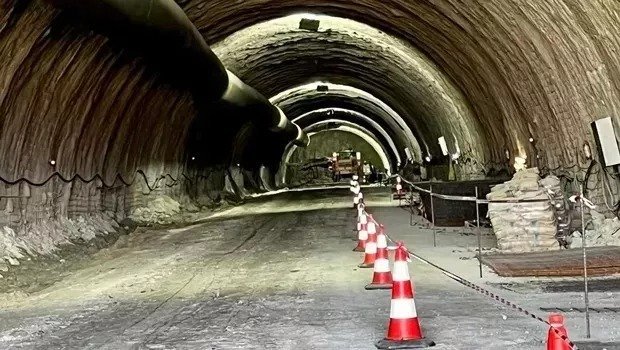
The Department of Public Works has terminated its contract with Greek construction company INTRAKAT for the long-delayed Paphos-Polis Chrysochous highway, a project first conceived in 1997 to serve tourist developments.
The termination comes after INTRAKAT demanded a 59-month extension and an additional 36 million euros, which would have inflated the first phase’s cost from 72.9 million to 108.9 million euros, the department’s director Lefteris Eleftheriou said Monday.
The project’s troubled history reflects a pattern of escalating costs. Initially estimated at 180 million euros in 2005, the budget rose to 260 million, then to 307.5 million, before reaching 867 million euros in later projections, including loan repayments over 20 years. Land acquisition alone, involving more than 1,400 plots, was estimated at 101 million euros.
The original design was ambitious, featuring nine interchanges, seven valley bridges, and three tunnels. The first phase, now only partially complete, was scaled back but still includes two tunnels near Tsada-Kallepia (730 and 290 metres long), five valley bridges, and two interchanges along its 15.5-kilometre route.
Both former Auditors General Chrystalla Giorkadji and Odysseas Michaelides had questioned the project’s economic viability. Michaelides cited traffic studies showing only 10,700 vehicles per day on the existing road, well below the 13,000-vehicle capacity of a two-lane highway.
The Technical Chamber of Cyprus (ETEK) has criticised the route, which begins 6 kilometres outside Paphos city near Ayia Marinouda airport, forcing residents to either travel an additional 12 kilometres or continue using the old road to access the highway at Tsada.
As of May 2023, only 30 per cent of the work had been completed. INTRAKAT blamed unforeseen ground conditions and government delays for the setbacks, claims rejected by the transport ministry.
The Public Works Department has given INTRAKAT 14 days to vacate the site and plans to launch new tenders, with construction expected to take three years.
The project has been substantially downsized from its original specifications, which called for four lanes throughout and more extensive infrastructure. Despite these reductions, the contract termination marks another setback for a project that has faced repeated delays and cost overruns since its inception.
Read more:

