


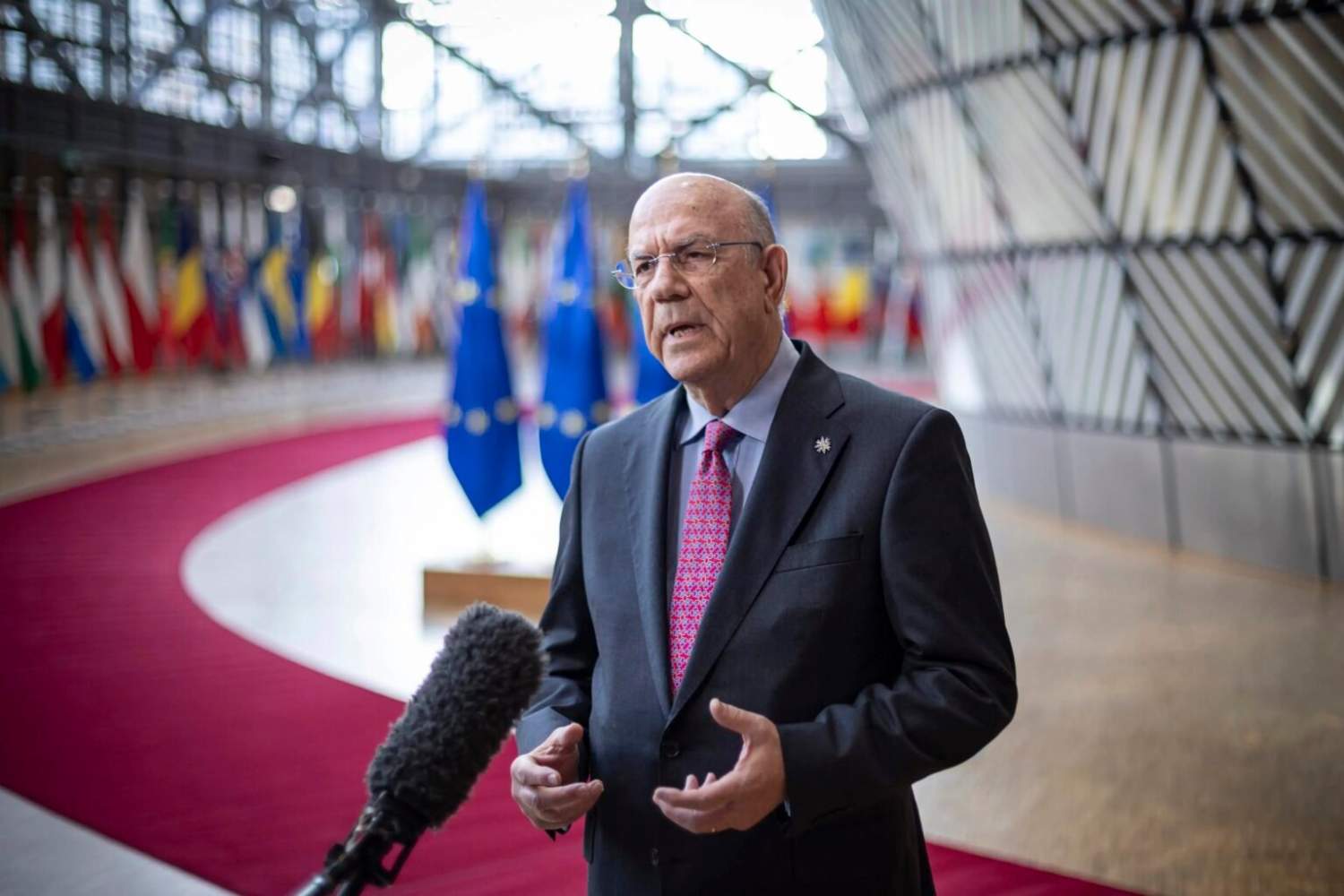
Finance Minister Makis Keravnos has started a process with the European Commission to change how VAT is charged and calculated on electricity bills. In recent statements, he said the current method amounts to double taxation that cannot continue. Keravnos is in Luxembourg for a meeting of the Eurogroup on Thursday and the Economic and Financial Affairs Council (ECOFIN) on Friday.
Households are paying higher electricity bills, partly because of a large rise in heavy fuel oil and diesel prices.
Phileleftheros understands that the Commission initially appeared to view the request unfavourably. Keravnos has been pressing the EU side for some time, citing mainly the good performance of Cyprus’s public finances and the reduction in its debt as grounds for a derogation.
Heating oil
Cyprus is also seeking a further cut in excise duty on heating oil. Keravnos has said publicly that he has started the process of securing an EU derogation to bring the duty below 2.1 cents a litre.
Under recent Cabinet decisions, the duty will fall from 7.4 to 2.1 cents a litre, a cut of 5.3 cents, from 1 November 2026 to 30 April 2027. Phileleftheros understands that the government is prepared to scrap the duty altogether if the Commission allows it.
How VAT is calculated
The amount on an Electricity Authority of Cyprus (EAC) bill depends not only on the VAT rate but on what it is charged on. As the bill is currently structured, the reduced VAT rate of 5 per cent appears to be applied at the end, to almost all the charges that come before it.
According to the EAC’s official explanation of the bill, the charges subject to VAT start with tariff charges at the basic fuel price. These cover, among other things, electricity generation, network use, ancillary services, fixed charges and metering data management. The fuel adjustment and public service obligations are added to give the total before VAT. The charge for the RES and Energy Conservation Fund, which is exempt from VAT, is then added, along with any interest for late payment. VAT is added last.
No details have yet been given of exactly what Cyprus’s proposal involves.
Measures in force
Alongside the heating oil duty cut, the government decided a package of new and extended support measures last week. The new measures cost 70 million euros. Together with measures already in force, the total cost comes to about 160 million euros. The package comes as households face price rises on almost all products, including motor fuel, electricity bills and heating oil.
The electricity subsidy for vulnerable consumers (category 08) and commercial users (category 10) has been renewed for all of 2027. It covers 100 per cent of the price increase for 23,300 households, and up to 85 per cent for about 82,500 businesses.
Zero VAT on fresh fruit, vegetables, infant milk, children’s and adult nappies, and feminine hygiene products will apply throughout 2027.
Zero VAT on meat, fish and poultry has been renewed and extended to bread, milk, coffee, sugar and baby food, from 12 October 2026 to 31 May 2027.
VAT on solar panels for household consumers falls from 19 per cent to 9 per cent. The change takes effect when the relevant decree is published in the Official Gazette of the Republic.
A one-off emergency payment of 200 euros will be paid to 53,511 vulnerable beneficiaries.
The allowance for mountain areas is being increased for 10,500 households and 24,000 beneficiaries. Each household receives an extra 50 euros, depending on altitude, and each person an extra 35 euros.

