


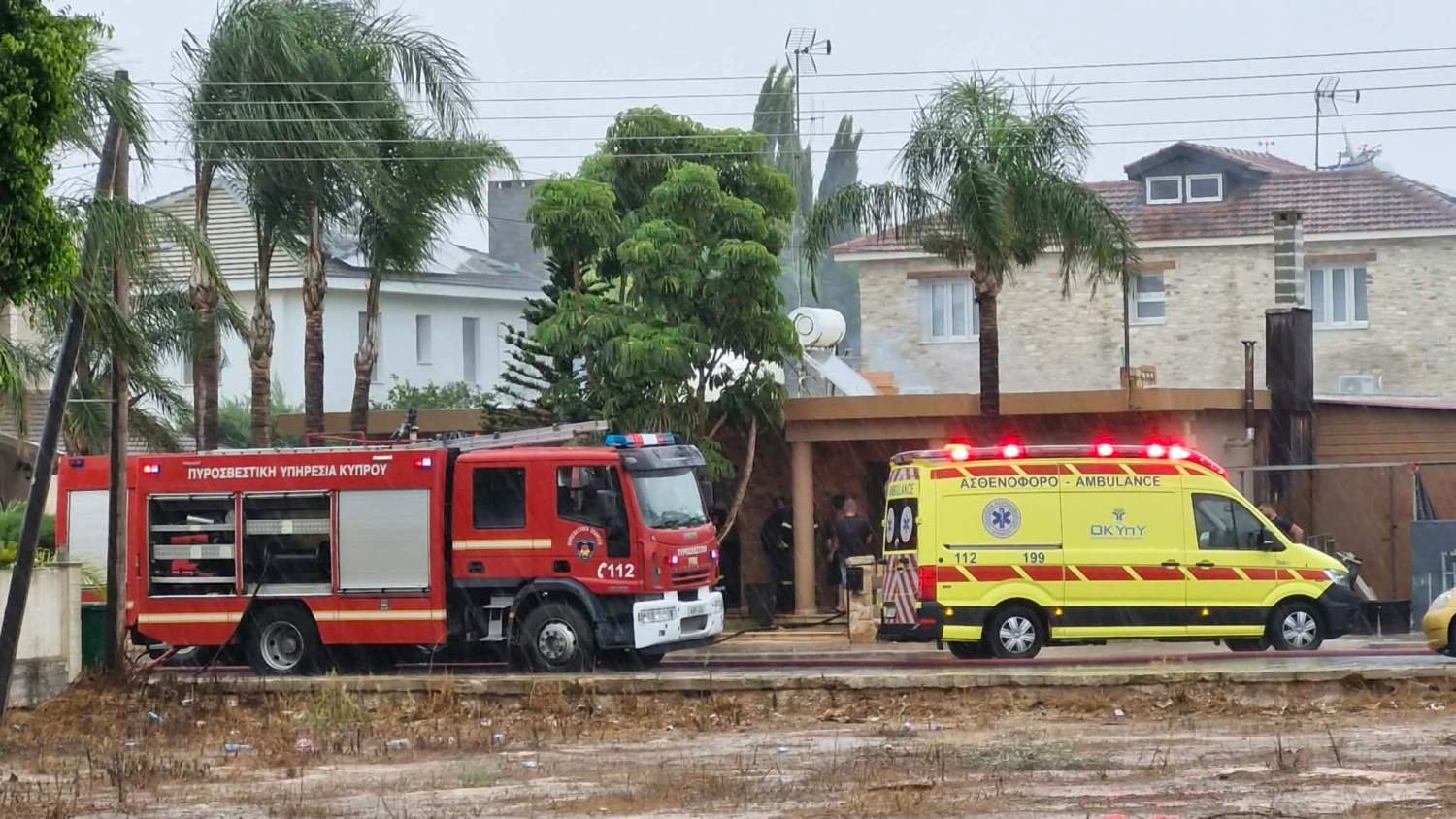
A bill that would rename the Interior Ministry the Ministry of Interior and Civil Protection, and allow the National Guard to help deal with natural disasters, goes before the House Interior Committee on Thursday.
The bill, the ‘Renaming of the Ministry of Interior Law of 2026’, would set up a National Civil Protection Mechanism, headed by a National Coordinator. The mechanism would be the central system for coordinating all government departments and other bodies involved in civil protection. According to an extract from the Cabinet minutes, the bill would also move the Fire Service to the renamed ministry from the Ministry of Justice and Public Order.
The National Guard would take part in tackling natural disasters, provided that its ability to safeguard the Republic’s defence was not affected during any such event.
The Cabinet decided on 4 June 2025 to rename the ministry, and approved the development of the mechanism. The aim is to improve the Republic’s effectiveness at every stage of disaster management. Oversight of the mechanism lies with the Cabinet, to which it reports.
National Coordinator
In a civil protection situation, the coordinator would have sole responsibility for directing everyone involved in a crisis response, “regardless of which service they belong to”. That responsibility would cover the deployment, movement and positioning of forces.
The coordinator could come from the public or private sector. The term could not exceed five years and would be renewable, up to a total of 10 years. It would end no later than three months after the end of the President’s term.
What counts as a disaster
The bill defines a disaster as a destructive event on the Republic’s territory. The causes it lists include earthquakes, landslides or subsidence, floods, cyclones, tornadoes, storms or rough seas, tsunamis, rising sea levels, extreme weather and other natural disasters. The list also covers environmental pollution, water shortage, coastal erosion and desertification, as well as technological accidents, fires, explosions, accidents, shipwrecks, pandemics and epidemics.
The definition also covers any other serious incident whose scale endangers, or could endanger, the life, health or welfare of a significant number of people. It includes incidents with wide-ranging consequences for the Republic’s environment or natural resources.
How the response would work
The bill says everyone involved must be coordinated and directed to improve how crises are prepared for, handled and managed. This applies to crises that threaten life or property, or that require the mass mobilisation of people or resources.
Measures would be activated during or immediately after a disaster or threatened disaster. Their purposes would be to protect people’s lives and health, meet their immediate living needs, provide relief and support to soften the disaster’s impact, and protect property and the natural environment.
The bill also provides for logistics. These cover the supply of food, fuel and materials; the movement and transport of equipment and personnel; healthcare and medical support; camp facilities; and operational security protocols to protect the personnel involved. Each crisis response would conclude with recovery measures to return society, the environment and the economy to normal.
Aims of the mechanism
The mechanism is intended to prevent disasters or reduce their potential impact, and to foster a culture of prevention, particularly through information and education. It should also raise public awareness and preparedness, strengthen cooperation between departments and other bodies, and improve readiness for disasters at national level.
Its other aims are to ensure a rapid and effective response to existing or threatened disasters, including measures to soften their immediate consequences, and to make scientific knowledge about disasters more available and more widely used.
Legal basis
The bill refers to the need to secure a safe, clean, healthy and sustainable environment. It says the state is obliged to take preventive, response or restoration measures under the principle of sustainability.
It also cites Article 23 of the Constitution, which it says protects the right to property, public health and public safety. It argues that protecting the Republic requires an effective response system covering all crises, natural and man-made, in peacetime.

