


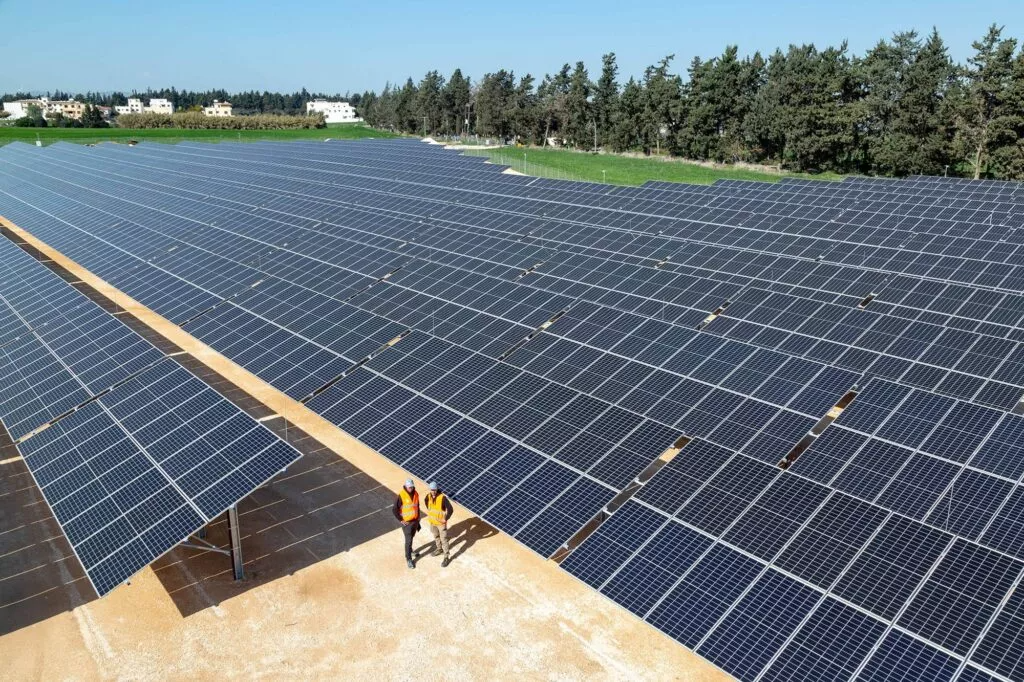
The Electricity Authority of Cyprus (EAC) has issued a statement addressing concerns over the curtailment of energy production from photovoltaic systems, emphasising that such measures are necessary for grid stability and represent standard practice internationally.
According to data cited from the independent Transmission System Operator (TSO), energy losses due to curtailment for small commercial and residential photovoltaic systems amounted to approximately 1% of potential annual production in 2024, EAC said.
This figure is projected to increase to 4-5% in 2025, primarily due to the growth in photovoltaic installations across the country.
Limited financial impact for homeowners
The EAC has provided calculations to contextualise the financial implications for typical residential installations. For an average home with a 4KW photovoltaic system installed under the “PV for All” scheme, with annual production of approximately 6,500KWh, a 5% reduction in annual production would translate to a loss of roughly €12 per billing period.
This potential loss is contrasted with the estimated €240 bimonthly savings such systems typically generate on electricity bills (based on electricity costs of €0.23/KWh).
Grid stability considerations
The authority emphasised the importance of maintaining balance between energy production and consumption for overall system stability.
“In recent years, in pursuit of green transition, the use of renewable energy sources has been encouraged. Incentives provided by the government have led to increased electricity generation from renewables, which was the desired outcome,” the EAC noted in its statement.
The authority explained that under specific conditions when production exceeds consumption, measures must be taken to ensure grid stability. In such cases, the independent TSO issues specific instructions to the EAC to limit renewable energy production.
Curtailment process follows established protocol
Describing the procedural sequence, the EAC stated that following TSO directives, it first reduces conventional generation at the Vasilikos and Dhekelia power stations to minimum possible levels. If demand still remains below production, the next step involves gradually disconnecting large wind and photovoltaic systems.
Only if imbalance persists do authorities implement rotational curtailments affecting smaller commercial and residential installations.
The EAC emphasised these measures are necessary because Cyprus operates an isolated electrical system without the ability to export surplus energy to neighbouring countries, unlike interconnected European nations.
Net metering customers retain benefits
The authority sought to reassure customers participating in net metering schemes that they continue to benefit substantially from their installations despite occasional curtailments.
“Those who have installed net metering systems, which includes most residential consumers, have already ‘stored’ their excess generated energy in the grid. Thus, in the event of PV system disconnection, they automatically use the electricity they have already ‘stored’ in the network,” the EAC said.
Potential solutions mentioned by the authority include electrical energy storage systems (batteries) and the prospective interconnection of Cyprus’s electrical system with those of other countries.
Read more:

