


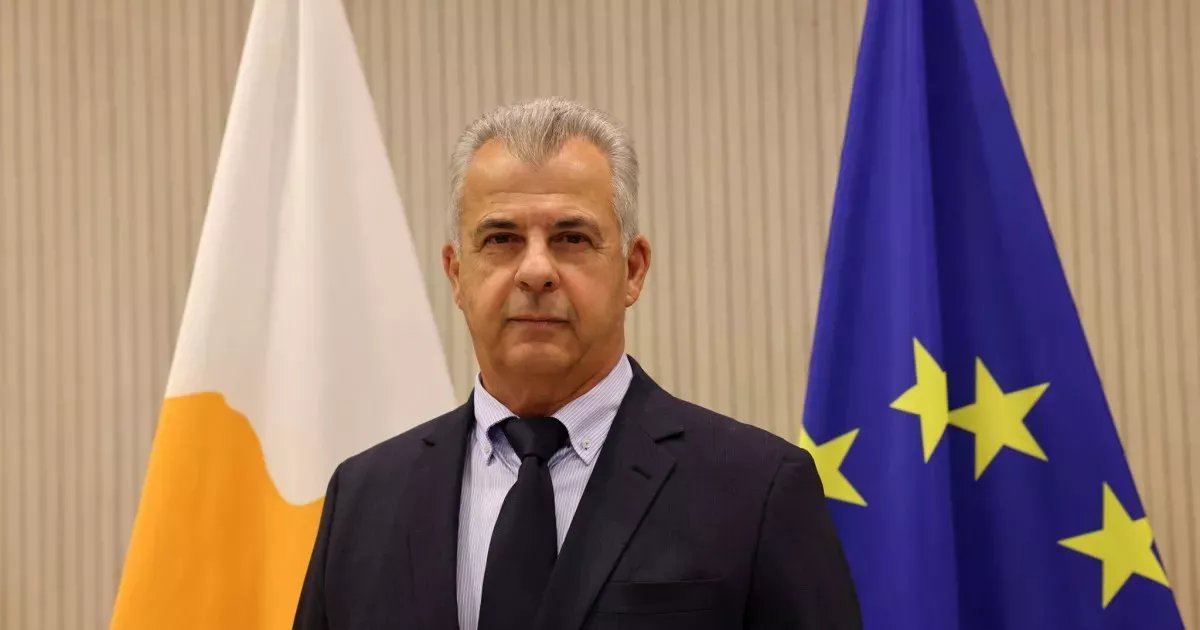
Justice Minister Costas Fytiris said on Monday that legislation allowing phone tapping would return to parliament, telling the House Finance Committee it was a priority because authorities were “one step behind” without surveillance.
Presenting his ministry’s budget, he also said security authorities had information that migrant flows from African countries were expected in the coming period, and that measures were being taken to detect and stop them.
On phone tapping, Fytiris did not say whether the bill would be changed or brought back as originally drafted. He pointed to Greece, saying it had success against organised crime because it had surveillance powers.
The police chief told the committee the issue was a major concern for police, describing the drugs problem as “terrifying” and saying police were working with foreign agencies to tackle it.
Police recruitment
The ministry is considering recruiting police officers on a model similar to the National Guard’s contract soldiers, known by the Greek acronym SYOP, so that they would cost less and be easier to hire, Fytiris said.
Under the National Guard scheme, SYOP are recruited on contract and paid on salary scale A2, with promotion prospects up to A8, plus a monthly allowance of 150 euros, or 250 euros in elite or specialist units. The National Guard has struggled to fill the posts, which compete with better packages offered by the police and the fire service.
Police are currently assigned to duties at morgues, serving summonses and other non-police tasks, he told the committee.
Prisons
A new prisons director will take over next Monday, November 2, the minister said, adding that recruitment had been opened to Europeans because of staff shortages. Work is under way on a system to block mobile phone signals.
On plans for a new prison, he said the ministry was waiting for a master plan to be completed. It will be presented to affected residents to see where they agree and disagree.
The ministry’s prison reforms focus on three areas: the legal framework, security and infrastructure, and staffing. On the legal side, they include a new prisons law and regulations, and legislation introducing electronic monitoring for remand prisoners.
Anti-drone and mobile phone detection systems have already been completed, and a new unified CCTV system is due to be finished in November 2026. The ministry also plans building improvements to tackle overcrowding, along with more recruitment and better training for staff.
Juvenile detention
A detention facility for convicted minors, originally planned for Menogeia, will instead be housed in modern prefabricated units next to the Central Prisons, so that it can be relocated in future, Fytiris added. It is expected to be ready in October 2027. Menogeia will become the police’s central holding facility.
Courts
The design for new courts in Nicosia will be announced in 2027, the minister said.
AKEL Larnaca parliament member Andreas Pasiourtides strongly criticised the delay in building the juvenile detention facility, saying the law providing for it was passed six years ago. He also said justice was dying, as people were discouraged from going to court because of delays in hearing cases.
Plasmapheresis case
Deputy Police Chief Panikos Stavrou said the investigation into the plasmapheresis case, in which Larnaca CID and the Health Services Department are examining whether machines that appear to have been found at a medical centre in the district are being operated illegally, was at an advanced stage.
Legal issues had been identified, he said, and police were in contact with the Law Office of the Republic with a view to the Health Ministry amending the law.
Police investigated the same centre in 2023, after a patient needed hospital treatment for serious complications reportedly linked to a procedure, but found insufficient evidence of a criminal offence.

