


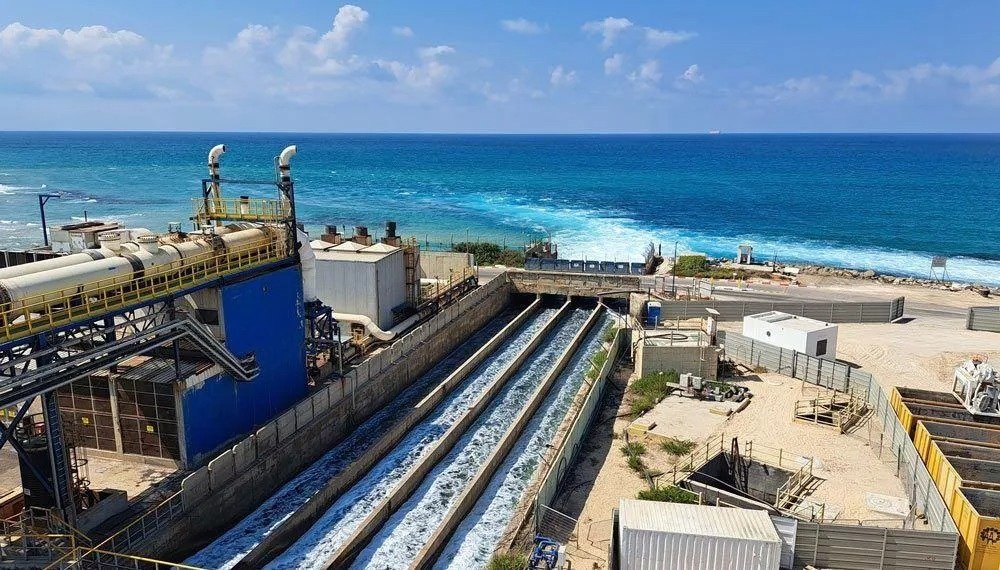
Cyprus’s Cabinet has approved an extensive desalination programme to tackle the country’s worst water shortage in decades, with spending on desalinated water set to hit a record €140 million in 2026.
The government greenlit two new permanent desalination plants and three additional mobile units, following a proposal by Agriculture Minister Maria Panayiotou. Reservoir levels have plummeted to 10.8% of capacity, down from 25.9% at the same point last year.
The Kouris Dam, Cyprus’s largest, now sits at just 9.8% capacity—compared with 23.5% last year—forcing the state to shift towards desalination to guarantee drinking water supplies whilst preserving dam water for irrigation.
Two permanent plants by 2029
The first permanent facility will be built in eastern Limassol with a capacity of 60,000 to 80,000 cubic metres daily. The rapidly growing Limassol urban area currently relies heavily on natural sources including the Kouris Dam and boreholes, with the existing Episkopi plant unable to meet demand.
A second plant will replace the ageing Dhekelia facility, whose contract expires in 2027. The new unit will produce 80,000 to 100,000 cubic metres daily, serving free Famagusta and parts of Larnaca district. Full replacement was deemed more cost-effective than upgrading the old plant.
Preliminary studies for both permanent plants will begin this year, with operations targeted for late 2029. Both facilities will incorporate renewable energy.
Mobile units to bridge the gap
In the meantime, four mobile desalination projects—including units donated by the UAE and operational within three months—will reach full capacity by January 2026, adding 47,000 cubic metres daily. These units, announced in March 2025, will be installed at Moni, Limassol Port, Kissonerga and Garyllis.
Three additional mobile units, each with minimum capacity of 10,000 cubic metres daily, will be installed before summer 2026. The first will go up at Episkopi (Kourion Municipality) within British Bases territory near the existing Limassol plant. A tender was issued on 30 September, with contracts expected late November and a six-month construction period that includes bonuses for delivery within four months.
The second mobile unit will be installed at the Electricity Authority’s Vasilikos power station, supplementing the existing permanent facility. The government aims to issue the tender in November for operation by summer 2026.
The third will be installed in free Famagusta, prioritising Ayia Napa with minimum capacity of 10,000 cubic metres daily, followed by Paralimni-Deryneia to boost water supply to the Protaras tourist area.
Desalination to cover 100% of drinking water
When all seven mobile units are fully operational, they will add 77,000 cubic metres daily to the system—exceeding the combined output of the two permanent plants at Vasilikos and Paphos. This represents a 32% increase in desalinated water production.
The expansion will enable Cyprus to cover 100% of drinking water needs from desalination within months. Currently, five permanent plants produce 235,000 cubic metres daily, meeting 70% of drinking water requirements.
The water authority will later assess whether to convert mobile units to permanent installations or extend their capacity and operating periods, depending on results from an upcoming feasibility study on desalination projects.
Worst shortages in southern districts
Worst-case scenarios for 2026 predict significant shortages in Limassol, Nicosia, Larnaca and Famagusta—areas served by the Southern Conveyor Project. Paphos, which already operates a permanent desalination plant with a mobile unit expected to reach full capacity, is not forecast to face deficits.
Three additional locations are being assessed for future permanent desalination plants to meet rising demand. Total spending on purchasing desalinated water in 2026 is expected to reach €140 million.
Presenting the proposal to Cabinet, Panayiotou said Cyprus faces its most severe water shortage in decades.
The approved projects will guarantee sufficient water for drinking and irrigation without requiring restrictions, she said, adding that the government is moving forward with a plan that respects the environment whilst using every available technological and financial tool.
With reservoir levels at historic lows and rainfall forecasts uncertain, 2026 is shaping up as a watershed year for Cyprus’s water management. The new desalination projects represent the state’s largest investment in the sector over the past decade.
Read more:

