


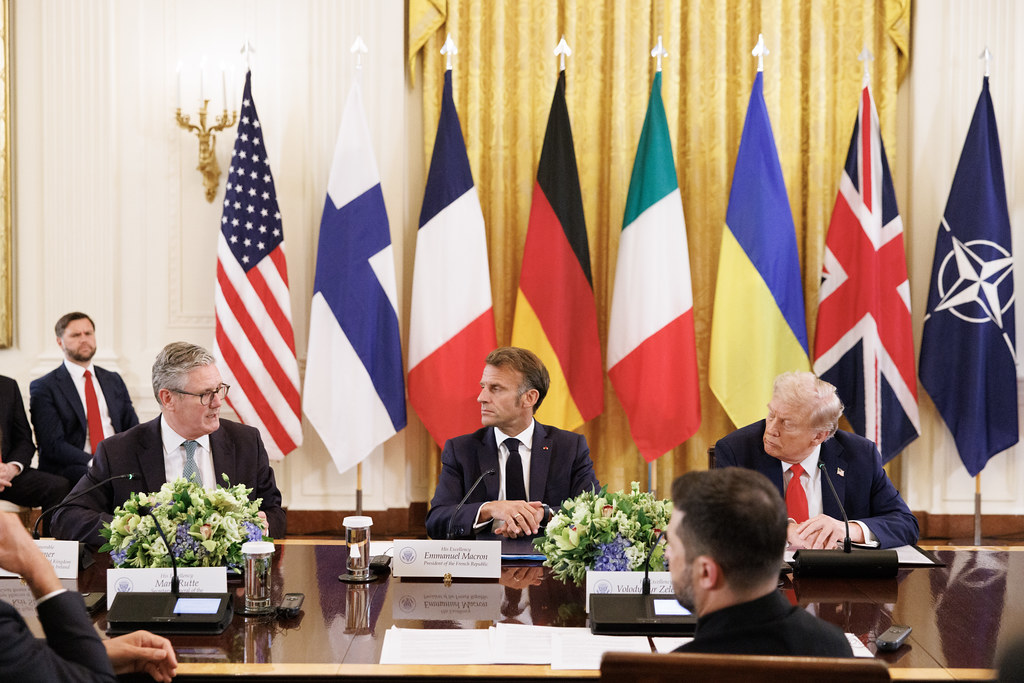
The Democratic Party’s sweeping victory in this week’s US midterm elections has reshaped the political balance in Washington, with the party winning control of both the House of Representatives and the Senate.
The result marks a significant setback for President Donald Trump, whose first two years back in the White House have been defined by an increasingly confrontational approach to domestic and international politics.
The scale of the defeat is particularly significant as Democrats made gains in traditionally Republican states, including Texas, Kansas and Ohio, turning the elections into a broader rejection of Trump’s political agenda.
High living costs, economic dissatisfaction and the war with Iran were among the main factors driving voter frustration, according to early election analysis.
For Europe, however, the result presents a more complicated picture. A Democratic-controlled Congress could place new political and institutional constraints on the president, but it does not automatically give Washington a different foreign policy. The White House remains under Trump’s control, and the president retains considerable authority over America’s international commitments.
A new balance of power in Washington
Democrats have secured control of both chambers, exceeding the more limited scenario of a split Congress. They gained at least seven Senate seats and more than two dozen House districts, including several in states that had strongly supported Trump in 2024.
The result is particularly important because the Senate and House offer different mechanisms for challenging the administration. The House can investigate government conduct, scrutinise spending and block legislation, while the Senate can obstruct presidential appointments and influence the confirmation of senior diplomatic and national security officials.
The new Democratic majority will therefore have greater capacity to scrutinise Trump’s decisions than the previous Republican-controlled Congress. Investigations into the administration, closer oversight of spending and resistance to presidential appointments are likely to become central features of the remaining two years of his presidency.
Foreign policy remains Trump’s territory
For European governments, the distinction between congressional influence and presidential authority is particularly important.
The US president retains considerable discretion over foreign policy, military deployments and diplomatic negotiations. This means that a Democratic majority cannot simply reverse Trump’s approach to NATO, Ukraine or relations with European governments.
The administration’s use of executive powers also provides a way to pursue policies without relying on congressional approval. Trade is one example. Despite Democratic control of Congress, Trump may retain legal routes to impose tariffs without a vote by lawmakers, leaving European exporters exposed to further trade tensions.
Ukraine presents a similarly complicated picture. Democrats are generally more supportive of continued American assistance to Kyiv, and the new congressional majority could seek to approve additional funding. Yet securing congressional approval does not necessarily guarantee that the White House will release or implement those funds.
For the EU, this distinction reinforces the uncertainty surrounding American security commitments. A more sympathetic Congress could provide political and financial support for Ukraine, but it cannot guarantee that the president will follow the same direction.
Could a weaker Trump become more unpredictable?
The election also raises questions about how Trump will respond to losing control of Congress. With his domestic legislative agenda facing greater resistance, foreign policy could become an increasingly important arena in which the president seeks to demonstrate political strength.
A more confrontational approach towards international partners, including Europe, cannot be ruled out. Trade disputes, disagreements over NATO contributions and pressure on European governments over defence spending could remain instruments of presidential policy.
There is also the possibility that congressional investigations and political confrontations at home could encourage the administration to adopt a more assertive international posture. Such a development would complicate an already strained relationship with Brussels.
The election result may weaken Trump’s domestic political position, but it does not necessarily mean that his foreign policy will become more restrained.
Europe’s strategic autonomy is no longer optional
For Europe, the Democratic victory does not remove the need to reconsider its dependence on Washington. Even if congressional opposition creates greater institutional resistance to Trump’s decisions, the possibility of another shift in American foreign policy remains.
The question of European strategic autonomy therefore becomes more pressing. Building independent defence capabilities, coordinating military spending and strengthening the European defence industry will require long-term political and financial commitments.
However, the economic difficulties facing several EU member states remain a significant obstacle. France, Germany and other major European economies must balance defence spending with domestic pressures, while reaching agreement on a common European security approach remains difficult.
A Democratic Congress cannot act as a substitute for a European defence policy capable of functioning independently of the political direction in Washington.
Though the Democratic victory has successfully changed the political landscape in Washington, creating new limits on Trump’s domestic agenda and greater scrutiny of his administration, the underlying tensions in US-EU relations remain.
For Brussels, the result offers a stronger congressional counterpart in Washington, not a guarantee of a more predictable US president. The immediate challenge is therefore twofold: making use of the new political balance in the United States while continuing to build the economic and defence capabilities needed to reduce Europe’s dependence on it.
(Sources: Euronews)
Read more:

