


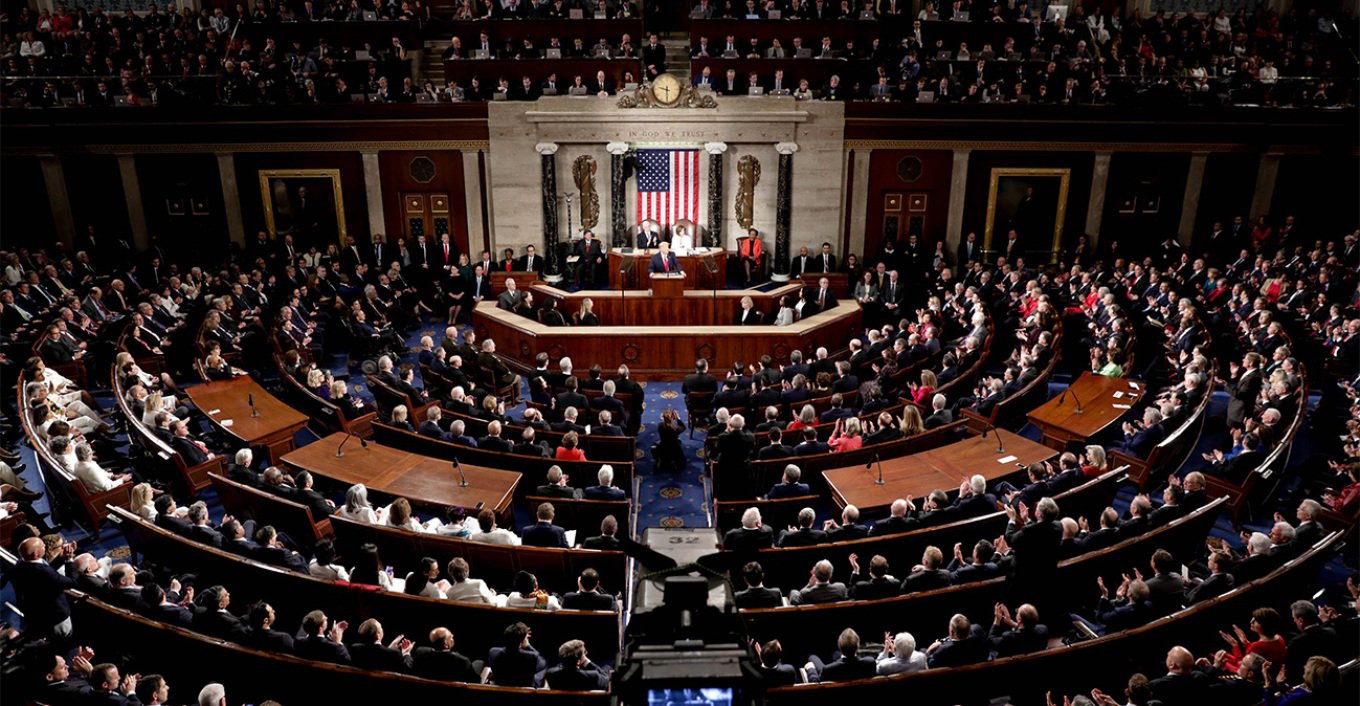
Democrats won control of Congress in Tuesday’s US midterm elections, making large gains deep in Republican territory in what Reuters described as a sharp rebuke to President Donald Trump and his agenda.
A Democratic wave
Opinion polls had pointed to a good night for Democrats, but their gains were far bigger than most analysts had forecast, reaching beyond the traditional battlegrounds into Republican strongholds.
In Texas, James Talarico beat Republican Ken Paxton by a wide margin to become the state’s first Democratic senator-elect in 38 years. In South Carolina, where Democrats had not won a Senate race this century, Annie Andrews defeated Republican Senator Darline Graham.
In Ohio, a state Trump won three times, Democrat Sherrod Brown won the Senate race, while in Kansas Democrat Adam Hamilton comfortably beat Republican incumbent Roger Marshall. Democrats last won a Senate seat in Kansas in 1932, during the Great Depression.
US media projected that Democrats would win back control of both the House and the Senate.
Strategists in both parties said the gains were driven by strong turnout among Democratic supporters and by independent voters who backed the party in both swing states and Republican strongholds. Democrats also fielded a candidate in every race, including those that looked like long shots only months ago, and those bets paid off as Republican candidates struggled with Trump’s unpopularity and voters’ anger over high prices.
Reuters noted that winning Congress could cut both ways for Democrats. Voters are likely to expect them to tackle economic concerns rather than simply oppose Trump, but the president’s veto will limit what legislation they can pass, and Trump could argue that Democrats now share responsibility for the state of the economy.
Trump told media outlets he would accept the results and was prepared to work with Democrats.
Voters angry over prices
Trump had asked voters to vote as if he were on the ballot. Early results and exit polls showed voters deeply unhappy about high prices and the direction of the country.
Many said they felt worse off than two years ago, and nearly nine in ten named the cost of living as a crucial or major factor in their vote, according to exit polls conducted by SSRS for a group of US media outlets including the major television networks and the Associated Press.
Nearly two-thirds of voters blamed Trump for high prices, and three-quarters said they were angry or dissatisfied with the direction of the country. Voters also expressed widespread concern about government corruption.
Trump was elected in 2024 promising to bring down high inflation, but his tariffs on foreign goods and the war against Iran have made the economic situation worse for many Americans. On the campaign trail he told Americans to absorb the higher costs, as his popularity fell to record lows.
Trump’s candidates lose
Several candidates Trump had promoted over the objections of local Republicans struggled in races the party had expected to win. His handpicked Senate candidates in South Carolina and North Carolina, Graham and Michael Whatley, lost, and Paxton was heavily beaten in Texas.
Reuters said the losses were likely to revive questions about Trump’s political judgement, particularly his tendency to put personal loyalty ahead of broader electoral appeal.
Exit polls showed that the coalition behind his 2024 victory had fractured, with Republican support falling sharply among Black men, Latinos and young voters.
Campaign attacks fall short
In the final weeks of the campaign, Trump and other Republicans portrayed Democrats as dangerous radicals and communists who would destroy the country. Trump repeatedly said that if Democrats won, “it’s going to be a communist country”, and claimed that Democratic establishments in several states had been replaced by radicals.
Voters were far more focused on grocery and petrol prices, and wanted to hear from Trump how he would bring costs down.
Latino voters turn away
In Texas, where four in ten people are Latino, Democrats flipped both the governor’s office and the Senate seat, media outlets forecast. In heavily Latino southeast Florida, Democrat Pia Dandiya won the 22nd congressional district, despite it being recently redrawn to favour Republicans.
Trump won nearly half the Hispanic vote in 2024, up from about a third in 2020. On Tuesday, Republican support among Hispanic voters fell to one in three, from 46 per cent in 2024, driven in part by economic anger, exit polls showed.
Gina Hinojosa will become Texas’s first Latina governor, and Xavier Becerra California’s first elected Latino governor.
(Reuters)

