


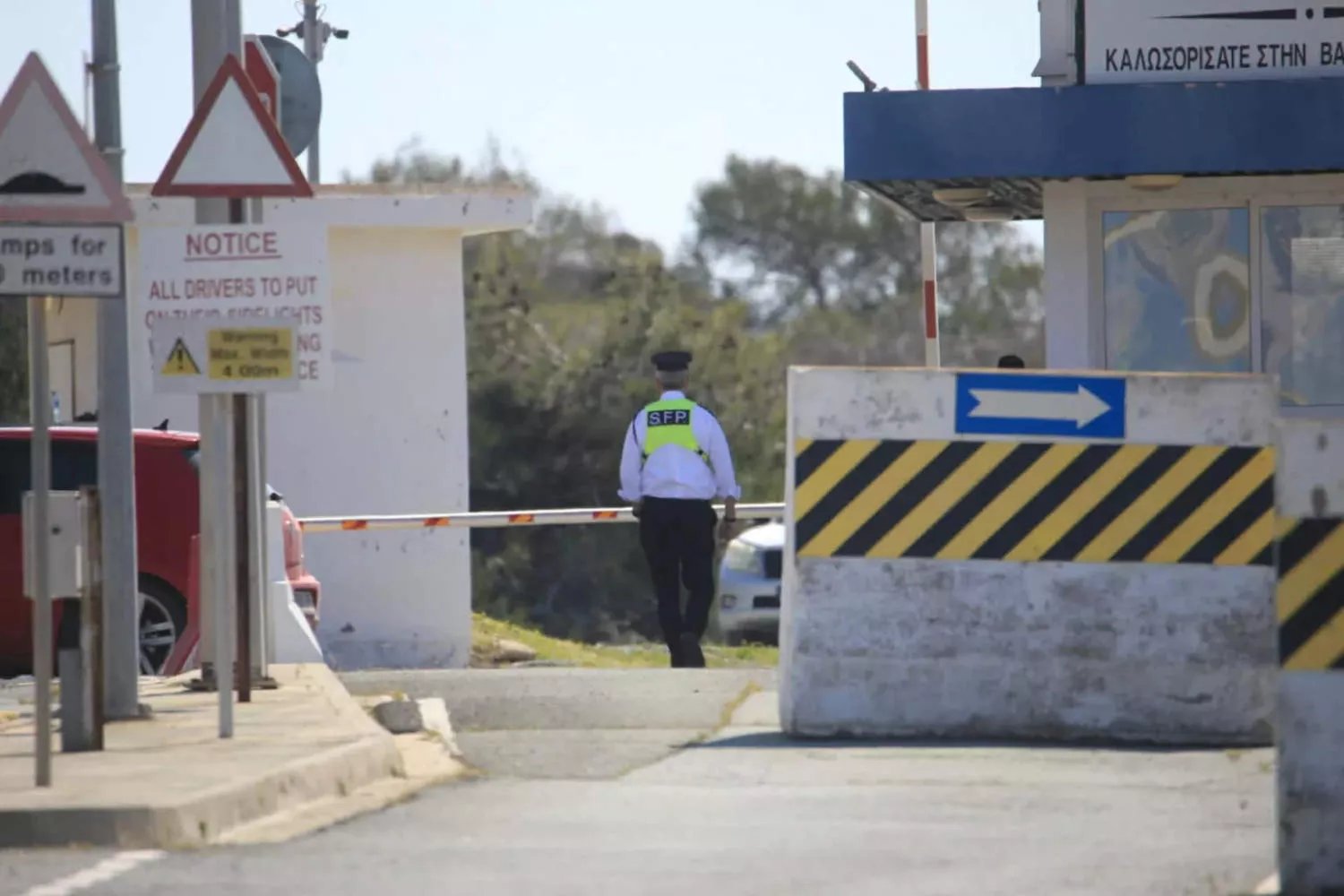
Last March, all hell broke loose when a drone launched from Lebanon crashed into a building inside the British Sovereign Base Areas at Akrotiri. Last Wednesday, a Financial Times report claimed the danger for Cyprus is back on the table, should Iran decide to hit back at the American strikes, with the Bases a likely target. Within a five-to-six-month window, the territory of the Republic of Cyprus finds itself in the crosshairs of a country it has, essentially, no quarrel with at all. Diplomatic relations between the two states carry on as normal.
The problem here has nothing to do with how Cyprus conducts its foreign policy, or with whatever alliances or partnerships it holds. The problem comes down to one very specific reason, and that reason is the British presence on the island.
Whether Iran is putting Cyprus in its sights, as the latest report suggests, or whether a drone fired by one of its proxies in Lebanon simply strayed here, none of it has anything to do with the Republic of Cyprus as a state. It’s entirely down to the British presence. The fact that the Bases happen to sit on Cypriot soil doesn’t change that.
The facts themselves make the case. March’s strike had one target and one target only: the ground the Bases stand on. Because if the real target had been the areas under the Republic’s control, there were plenty of places to hit. Far closer to the launch site, too. This was aimed squarely at the British, for teaming up with the Americans on operations against Iran.
Right now, Cyprus is back in the conversation purely because of US action against Iran, with Tehran threatening retaliation against any country hosting facilities it deems to be helping and enabling the American campaign. And in Cyprus’s case, the facilities the Iranians regard as “suspect” for cooperating with the Americans are the Bases at Akrotiri.
For the Republic of Cyprus, none of this is down to anything it’s done. No actions, no initiatives, no regional alliances of its own making. The problem is that a third country insists on holding a slice of its territory hostage, running Bases it uses without so much as checking in with the Cypriot Government. This isn’t some new development. It’s a decades-old reality, stretching right back to the Republic’s founding. And some of these third countries, on top of it all, choose to settle their scores through force rather than diplomacy.
These aren’t Cyprus’s fights. And yet here we are again today, just as we were yesterday and the day before, footing part of the bill anyway.
On paper, the EU has a mutual assistance clause Cyprus is fully entitled to invoke, and hasn’t, not once, asked for. So here’s the opening, not out of any need to scaremonger or stoke tension and anxiety. Nicosia should drag that conversation, the one that started last March and somewhere along the way got quietly shelved, back into the room within European circles. But the facts speak for themselves: neither the debate over the Bases nor the mutual assistance clause can stay locked in a drawer any longer.
P.S.: On yesterday’s piece in Alitheia about DISY, and specifically its claims of orchestrated sabotage and directed reporting, which simply don’t stand up, there’s plenty I could say in response, especially to the anonymous authors, seeing as we all know each other rather well around here. Out of respect, first and foremost, for those not here to answer for themselves, I’ll leave it at this: it takes one to know one…

