


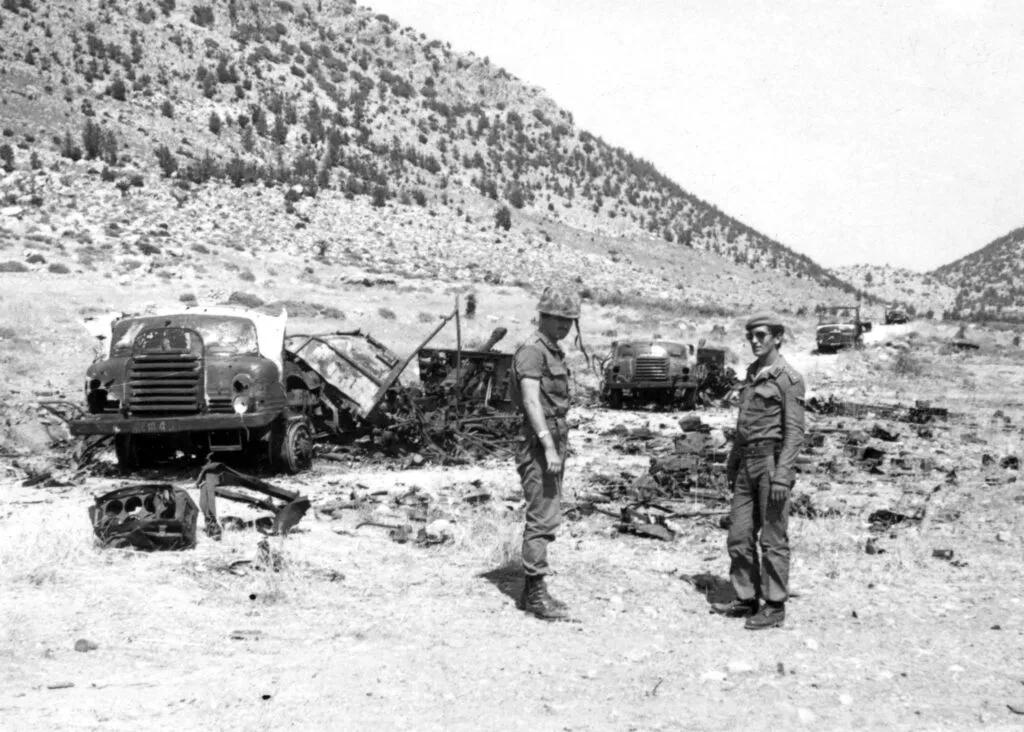
The 2nd and final phase of the criminal plan was implemented on a day of ceasefire, as the Turkish army, which had now established a bridgehead in many areas following the July 20th invasion, moved to strike and occupy additional territory, violating an agreement which had been reached during the Geneva talks.
By August 16th 1974, Attila forces, had seized most of the Mesaoria plains, the city of Famagusta, the Karpass peninsula and part of Morphou, where most of the population had fled, further violating international law and blatantly ignoring every humanitarian aspect.
They were now in control of 37% of Cyprus Republic territory.
The Turkish occupation regime subsequently moved ahead with illegal colonisation. They kept Famagusta, the most popular resort of the region, as a bargaining chip, with the new city fenced off after it was stripped of everything valuable. It remains a ghost town to this day.
How the 2nd phase begun
On August 13th, persistent chatter and diplomatic back channel communication spoke of a new Turkish advance, shattering belief that the invading army’s goal was merely to create a bridgehead in Kyrenia and around Nicosia.
At 3 in the morning of August 14th 1974, the Turkish foreign minister Turan Gunes urgently calls PM Ecevit, speaking in code.
‘Aishe can now go on holiday’. (Aishe was the name of Gunes’ daughter). The code signalled a green light for the start of the 2nd phase of the invasion.
Ground forces, supported by tanks and jets, advanced to Famagusta in the east and Morphou to the west.
In just three days, by August 16th, Turkish troops had reached the two cities, completing their longtime division designs. There was strong resistance in Kyrenia, marked by a heroic battle at the Greek forces camp.
But the military balance did not favour the brave defenders. The Turkish superiority was overwhelming, both in numbers and hardware.
The advancing army killed, raped and pillaged, as more than 200 thousand Greek-Cypriots were torn from their homes.
Most historians converge on accounts of the time clearly indicating that Turkey was working closely with US State Secretary Henry Kissinger who was essentially running Washington as Nixon was embroiled in the Watergate scandal.

