


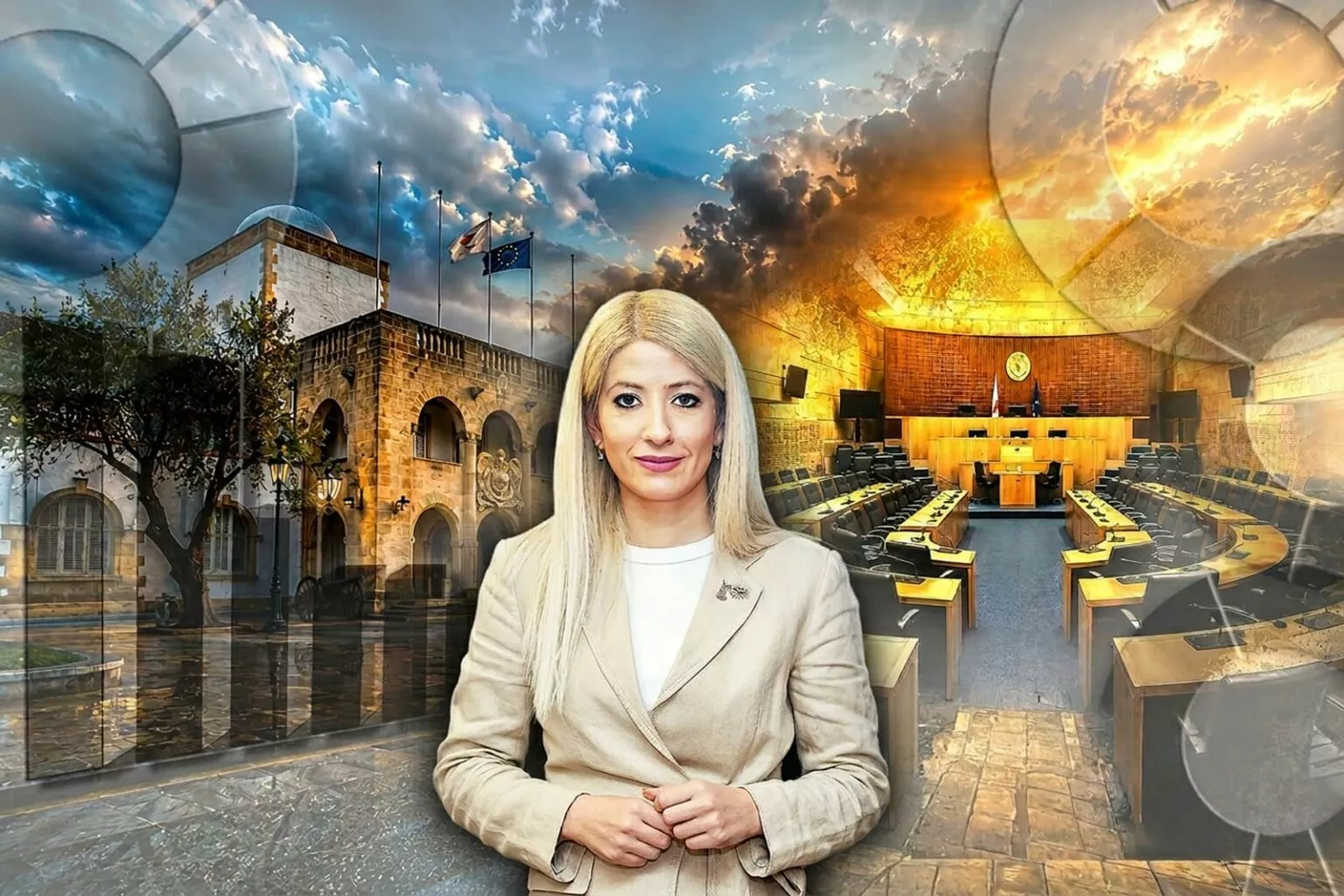
The conclusion of the first plenary session of the new House of Representatives marked the end of a highly successful electoral cycle for Annita Demetriou and the Democratic Rally (DISY). Securing the top spot in legislative elections, achieving a strong final percentage, and winning re-election to the House presidency have established a new political reality. Demetriou has emerged as the most formidable figure on the political right, with many within the party already viewing her as the vehicle to build a path toward the 2028 presidential elections.
Concurrently, these developments are clarifying the broader political puzzle for the country’s highest office. The recent election results designated AKEL as the primary anchor around which any future alliance of the wider left and centre-left space will be constructed. This outcome could have taken a different turn during the week had the party’s Political Bureau and Central Committee made decisions that altered the general political alignment.
Conversely, the Democratic Party (DIKO) emerged from these legislative maneuvers in a weakened position. Behind-the-scenes efforts regarding the House presidency hit a dead end after Nicolas Papadopoulos failed to secure the backing of either AKEL or Amesi Demokratia. Ultimately, his candidacy was supported only by DIKO MPs, before the party shifted its support to Annita Demetriou in the final round of voting.
Demetriou vs. Christodoulides
The president of DISY enters the post-election period from a position of undisputed strength within the centre-right spectrum. Her dual success in winning the legislative elections and reclaiming the House presidency has solidified her internal party standing while positioning her as a potential candidate for the Presidency of the Republic in 2028. Currently, Demetriou stands as the primary right-wing counterweight to Nikos Christodoulides. Due to her high popularity and broad public acceptance, she is viewed by party circles as the DISY figure most capable of defeating him in the critical first round of the 2028 elections.
Whether Demetriou will run in 2028 remains the critical question. While she is unlikely to reveal her intentions early, insiders familiar with DISY’s internal dynamics suggest a presidential bid is highly probable. Demetriou had previously signaled that if she were not re-elected House President, a 2028 presidential candidacy would be certain. This scenario initially provided comfort to the Presidential Palace and prospective internal rivals, driving backroom efforts to shape outcomes. Notably, former DISY president Averof Neofytou played a central role in these negotiations, facilitating a key meeting between Demetriou and Fidias Panayiotou.
Demetriou has never stated that the House presidency precludes a run for the state presidency, nor does she have any strategic reason to do so now. DISY circles believe that even if she expresses disinterest, she will face significant pressure to run to prevent a new cycle of internal party division, acting as a unifying figure just as she did during the 2023 party leadership election. If Demetriou does not run, alternative scenarios include a return by Averof Neofytou, a candidacy by Giorgos Pamboridis, or a renewed DISY-DIKO coalition backing a joint candidate. In all scenarios, Demetriou remains a central factor, and she is currently considered unbeatable in an internal party primary decided by the grassroots.
Presidential Palace Maneuvers
President Nikos Christodoulides publicly congratulated Demetriou immediately following her re-election, as the Presidential Palace sought to maintain an official stance of neutrality. Behind the scenes, however, initial contacts and soundings were made with Demetriou through intermediaries to explore avenues for broader political cooperation, potentially seeking clarification on her 2028 intentions.
The government’s ideal scenario would have been either Demetriou’s re-election coupled with an understanding for the 2028 presidential elections, or the election of Nicolas Papadopoulos through the votes of ELAM and Amesi Demokratia. The latter option would have effectively sidelined Demetriou in the first round, placing significant internal pressure on DISY. However, this formula failed to materialize. On the other hand, the process successfully prevented any foundation for a DIKO-AKEL cooperation. It is now evident that the Presidential Palace and DISY are entering a phase of intensifying competition that will culminate in the 2028 ballot box.
The Breakdown of Centre-Right Alignment
DISY’s electoral performance returned the party to its 2021 strength. Combined with DIKO’s eight MPs—and given that ELAM would not support a left-wing candidate—the two parties possessed the necessary numbers to elect a House President without requiring third-party assistance. This dynamic altered pre-election expectations driven by polling data. However, direct talks between Demetriou and Papadopoulos quickly collapsed as the DIKO leader maintained his own bid for the seat.
In her initial proposal, Demetriou offered DIKO the chairmanship of the House Commerce Committee in exchange for supporting her candidacy. Sources indicate that Demetriou also proposed a sequential power-sharing arrangement: DIKO would support her current House presidency bid to strengthen her position for a 2028 presidential nomination backed by a DISY-DIKO alliance, after which Papadopoulos would be supported for the House presidency. Although this scenario was floated through intermediaries and occasionally involved the Presidential Palace, the gap proved unbridgeable. DISY refused any immediate government alignment or 2028 commitments, while DIKO lacked a viable narrative to exit the Christodoulides government.
The DIKO-AKEL Dialogue
Following the breakdown of talks with DISY, Nicolas Papadopoulos approached AKEL, attempting to separate the House presidency from the 2028 presidential contest—a distinction publicly echoed by AKEL General Secretary Stefanos Stefanou. However, the approach lacked a broader framework for political cooperation. Furthermore, Papadopoulos faces entrenched unpopularity among AKEL’s base, a factor Stefanou conveyed during their initial discussions, compounded by the friction of the 2021 House presidency and 2023 presidential elections.
Papadopoulos sought AKEL’s backing solely on the premise of preventing Demetriou’s re-election. This argument was inverted within AKEL’s collective bodies, with members questioning why DIKO would not vote for an AKEL candidate to achieve the same result. Significant resistance emerged within AKEL’s Political Bureau and Central Committee regarding supporting a leader whose party remains a core member of the current governing coalition. While AKEL left open the possibility of discussing an alternative name from DIKO, no such proposal was put forward by Papadopoulos, as a wider political dialogue was something DIKO could not initiate at this stage.
AKEL Solidifies ALMA Alliance
Through this process, AKEL successfully finalized its cooperation with the ALMA party, bringing Odysseas Michaelides into the political axis being constructed by the leadership in Ezekia Papaioannou. The formalization of the alliance was concluded just prior to AKEL’s Central Committee session via a telephone call between Stefanou and Michaelides. Concurrently, Irene Charalambidou publicly announced her support for a Stefanos Stefanou candidacy, neutralizing internal rumors that she might vote for Papadopoulos—an option Michaelides had already publicly ruled out. AKEL ultimately limited its focus to Stefanou’s candidacy, recognizing the low probability of election but prioritizing the long-term groundwork for the 2028 presidential race.
The Final Voting Alignments
The final stage of the legislative negotiations centered on DIKO’s attempts to build a voting bloc with ELAM and Amesi Demokratia, which represented Papadopoulos’s only path to the second round of voting. ELAM leader Christos Christou left this option open, contingent upon Amesi Demokratia also backing the bid.
Significant pressure was directed at Fidias Panayiotou of Amesi Demokratia, who held the deciding vote. Reports indicating that President Christodoulides had requested Panayiotou to support Papadopoulos during a prior meeting were denied by the Palace. Ultimately, the DISY lobby or the influence of Averof Neofytou prevailed, leading Panayiotou to support Demetriou from the first round, ensuring her re-election regardless of whether DIKO voted or abstained.
Within DIKO’s parliamentary group, six out of eight MPs favored voting for Demetriou in the final round, while Deputy President Christiana Erotokritou and Zacharias Koulias reportedly favored abstention. Papadopoulos later stated that the arrangement with Amesi Demokratia collapsed because Panayiotou demanded the creation of TikTok promotional videos featuring himself and government ministers as a condition for his vote. Demetriou ultimately agreed to a video collaboration with Panayiotou, drawing significant criticism, though sources note the footage was filmed prior to the plenary vote, confirming the agreement had been finalized during their final meeting.
While internal criticism exists within DIKO regarding Papadopoulos’s management of the House presidency issue, party members credit his extensive campaign efforts with preventing a broader electoral collapse for the party. Meanwhile, ELAM utilized the situation to maintain its anti-systemic positioning by holding a consistent voting line, though reports indicate the party engaged in backroom negotiations with both DISY and DIKO regarding the chairmanships of the House Defence and Education committees. Amesi Demokratia demonstrated from the outset that it operates as a personalized party centered entirely on Panayiotou’s popularity, signaling a clear intent to operate within mainstream power structures.

