


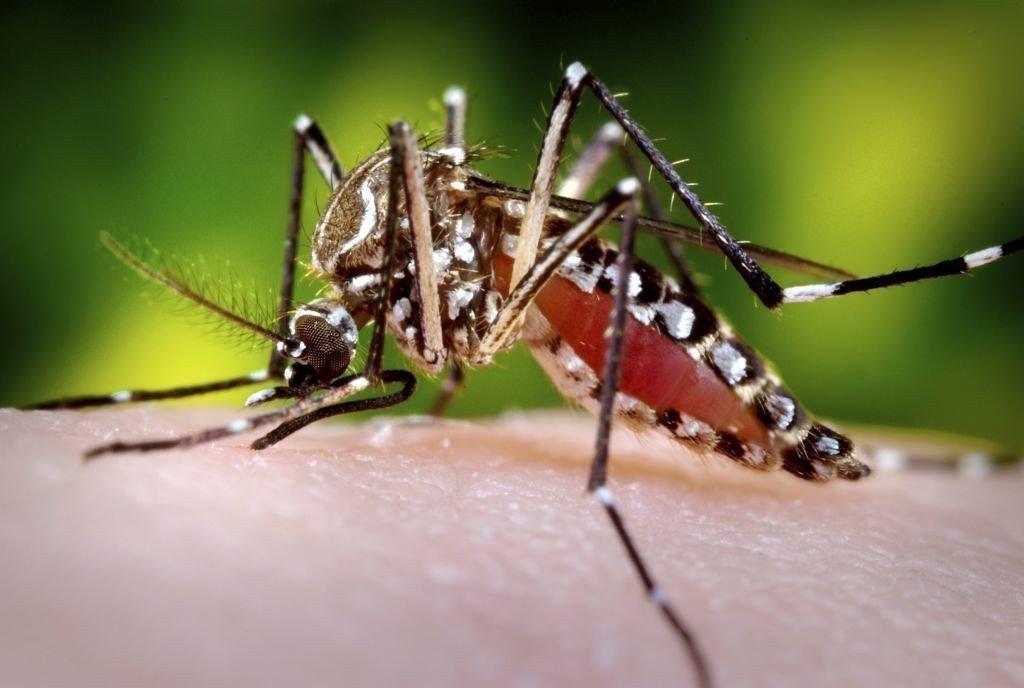
The European Centre for Disease Prevention and Control (ECDC) issued a health alert for member states following a surge in mosquito-borne diseases across the Mediterranean, with Cyprus classified among high-risk areas.
Dengue fever cases increased from 71 in 2022 to 304 in 2024, whilst West Nile virus infections reached 1,436 across 212 regions in 19 European countries, according to ECDC data released yesterday.
The agency called on member states to implement preventive measures as three invasive mosquito species expand their territorial range. Cyprus received a Level 2b risk classification for dengue fever, Zika virus and chikungunya transmission.
Aedes aegypti mosquitoes re-established populations in Cyprus, the Canary Islands and Madeira after decades of absence from Europe. The species transmits dengue, chikungunya, Zika and yellow fever viruses.
The Asian tiger mosquito, Aedes albopictus, has colonised 369 European regions across 16 countries, representing a threefold increase from 114 regions recorded in 2015. This species carries dengue, chikungunya and Zika viruses.
Culex pipiens mosquitoes continue to facilitate West Nile virus transmission, particularly during summer months when temperature and humidity conditions favour both vectors and viral replication.
France reported six locally transmitted chikungunya cases by June 2025, with symptom onset occurring from late May. The timeline indicates earlier seasonal transmission compared to previous years.
Belgium, Germany and Greece maintain elevated surveillance protocols as temperatures across European countries extend mosquito activity periods.
The ECDC noted that higher temperatures “prolong the period during which mosquitoes are active, increasing the duration and intensity of transmission” of vector-borne viruses.
Rising temperatures have created optimal breeding conditions for invasive mosquito species, with research indicating mosquito biting frequency increases threefold when temperatures rise from 20°C to 30°C. Climate models predict Aedes mosquitoes will advance northward at six kilometres annually by 2050, representing 3.5 times faster expansion than historical rates.
Climate projections indicate parts of Spain, Portugal, Greece and Turkey will experience sustained mosquito suitability by 2030. Temperature increases could lengthen dengue transmission seasons by four months and malaria seasons by one month over the next 50 years, according to research published in The Lancet Planetary Health.
Cyprus hosts established populations of both Aedes aegypti, which reappeared in 2022, and Aedes albopictus mosquitoes across multiple regions of the island.
Read more:

