


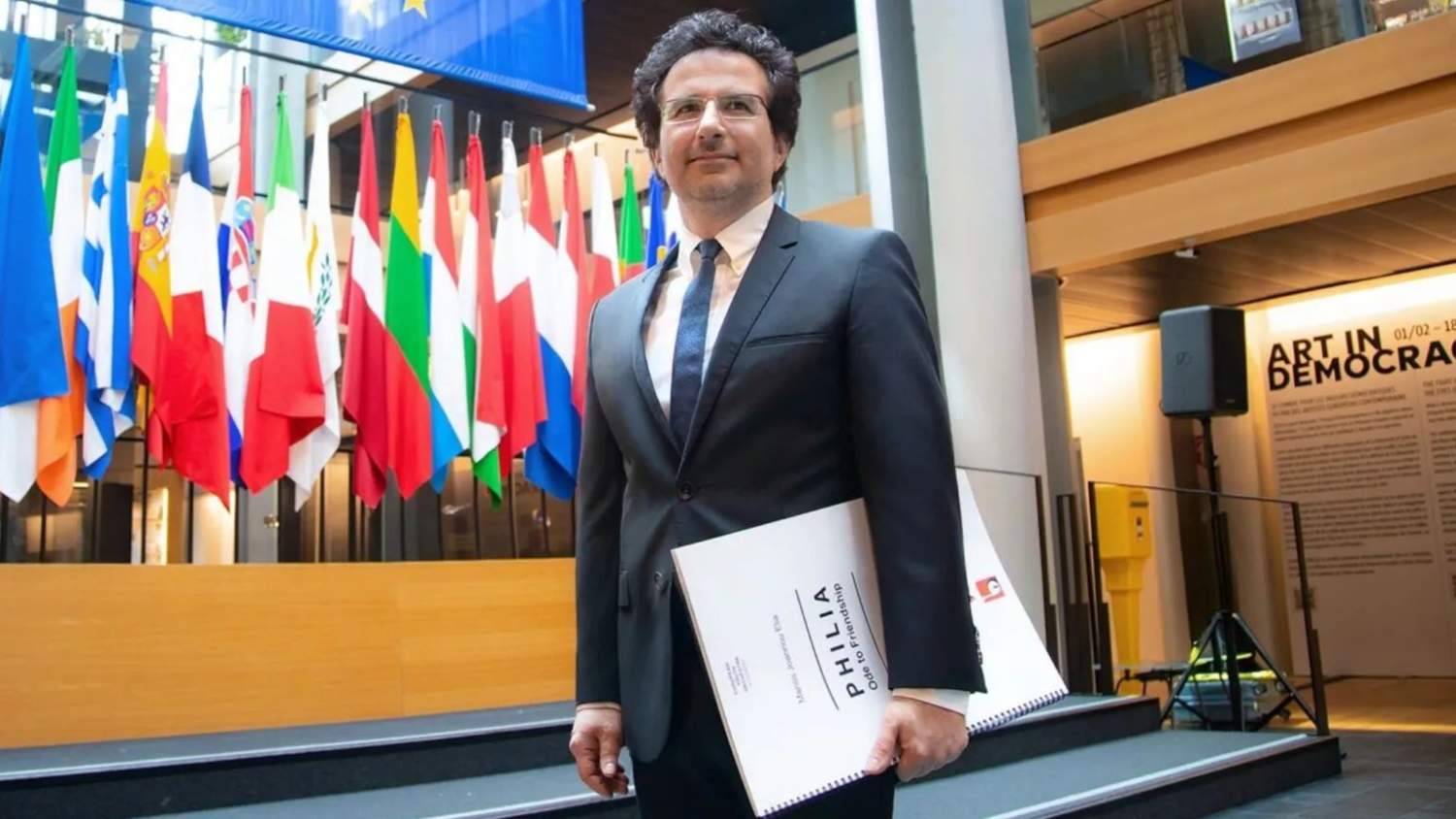
From composing music to leading cultural institutions, composer and chairman of the Cyprus Symphony Orchestra’s board of directors Marios Ioannou Elia discusses his vision, the importance of working together and why culture must play a meaningful role in society’s development.
For Marios Ioannou Elia, a career spanning musical composition, international artistic projects and leadership roles in cultural institutions has been a constant exploration of what culture can achieve. Following his recent appointment as chairman of the Cyprus Symphony Orchestra’s board of directors, he discusses the challenges of leadership, the importance of collaboration and the need to lay the foundations for cultural development that has a lasting impact.
How easy is it to move from creating music to managing an organisation?
For me, the transition from composition to management feels natural. At the age of 30, I became artistic director of the German company m:con – mannheim:congress GmbH, a subsidiary of the City of Mannheim, with an annual budget of €80 million and around 100 employees.
The role brought me face to face with the demands of management: leading people, managing resources and turning an artistic vision into reality.
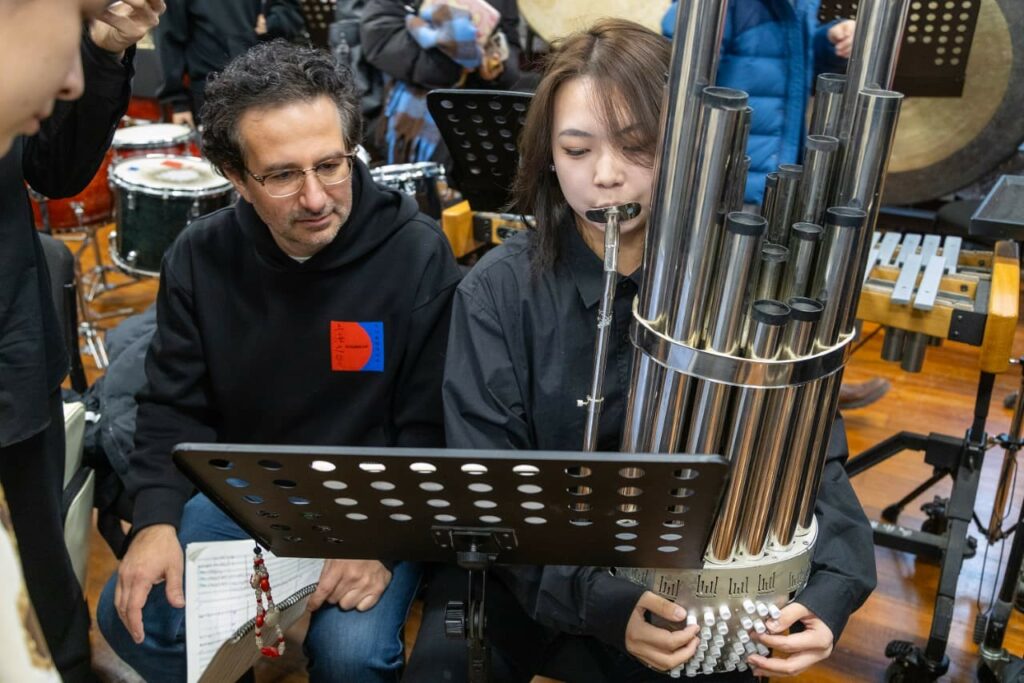
Management requires different skills from composition, although I also direct and produce many of my own works, most recently The Sound of Shanghai.
Both, however, demand imagination, discipline, clarity of thought and the ability to see how individual elements come together to form a coherent whole.
How did you come to follow such a varied career path?
I’ve always been interested in looking at things from different perspectives.
Aristotle explains that each of our senses perceives different qualities of the things around us. Take something as simple as tasting wine. You look at it, smell it and taste it. Each sense contributes to your assessment.
That’s rather how I see life. I believe that bringing different experiences together allows us to understand things more fully.
What role did your childhood play in shaping that outlook?
Childhood shapes the way we recognise our inner needs.
My roots are in Kyrenia, but I grew up in Paphos in the aftermath of the Turkish invasion. At the time, Cyprus felt almost like a desert when it came to opportunities to experience the arts.
An environment like that can leave room for the imagination and intensify the desire to explore.
The opportunities I had to travel as a child exposed me to different experiences and cultures.
Is there a particular childhood memory that captures this way of seeing things?
I remember the arrival of the Kyrenia II in Paphos in October 1986, with Melina Mercouri in attendance. The vessel had set sail earlier from Piraeus.
Although I was very young, the scene remains vivid in my memory: the small boats sailing out to welcome it, the crowds gathered at the harbour, the music and the feeling that the entire town was taking part in the celebration.
Years later, when I attended opera performances in Paphos, I would think back to that occasion as my first experience of something similar.
It was a celebration with historical, cultural and social dimensions. In my memory, it remains an open-air opera in which the audience itself was part of the performance.
How do you view the development of opera in Paphos, and what needs to happen next?
Opera in Paphos needs a clear artistic identity, consistent programming and an international outlook, with a firm commitment to the quality of its productions and the artists and creative teams behind them.
The Council of Ministers has tasked the Deputy Ministry of Culture with developing a long-term plan for opera in Cyprus, in cooperation with the Paphos Municipality and the Cyprus Symphony Orchestra Foundation.
Contacts are under way with organisations abroad to explore artistic partnerships and share expertise in organising, promoting and developing the festival, with plans extending to 2027 and beyond.
Public funding can be supplemented by ticket revenue and sponsorship, supported by effective management and a targeted approach to reaching audiences both in Cyprus and overseas.
That also means developing an audience…
Absolutely, provided that audience development is a deliberate objective and is assessed systematically.
We need to understand whom we are reaching and what prevents others from taking part, so that we can adapt our activities accordingly.
Success should be measured not only by attendance, but also by whether people come back and feel that the festival has something to offer them.
How can this translate into something that reaches ordinary people, particularly children?
By creating opportunities for people to experience and participate in the arts.
For children, that means being introduced to music from an early age, having the freedom to experiment and discovering what they are capable of.
Opera in Paphos could build on its educational role throughout the year through workshops, open rehearsals and partnerships with schools.
That would make investment in culture meaningful in everyday life, giving children opportunities to create and the wider public more ways to participate in cultural activities.
As a member of the European panel of experts evaluating bids for the European Capital of Culture 2030, what made Larnaca’s proposal stand out?
Larnaca stood out because of the coherence of its proposal, which combined an artistic vision with a European dimension and a convincing implementation plan.
The concept of “Common Ground” connected the city’s experiences with questions of coexistence and social cohesion, while actively involving its citizens.
The programme was also part of an approved cultural strategy extending to 2040, backed by financial commitments and contingency plans for possible delays in infrastructure development.
Together, these elements gave the bid a credible foundation.
What is the biggest challenge facing Larnaca until 2030, and beyond?
The greatest challenge is turning the vision behind the bid into lasting benefits for the city and its people.
As the panel’s report points out, that requires coordination with wider urban planning, clear timetables and measurable objectives.
Between now and 2030, the priorities are securing funding in good time, completing infrastructure projects and strengthening the organisational structure, alongside delivering a high-quality artistic programme with a European reach.
Looking beyond 2030, institutional continuity will be essential so that the partnerships, knowledge and opportunities created continue to support Larnaca’s cultural life.
What does your election as a full member of the Cyprus Academy of Sciences, Letters and Arts, and your appointment as head of its Cultural Diplomacy Research Office, mean for your role?
My election to the Academy’s Chair of Musical Composition is both an honour and a responsibility to help strengthen the place of music and culture in public life.
Through the Cultural Diplomacy Research Office, which was established following a proposal I submitted to the Academy’s Senate and Plenary, we are working to connect artistic creation and research with Cyprus’s international cultural presence. We are doing so in cooperation with the state, academic institutions and cultural organisations.
Are you optimistic about establishing and achieving shared goals?
I am optimistic. I believe in collaboration and common goals, without confining myself to any single institution or professional role.
That’s also how I understand my role in cultural diplomacy: bringing people and organisations together around a shared idea.
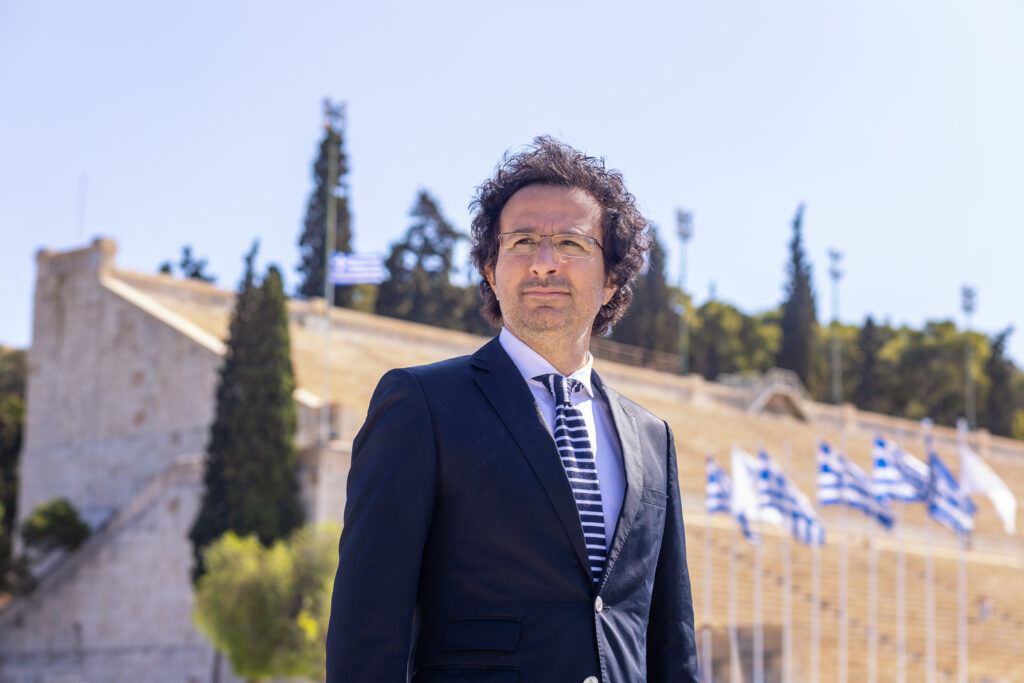
Cultural diplomacy is becoming an increasingly prominent topic in public discourse. What does it mean to you?
Cultural diplomacy should be judged by the relationships it creates and how long they last.
A concert or an exhibition can be the starting point for a meaningful relationship between people from different countries. But that requires an understanding of the other party, reciprocity and sustained engagement.
Just as we want our own voices to be heard, we must also be willing to listen.
The “Sound of Shanghai” is a good example of the international reach that artistic creation can achieve.
As was repeatedly pointed out in Shanghai, Cyprus received unprecedented exposure in China because Chinese media outlets highlighted my Cypriot origins.
As chairman of the Cyprus Symphony Orchestra’s board, what is your vision and what are your main priorities?
My vision is for a foundation that operates consistently, maintains high professional standards and plays a broader role in the country’s musical life.
As chairman, I work with the other board members to shape the foundation’s overall direction and development, while overseeing its services and activities.
My priorities include developing the organisation further, promoting music education, showcasing Cypriot composers and performers, and building partnerships that expand both our audiences and the organisation’s capabilities.
In managing the organisation, I place particular importance on compliance with the law, transparency, equal treatment and well-founded decisions, as well as responsible management of resources and long-term financial sustainability.
These principles of good governance lend credibility to our plans and enable us to make a persuasive case for what is needed, working with the relevant institutions.
You have also spoken about the need for the Cyprus Symphony Orchestra to develop further. What do you see as the main issues that need to be addressed?
The fundamental issue is the gap between the orchestra’s name and its actual capabilities.
In terms of the number of musicians, it is closer to a chamber orchestra, which limits the repertoire it can perform with its own resources.
Any plans to strengthen the orchestra must take account of both its artistic needs and the resources available.
That is why I requested comparative data on its funding as a percentage of GDP, alongside figures from countries such as Malta.
Every request for additional resources must explain what those resources would achieve and how the proposed changes could be implemented.
We need a multi-year plan, with gradual steps and continuity beyond the term of any individual board.
How do you see this developing?
In the longer term, I believe we could explore a shared organisational framework for the performing arts, in which the orchestra, opera, dance and theatre share infrastructure and administrative support while retaining their artistic independence.
That could create more opportunities for productions, collaborations and employment.
Such a model would need careful study and adaptation to the scale of Cyprus, ensuring that it meets the needs of artists and audiences while remaining financially and operationally sustainable.
Would that also require better facilities?
Certainly. The Pallas Theatre provides an existing base.
Ideally, however, our orchestras would have a permanent home of their own, befitting their status as the country’s foremost public musical institution.
It should be in an accessible part of the city and serve as a meeting place and centre of social life, as happens in many European cities.
The facilities would need to accommodate rehearsals and concerts, as well as music education, which is an integral part of the foundation’s mission.
You have also taken on the task of composing the music for the Olympic Flame ceremonies. How do you approach a work with such powerful symbolism?
I see the Flame as a symbol that connects the traditions of ancient Greece with the world today.
There is something deeply moving about the way it is passed from one person to another.
Music runs throughout the ceremony and reaches its climax at the moment the Flame is lit, closely intertwined with the choreography.
I see the ceremonies as parts of a larger “Olympic Symphony”, each with its own theme and distinctive sound, but all connected within a single work.
Technology and the relationship between music and other media seem to play an important role in your creative work. How did that interest develop?
My involvement with multimedia began with a practical problem.
In 2002, at a car factory in Dresden, I was trying to find a way to coordinate musicians positioned far apart from one another.
As I was leaving, I heard a car horn, and that gave me an idea.
The horn and lights of a car became signals that helped coordinate the musicians, supporting the work of the conductor and an assistant conductor.
What interests me about the relationship between music and technology is how a particular medium can become part of the compositional process itself, helping shape both the work and its meaning.
Innovation often begins when we discover that something can work differently from the way we’re used to.
So, for you, creativity often comes from bringing together things that initially seem unrelated?
Yes, provided their coming together creates a meaningful relationship, even if that meaning cannot be put into words.
I’m interested in how different elements are transformed through their relationship, creating something that none could express on its own.
Composition requires sensitivity both to the connections between these elements and to the tensions that arise between them, even when those relationships can only be sensed intuitively.
In a way, that’s how I see my own journey.
As you move forward, the path opens up before you. One difficulty leads to a discovery, and that discovery, in turn, takes your thinking in a new direction.
Finally, what thought guides you when you face a new challenge?
I’m naturally optimistic and focused on achieving my goals.
In music, as in management, perseverance and time are needed for an idea to mature and prove itself in practice.
Vision sets the direction, but it is the work we do every day that brings it to life.

