


Paphos province has entered a state of emergency due to prolonged drought, destruction of the main desalination plant at Kouklia, and critically low dam reserves.
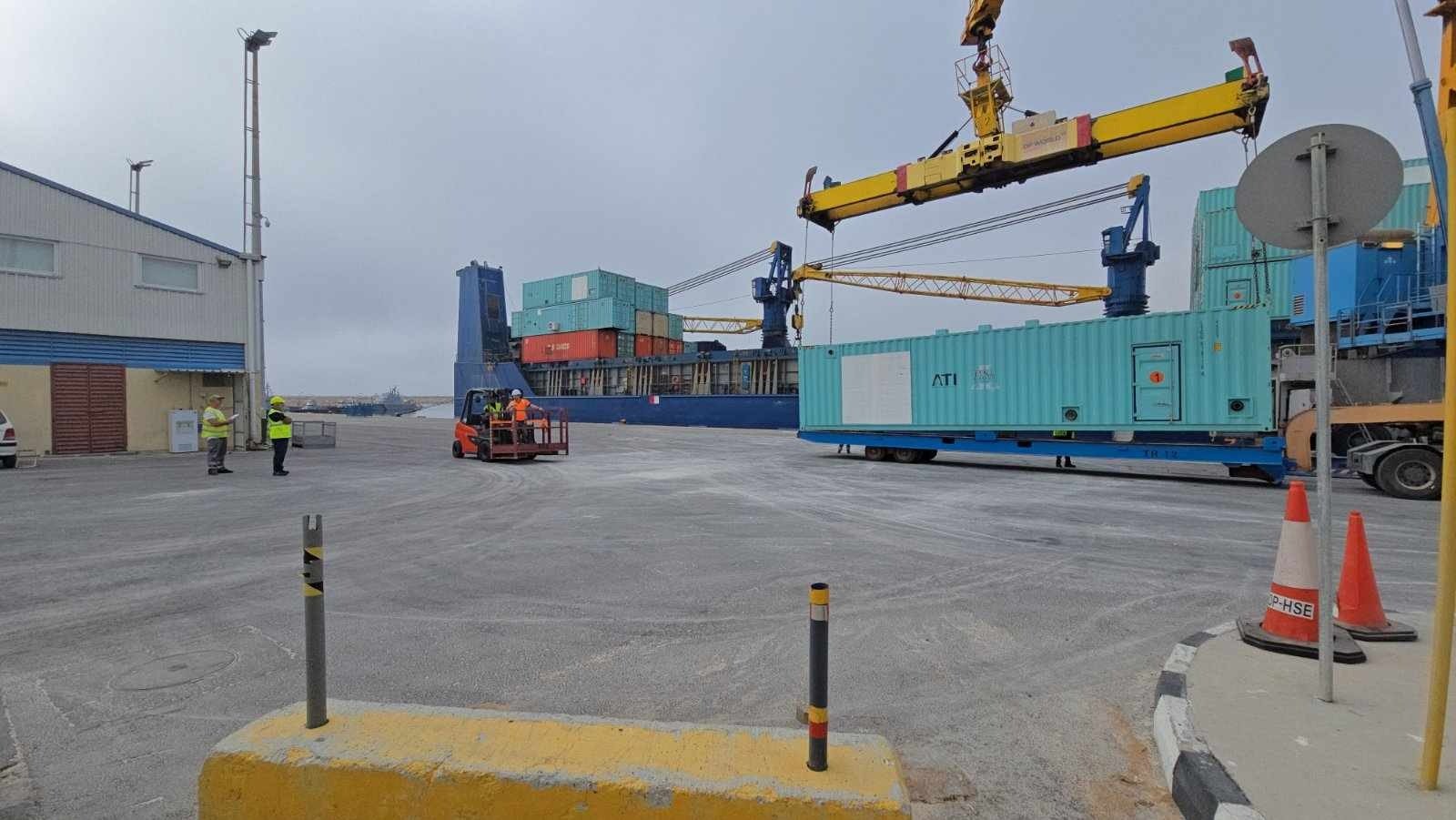
The Ministry of Agriculture, Rural Development and Environment has announced the arrival of mobile desalination units from the United Arab Emirates as part of an urgent plan to bolster Cyprus’s water supply.
The units arrived in Cyprus on Saturday aboard the Panama-flagged commercial vessel Princess Nabiha, with installation beginning today in collaboration with technicians from the UAE manufacturing company.
All units will be temporarily installed at Moni in Limassol for a testing period.
A desalination unit with a capacity of 1,350 cubic metres daily will be positioned in Paphos in the broader Kouklia area, at the site of the damaged permanent desalination plant that previously produced 15,000 cubic metres daily.
Additionally, a mobile unit at Kissonerga with capacity of 10,000 cubic metres per day is expected to become operational by September, based on a contract signed last Monday.

The plan also includes installation of smaller desalination units in the same area with a total capacity of 2,000 cubic metres daily, which will be operational by July to meet summer peak demand.
This water year is characterised by worryingly low adequacy, with available quantities barely sufficient to cover needs until year-end.

The Water Development Department estimates maximum daily demand in Paphos province will reach 43,000 cubic metres, whilst total requirements until December approach 9.15 million cubic metres.
Current production capacity, including the Anarita and Kannaviou treatment plants, boreholes and contributions from Asprokremmos and Kannaviou dams, is calculated at 45,020 cubic metres daily – barely sufficient to meet needs, provided no unexpected breakdowns or supply reductions occur.

According to philenews sources, the Water Development Department has prepared plans for coordinated, short-duration water supply cuts if necessary.
The plan predicts residents being able to utilise stored reserves in household tanks, with active involvement from District Local Government Organisations required for smooth implementation.
Until restoration of the permanent Kouklia desalination plant – expected to resume operation in August – the burden falls on boreholes.
The department has activated old boreholes whilst continuing to locate new ones to cover the anticipated deficit of 10,000 cubic metres daily during July and August.
Notably, irrigation in Paphos province will be restricted by 30% compared to approved 2024 quantities, whilst golf courses will receive just 30% of required amounts.

Authorities call on all citizens for responsible and prudent water use, emphasising that even the most comprehensive plan could collapse without restricting wasteful consumption.
The coming period is deemed critical, with success dependent on collective efforts by the state, local government and citizens.
Installation of mobile units from the UAE is considered a pivotal intervention expected to contribute decisively to averting potential water collapse.
The Agriculture Minister publicly expressed gratitude to the UAE for practical support, emphasising the agreement results from active foreign policy and strategic bilateral cooperation with friendly countries.

The Foreign Minister also expressed his thanks for the immediate and generous support to Cyprus. The free dispatch of desalination units, he said, constitutes practical proof of close strategic cooperation between the two countries, noting the UAE’s critical geopolitical role and leadership position in the friendly Arab world.

The biggest problem expected during the year relates to covering daily drinking water demand in Limassol province, prompting the decision to install the majority of UAE desalination units there.
Specifically, desalination plants with total capacity of 13,650 cubic metres daily – 12 units in total – will be installed at Moni by end of June.
Besides the Moni plant facilitated by the UAE, Limassol plans installation of two additional mobile desalination units at Garylli and the port.
Annual drinking water needs for the entire Limassol province total 32.2 million cubic metres, sourced from Kouris dam (14.5 million), Episkopi desalination (12.4 million), Germasogeia aquifer boreholes (3.3 million) and Kouris Delta boreholes (2 million).
Water demand in greater Limassol is expected to increase whilst Kouris dam reserves will be at lowest levels with possibly increased silt content, potentially affecting Limassol Treatment Plant performance.
During peak periods, maximum water demand in greater Limassol reaches approximately 96,000 cubic metres daily.
The Water Development Department intends to restrict water extraction from Kouris dam to minimum levels to preserve more reserves for Limassol province or other areas of the Southern Conveyor Unified Scheme as deemed necessary.

