


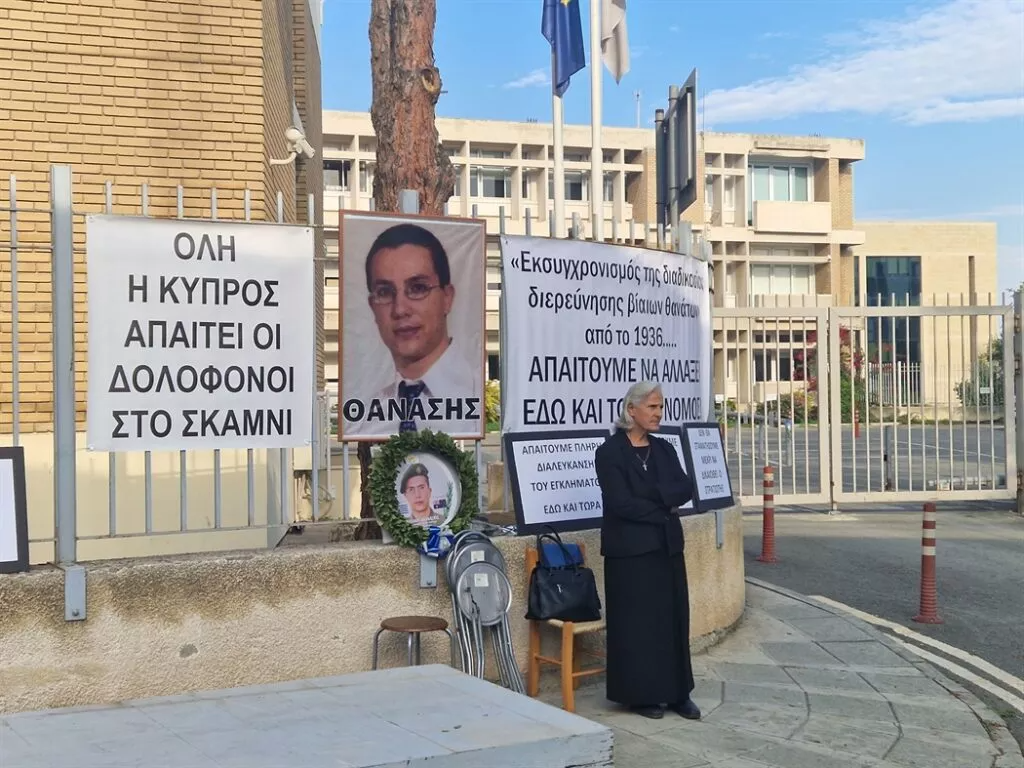
New evidence from the latest criminal investigation into the 2005 death of National Guardsman Thanasis Nicolaou details a pattern of bullying, drug use and alleged cover-up by military officials, according to findings submitted to the Law Office.
Nicolaou, a 26-year-old architect who returned to Cyprus from Australia to complete his national service, was found dead under the Alassa bridge in Limassol in September 2005. His death was initially ruled a suicide by military investigators. However, following the exhumation of his body in 2020 and forensic reanalysis, authorities confirmed that he had been strangled, indicating a criminal act.
The new criminal inquiry, led by investigators Pappas and Athanasiou, uncovered extensive testimonies from soldiers and colleagues indicating that Nicolaou was the target of persistent bullying and hazing by older soldiers. He was subjected to humiliating tasks, including being forced to make “romantic confessions” to a lamp, cleaning toilets, and performing chores assigned to others.
Multiple witnesses reported that cannabis was widely used inside the unit’s barracks and even in the offices. According to the testimony of a fellow soldier, when he first arrived at the company, he was shocked to find soldiers openly smoking cannabis next to the dormitories. This was corroborated by several others who described unchecked, widespread drug use and a complete lack of supervision. Investigators concluded that officers tolerated such behaviour, contributing to an environment of complete indiscipline.
Soldiers also testified that they frequently left the camp undetected, bypassing wire fencing. Nicolaou, who refused to participate in such rule-breaking, was reportedly isolated and harassed as a result.
In a key testimony, several witnesses stated they believed Nicolaou may have been ambushed outside the camp on the day of his death. They said an attack intended to intimidate him may have escalated into fatal violence. His body was then allegedly placed under the Alassa bridge to create the appearance of suicide.
Further, two individuals stated that Nicolaou had privately confided in them that he was in conflict with specific soldiers, but with no one else.
According to the investigation report, senior officers within the brigade were fully aware of the situation and failed to intervene. “The entire hierarchy of the brigade knew what was happening both generally and specifically to Thanasis,” the report notes. “Rather than taking action, they downplayed or even potentially covered up the incidents.”
On the morning of 29 September 2005, when Nicolaou failed to report for duty, his mother was contacted by the unit. She informed the commanding officer that Nicolaou had left home on time and expressed concern over the bullying he faced. Although she proposed calling the police, the officer advised against it, claiming her son had likely gone somewhere and would return. Investigators noted that if the police had been notified at that stage, the case outcome might have been different.
Responsibility was also attributed to the officers for failing to protect Nicolaou. Drawing from a ruling by the European Court of Human Rights, the investigators argued that the army failed to investigate officer conduct prior to the death. “The officers, though aware of what Thanasis was facing, did not take adequate measures to protect him. Their omissions amounted to a failure of duty,” the report concluded.
Finally, the investigators questioned the legitimacy of the original military inquiry, led by a major who also served as duty supervisor the night before Nicolaou’s disappearance. They argued that his dual role created a conflict of interest, and that his investigation—described by the European Court as superficial—wrongly concluded that Nicolaou had died by suicide while on overnight leave.
The findings, which for the first time assign responsibility to two senior army officers, are now under review by the Law Office to determine the next legal steps.
Read more:

