


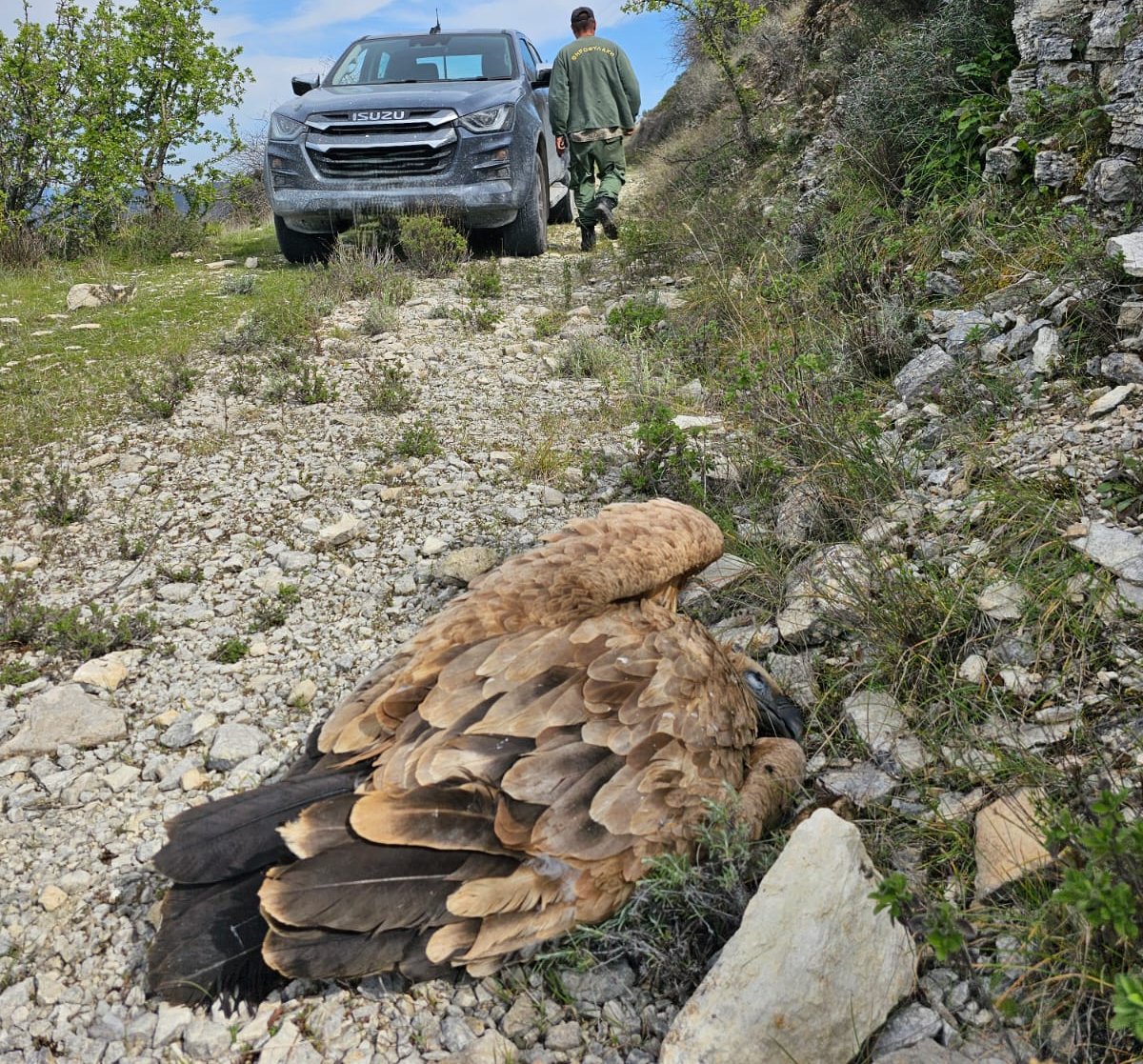
A male Griffon Vulture has been found dead beneath an electricity pole in Limassol, sparking renewed concerns about Cyprus’s dwindling vulture population, BirdLife Cyprus said Tuesday.
According to BirdLife, the vulture, identified by ring code JJC, was discovered in the Korfi area with visible burns and clear signs of electrocution on its body. The incident occurred in what conservationists describe as “the heart of this threatened species’ territory.”
Police and the Game and Fauna Service are investigating the death, with official autopsy results pending to confirm the cause. However, BirdLife Cyprus stated that “the picture speaks for itself.”
This marks the latest in a series of similar incidents, with at least six vultures having died from electrocution in recent years. Conservation experts estimate that approximately one-third of the island’s vulture population has been lost to the Electricity Authority of Cyprus (EAC) power network.
“While the EAC has marked cables on the transmission network to reduce collision risks, measures taken to insulate medium-voltage poles and prevent electrocution are inadequate,” BirdLife Cyprus said in its statement.
The organisation emphasised that each lost vulture represents an irreparable blow to the already vulnerable population in Cyprus. The deceased bird, JJC, was only two years old and had been transferred from Spain as part of conservation efforts. Conservationists note the bird “could have contributed significantly to the reproduction of this rare species for decades.”
Energy infrastructure experts point out that technical solutions exist to make power poles safer for large birds, including insulation retrofitting and redesigned crossarms that increase the distance between conductors.
The EAC has previously stated it is working to improve wildlife safety measures across its network, though conservation groups argue implementation has been too slow given the critical status of the vulture population.
BirdLife Cyprus has called for immediate implementation of effective measures, including proper insulation of poles and replacement of those identified as high-risk. The organisation also stressed the importance of considering wildlife impacts in any future network expansion plans.
Read more:

