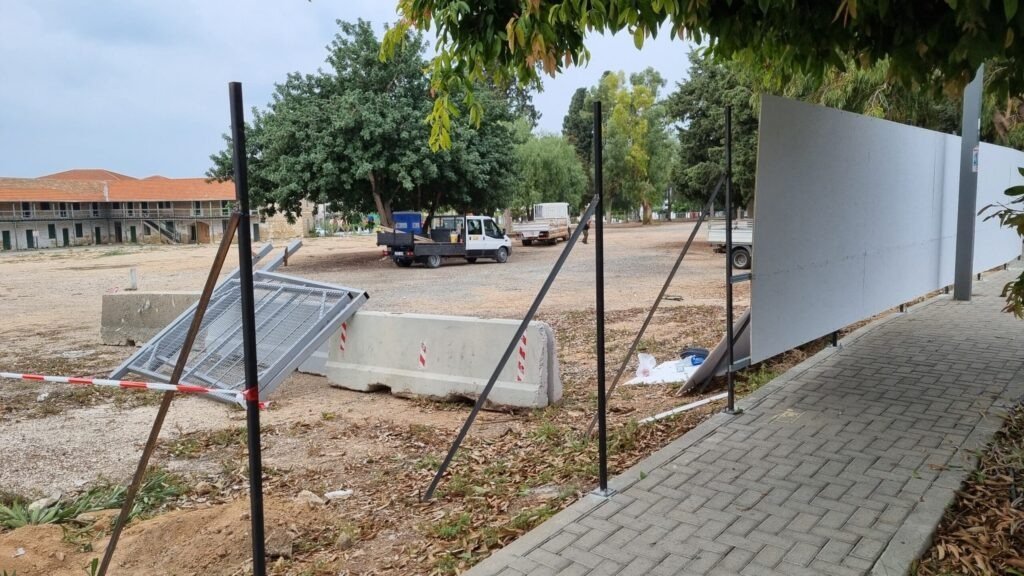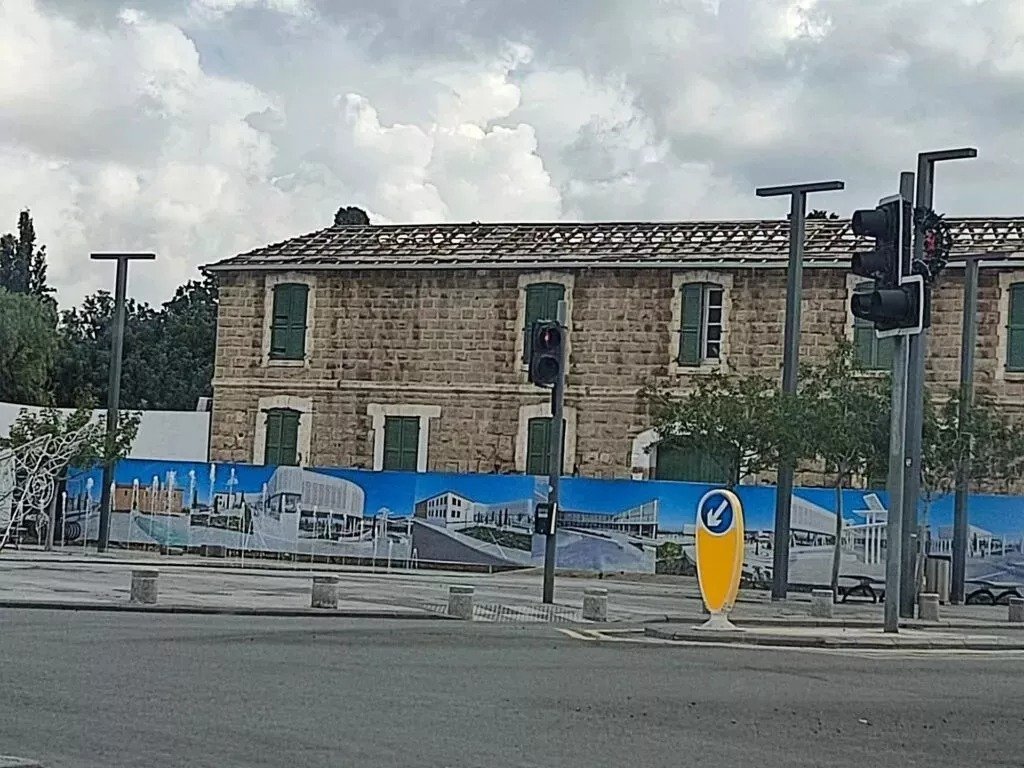
A €10 million project is now underway in the heart of Paphos’s commercial centre, creating the Paphos Historical Documentation Centre, set to open in the coming months.
The development, which will showcase the city’s rich history, is taking place within a sensitive area: the former Paphos Police Headquarters and, during British colonial rule, the province’s holding cells. These historic buildings are now being transformed.
The project encompasses the redevelopment of 18,000 square metres of outdoor space and the restoration and repurposing of a 950-square-metre listed building, with a timeline of 15 months for completion. A dedicated team of experts has prepared a detailed museological study to guide this process.
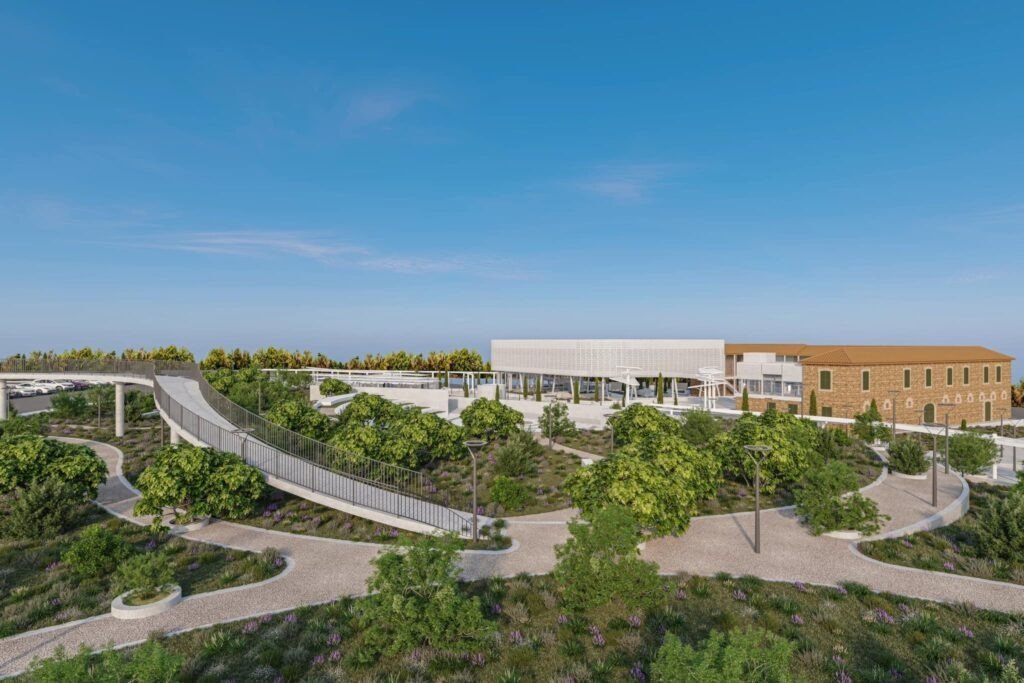
The design also aims to connect the urban landscape with the city’s history through a carefully curated walking route. It begins in the north, near the Armenian Genocide Memorial Park, and passes through a lush green space with above-ground and ground-level crossings.
As envisioned, visitors will arrive at an urban plaza to the north of the building, complete with seating areas and amenities. From there, they will enter the modern museum space, where they will embark on a journey through time, learning about Paphos’s history from 332 BC onwards through physical exhibits and digital explorations.
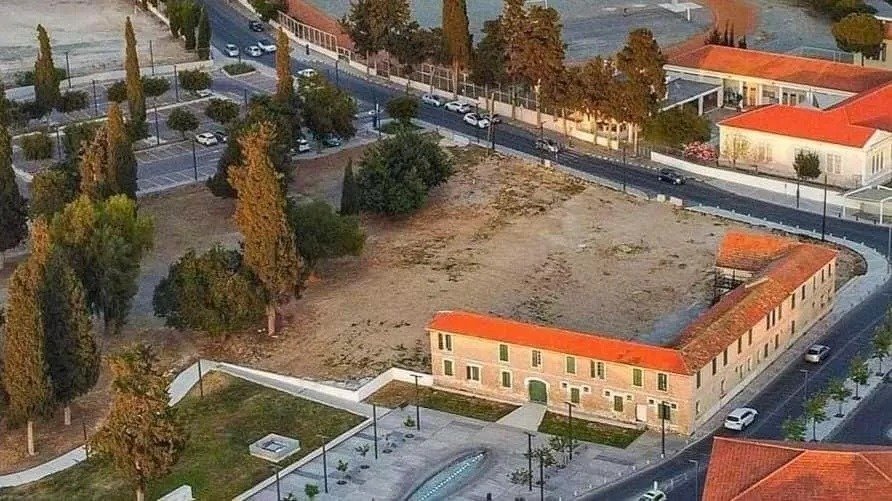
In an interview with the philenews, Professor Katerina Papazacharia of Neapolis University in Paphos shed light on the history of the buildings that will house the Historical Documentation Centre.
She noted that in May 1879, the British High Commissioner of Cyprus, with the concurrence of the Legislative Council, designated specific sites as places of imprisonment in each city.
For Paphos, this was the Konak Ktyme. The Police Station, which later became the Provincial Police Directorate, was completed in November 1884, six years after the British annexation of Cyprus. The construction of the cells and police dormitories was also finalised during this period.
According to historical records from 1884, Professor Papazacharia explained, 16 convicts were transferred from Limassol Prisons to serve their sentences at the newly established Paphos Police Station and its associated prisons. The convicts, dressed in blue cotton uniforms, worked from dawn to dusk on forced labour, such as breaking rocks, removing station waste, and tending to gardens. They also disposed of station waste outside the city using carts.
The academic, who served on the committee of experts advising on the project, further revealed that the Police Station had a space designated for executing convicts by hanging.
Additionally, the station had stables, latrines, and even vehicles, including cars and motorcycles. Notably, during the national liberation struggle of EOKA, students and citizens who participated in the movement were also detained at the Paphos Police Station.
From Cyprus’s independence in 1960 until 2019, the building continued to serve as the Central Police Station of Paphos, after which the police operations were relocated to a new, purpose-built facility, concluded Professor Papazacharia.
Highlighting Paphos’s heritage
The winning museology team, selected through a competitive process, is comprised of eight Cypriot and Greek experts from diverse fields, meeting the exacting standards set by the Paphos Municipality.
Dr. Ioannis Iliadis leads the team as the contractor’s museology specialist. Other key members include Dr. Charalambos Chotzakoglou, Dr. Aikaterini Papazacharia, Spyridon Nasainas, Georgios Kavoulakos, Stamatina Mangklara, Panagiotis Tsimpiridis, and Theodoros Kakoullis.
According to Dr. Papazacharia, the team has submitted a comprehensive guide to the Paphos Municipality, outlining the exhibition layout, text content, and visual material for the Paphos Historical Documentation Centre.
This includes original artefacts, replicas, and digital applications to showcase the city’s archaeological, historical, and folkloric wealth, ensuring a captivating visitor experience.