


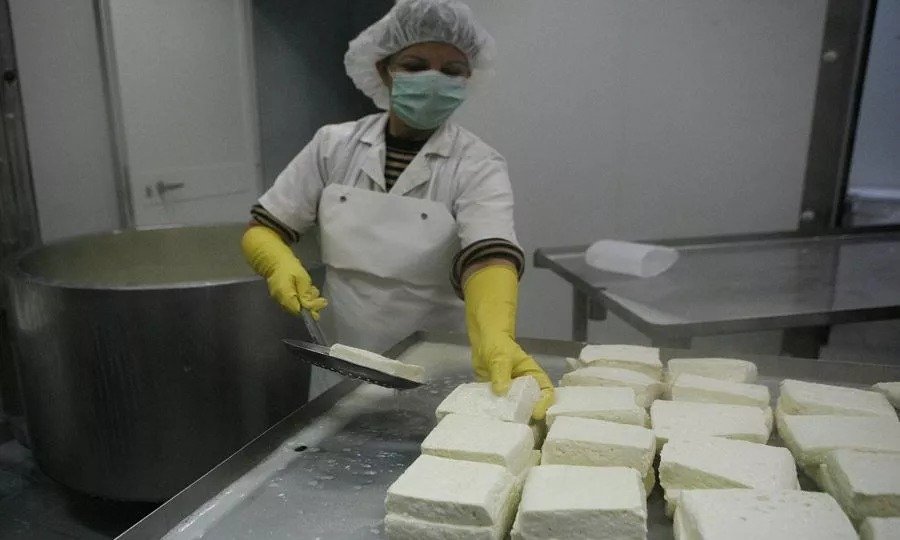
The proportion of sheep and goat milk in the production of Protected Designation of Origin (PDO) Halloumi is set to change significantly from the current 25%.
The Ministry of Agriculture is expected to finalise its proposal this coming Monday, which will be included in a decree effective from 10 July 2024.
Based on data from the Ministry, there is flexibility to increase the sheep and goat milk content in Halloumi production from the current 25% to 30% during the months with adequate milk supply (February 16 to July 10).
However, during the months with limited milk production (August 16 to February 15), there is considerable concern about reducing the sheep and goat milk content to below 20%.
From 10 July to 15 August, the minimum quota will remain at 25%.
The Ministry of Agriculture believes that a consensus among all parties involved for the full implementation of the PDO cannot be achieved.
Therefore, the participation of sheep and goat milk in Halloumi production will be determined as a compromise between the differing views expressed in the meetings to define the decree.
On one side, cheesemakers advocate for a 10% sheep and goat milk content in Halloumi, while on the other, sheep and goat farmers seek a decree covering the five-year extension of the transitional period (2024-2029), with a gradual increase of 5% annually in the sheep and goat milk quota used in Halloumi production.
Meanwhile, cow farmers propose that the quotas in the decrees ensure that neither cow’s milk nor sheep and goat milk goes to waste. This implies that during the dry period, they aim to limit sheep and goat milk usage to 10%, aligning with the cheesemakers’ position.
It is important to note that the current legislation stipulates that by the end of the transitional period, Halloumi must be produced with a minimum of 51% sheep and goat milk.
The Coordinating Committee of Cow Farmers has not met with the Minister of Agriculture to set the minimum sheep and goat milk content for PDO Halloumi based on the ongoing consultations with all stakeholders before issuing the relevant decree.
Instead, in a letter to President Nikos Christodoulides, the Coordinating Committee of Cow Farmers requests a meeting to discuss their positions for a definitive resolution of the Halloumi issue.
Additionally, representatives of all groups and the Organisation of Sheep and Goats Producers question the logic behind extending the dry period by one month and how the proposed quotas (19% during the dry period and 30% for the rest of the year), which are much lower than the actual sheep and goat milk production, will allow the market to function properly.
Read more:

