


This news piece was first published on policypress.cy
By Bilun Gunes
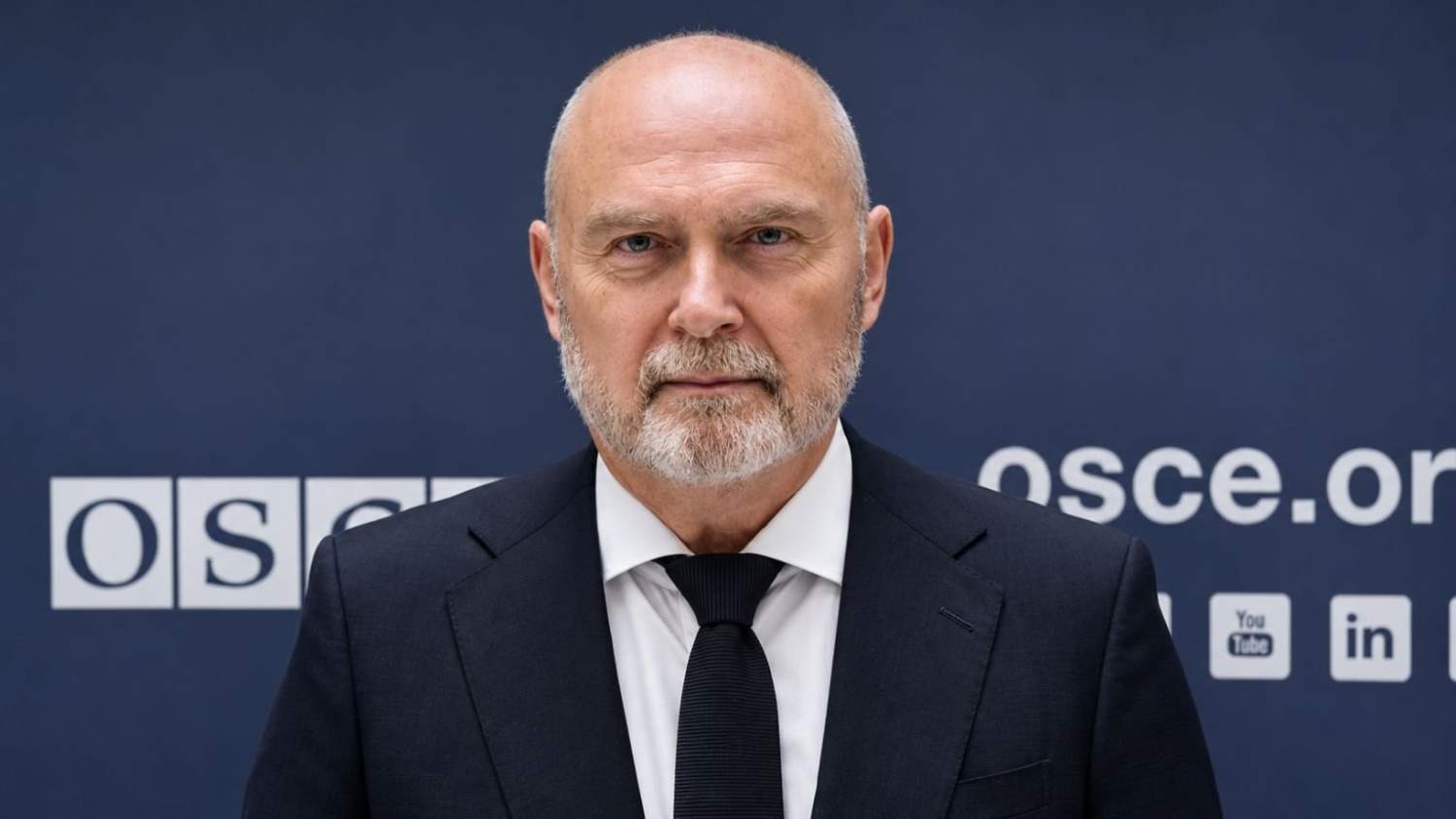
Turkey has nominated the OSCE’s secretary-general, Feridun Sinirlioğlu, to lead the United Nations, a late entry into a deadlocked race that Nicosia called a political oxymoron given Ankara’s record on Cyprus.
Turkey has put forward the current Secretary-General of the Organization for Security and Co-operation in Europe, the veteran diplomat Feridun Sinirlioğlu, as its candidate to succeed António Guterres as United Nations Secretary-General, drawing an immediate objection from Cyprus. Government Spokesman Konstantinos Letymbiotis called the nomination a political oxymoron and a deep institutional contradiction, arguing that a country with Turkey’s record on Cyprus could not credibly seek to lead the organisation.
The candidate
Sinirlioğlu, who is 70, is a career diplomat. He served as Under Secretary of the Turkish foreign ministry from 2009 to 2015, as foreign minister in the interim government of 2015, and as Turkey’s Permanent Representative to the United Nations from 2016, and was ambassador to Israel from 2002 to 2007. He is currently Secretary-General of the Organization for Security and Co-operation in Europe, a post whose term runs to December 2027; the UN role would begin on 1 January 2027, a year before that term is due to end. He first floated his candidacy at the General Assembly’s high-level week in September, before Turkey submitted a formal nomination at the end of October.
How the UN picks its chief
Under Article 97 of the UN Charter, the Secretary-General is appointed by the General Assembly on the recommendation of the Security Council. In practice the Council decides. Its 15 members settle on a single name, and any of the five permanent members, the United Kingdom, China, France, Russia and the United States, can block a candidate, before the Assembly gives formal approval to what is customarily a five-year term. Since 2016 the process has been more open than it once was, with candidacies made public and contenders setting out their platforms, which is how a name like Sinirlioğlu’s comes to be aired well before any vote.
A deadlocked race
Turkey’s move is a late entry into a contest that is already well under way and stuck. A series of informal straw polls through October left the field without a front-runner able to command the Council: at the poll on 16 October, none of the seven candidates then running had the support of all five permanent members, according to the Associated Press. The field was led by Latin American and Caribbean contenders, among them Rebeca Grynspan of Costa Rica, who heads the UN trade body UNCTAD, amid a widely voiced argument that the region is next in the office’s informal rotation and pressure for the first woman to hold the post. With permanent members signalling they were open to new names, Turkey entered Sinirlioğlu, a candidate from the group with which Turkey is aligned for electoral purposes at the UN, the Western European and Others Group.
Nicosia’s objection
Letymbiotis said the candidacy had been expected and that it confirmed what he called Turkey’s hypocrisy, which Cypriot President Nikos Christodoulides had raised from the General Assembly podium. It was an oxymoron, he said, for a country that in his words had for 52 years illegally occupied 37% of the Republic’s territory, defied Security Council resolutions and flouted international law to seek to lead the very organisation founded to defend international peace and the sovereignty and territorial integrity of states. He accused Ankara of revisionism and of breaches of the UN Charter and the Law of the Sea, and said the Council, in weighing the candidacies, would take account not only of a candidate’s record but of the proposing country’s stance toward the Charter, international law and the Council’s own decisions.
Not Cyprus alone
The objections are not only about Cyprus. The Associated Press reported that Sinirlioğlu would likely face resistance from Greece, a current elected member of the Security Council that held the Council’s rotating presidency in October, and from Israel, reflecting the two countries’ rivalry over Syria. For Nicosia, the nomination adds a further strand to the friction between it and Ankara that runs through the Cyprus Issue, maritime delimitation in the Eastern Mediterranean and Turkey’s wider regional posture, and it places the question of Turkey’s record before the same Security Council whose resolutions on Cyprus remain unfulfilled, as members press to settle the succession before Guterres leaves at the end of the year.
Sources: CNA (the Cyprus reaction). The state of the race, the 16 October straw poll and the candidate field via the Associated Press; the formal nomination via France 24 (31 October) and To Vima (2 November); Sinirlioğlu’s career from the United Nations biographical record and the OSCE; the selection process from the UN Charter (Article 97). Guterres’ term ends 31 December 2026.

