


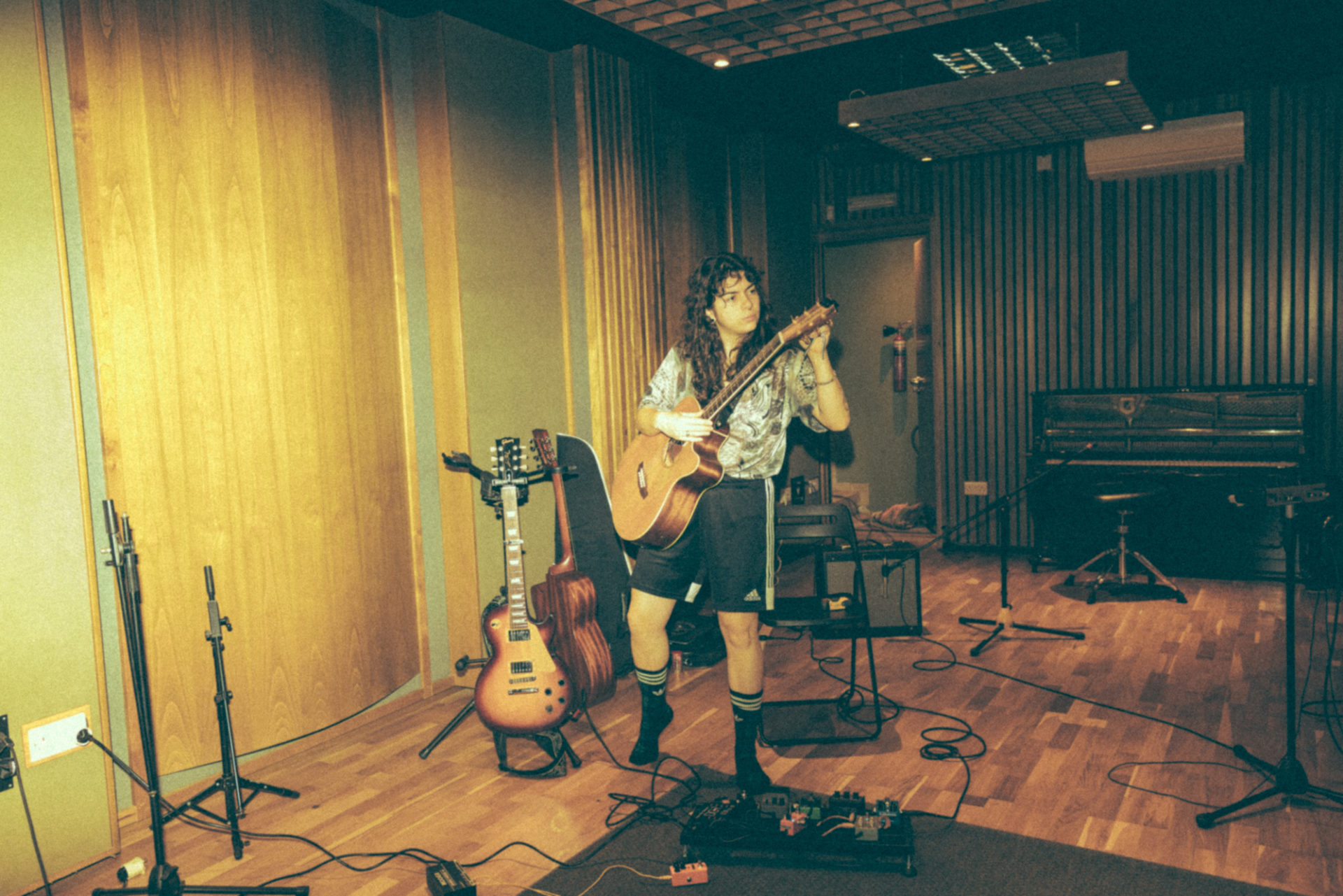
Della’s music can be a visceral experience, defined by brutally honest and often self-deprecating lyrics. On stage, the singer-songwriter from Nicosia commands attention with her captivating vocals and raw poetry, which resonates deeply, delivered with a powerful, deep voice and biting overtones.
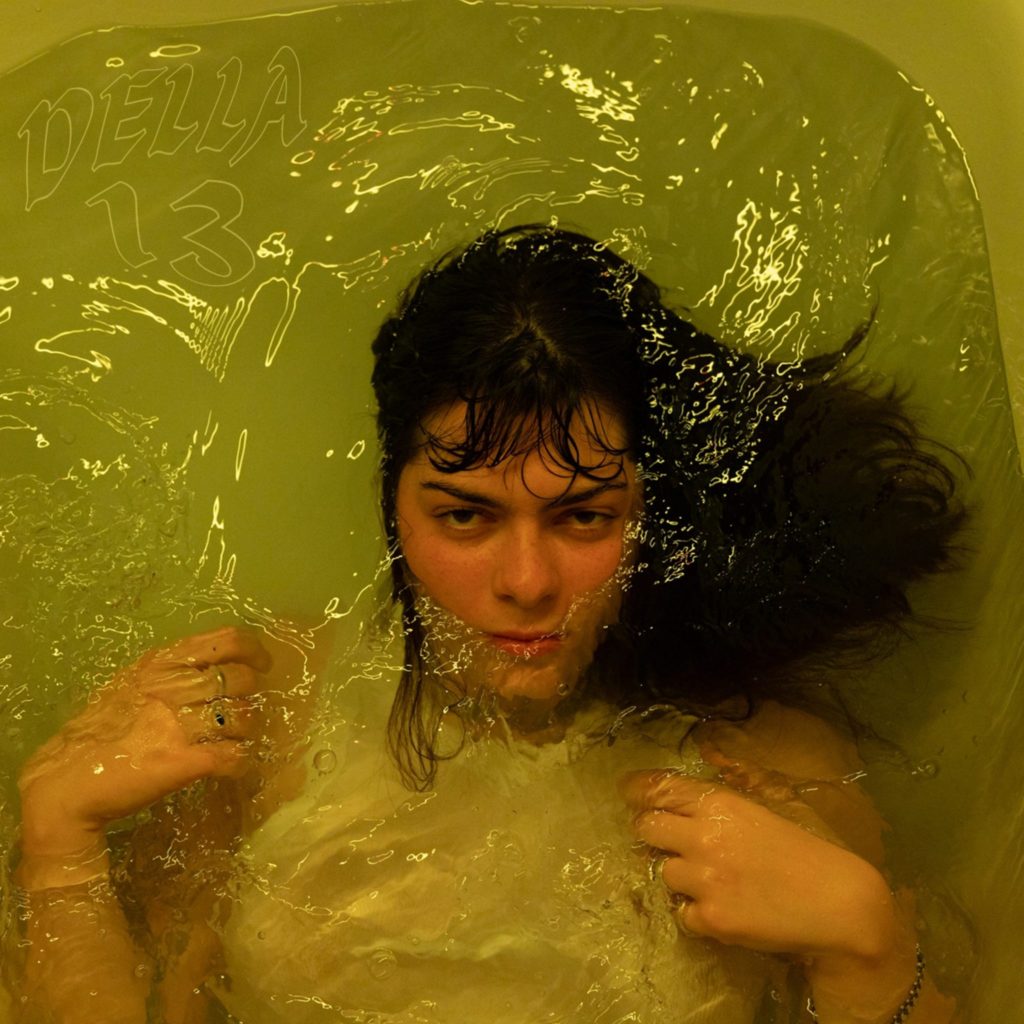
Last month, she released her debut EP, ‘13’, with Louvana Records. ‘13’ is a conceptual journey through past romantic experiences and evolving perspectives on queerness. Della says music is a way to transform her emotions into art, using her craft as a form of both relief and comfort.
’13’ as a title choice does not succumb to superstitions – Della reclaims the number, transforming it into a statement of defiance. It’s a playful yet profound nod to her belief in questioning societal norms and refusing to be held back by unfounded fears—a theme woven into her artistic journey and her personal sound.
Through the tracks on ’13’, Della offers listeners a raw and relatable exploration of love, often in its more toxic and self-destructive forms. Songs like “Sick” and “Sunday” explore queer relationships, providing a much-needed space for comfort and identification.
On the occasion of her album’s release, Della spoke to in-cyprus about the artistic process behind her work.
If your life were a song, what would the current title be?
“Adrenaline.” Something to do with adrenaline. I like to be excited and fast. Anything fast.
Your EP title is ’13’. What’s the significance of the number ’13’?
There are two sides to the coin: the serious side and the pragmatic side. I think the more serious, conceptual side is the fact that people get stuck on concepts and perceptions. They say “oh my god, 13 is an unlucky number, and it’s bad. And you’re releasing it on Friday the 13th. It’s so unlucky. And what if? And what if? What if?” And then you get lost in so much thinking that you never end up doing anything. I like to challenge norms.
The fun answer is that it’s my basketball jersey. It’s always been my favourite number, and I think it looks cool. But also challenging norms. I think being scared of a number is hilarious. I also understand it, but it’s hilarious. Superstitions, there’s so much more to be scared about that’s actually going on.
What do you hope listeners take away from the EP?
It’s important that someone listens to it and gets comforted, and I realised the importance of not just being, but saying that you identify with it, as queer music. So whether they listen to “Sick”, the first track on the EP, and they relate to the feeling of love and anger and an unhealthy side of love, blending, becoming one, or if it’s “Sunday,” and they’re like, “Oh, this is a sweeter song, and everything’s gonna be okay”.
I think I want people to resonate with the feelings.
Listening to the EP, you feel this sort of toxic, self-destructive sort of love. Many people can relate to that, especially when they’re younger.
The question about what if my life were a song, I said adrenaline and intensity. I like intensity, and I tend to be drawn to challenges. That can sometimes translate to relationships and people. I found a lot of comfort and self-soothing in writing these songs and boiling them down to four minutes of melody.
Is it also a way to process some intense or unhealthy relationships?
Yes, I think it also helps with processing experiences. And also, sometimes, you don’t want to think that someone you love or something you’re doing is bad for you or wrong. If you just say what happened as dry fact, it’s, “Oh, it’s a shitty breakup and it’s toxic,” or “It’s a shitty relationship and I can’t get out of it,” whereas, if you turn it into a song, it’s like, “Okay, well, it was a shitty relationship, but I have an EP now”.
Is it challenging to find a way to put your feelings into words?
From a young age, I’ve always had words come to me very fast, too fast. Sometimes I speak too much, occasionally too little. But I think having the words isn’t a challenge when I’m writing music.
And it’s a bit cheesy, but I find it much easier to express what I feel through music.
Is there a specific sound, instrument, lyric, maybe even production technique on this EP that you’re excited for listeners to discover?
One of my favourite things in the entire world is the piano at Studio eleven63. On “how do i?”, Alex (Alexandra Astreou-Karides) plays the piano in eleven63, in the beginning. And I think it’s one of the most beautiful sounds in the world. I mean, standing there whilst it was being recorded, no recording can capture it, but Andreas (Trachonitis) has done an amazing job.
From Alex, it will be the piano from “how do i?” – she plays beautifully, and she’s patient, and she plays at the exact right time. Andreas added a lot of reversed vocals and took a lot of guitars and reversed them and twisted them and put them as tiny details where you might say, “Oh, it’s so quiet. No one’s gonna hear it”. And you don’t hear it, but you feel it, and all the small details come together.
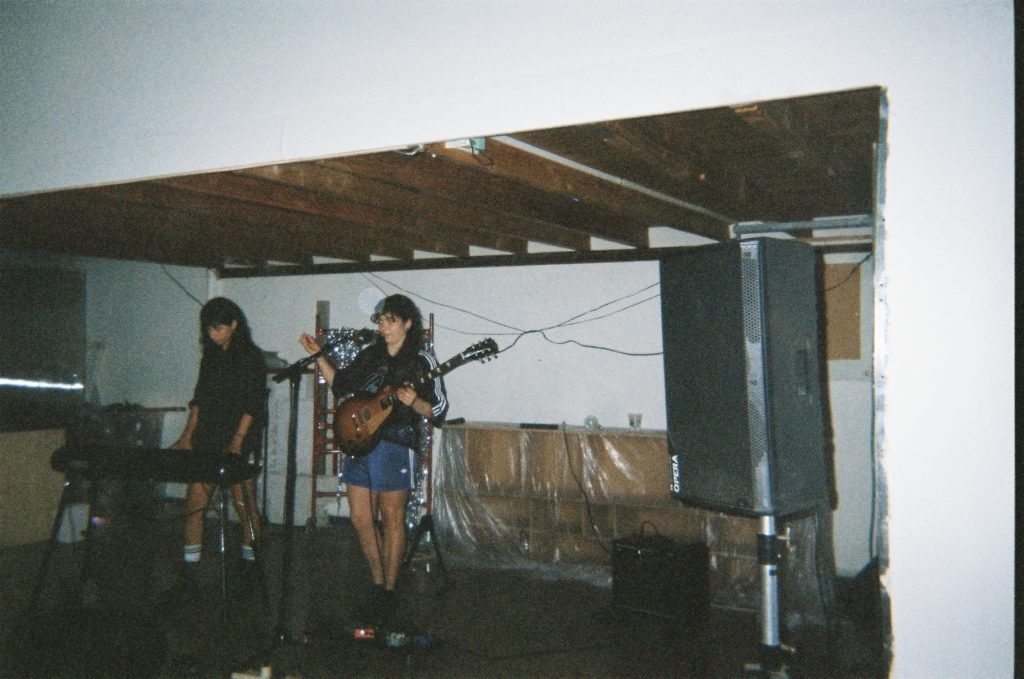
And for myself, during the production process, I got sick, and I think that it unlocked a way of singing, especially in “sick.” Through that, there was a really cool vocal effect, and we wanted a vintage, distorted sound. And instead of having to put on effects, it was just me being sick.
Petros (Papaconstantinou) plays the bass in the strangest, most amazing way that I’ve seen. He doesn’t play rhythmically. He plays melodically. In every song, the bass and the drums usually keep the beat. But Petros, it’s almost like he’s a synthesiser, which I think is beautiful. And with Chris (Erotokritou), who is a drummer, but he could be in the studio giving us advice on the guitars one minute, giving me advice on the vocals the next, and helping everyone.
Other than relationships and life experiences, where do you draw inspiration from?
Alexandra Savior, Camille Johnson, Lana Del Rey, Arctic Monkeys – a lot of their older stuff. And Alex Turner, as a solo artist. And it’s not necessarily the instruments and the sound and the composition of the music, but it was always the vibe. It was the dark, strange atmosphere, with Arctic Monkeys, with Lana Del Rey, it was this, “My melody might be happy, but I’m thinking about something sad,” and how much the visuals went into it.
I had the privilege growing up of not learning music in a structured way, which meant that I had no boundaries. A lot of my sound was developed by being in my parents’ garage and taking apart speakers and playing on a really bad guitar.
I would say a lot of my influences are those artists, a DIY sound in the sense of not having a manual. I just kept experimenting, and it pays off in the end, because it might take longer, but you end up having your own unique thing.
I also love cooking. I would say that I’m a better cook than I am a musician, technique-wise. Growing up, I was also given the freedom to find a piece of wood in the backyard and drill it with screws play around. I draw inspiration from anything that has to do with working with your hands.
What was the journey to finding a sound that’s ‘yours’ like?
Recently, I was hired to write the music for 12th Night, directed by Athina Kasiou. I wrote the music, set up the sound, and was given full creative freedom by the director. I felt a bit of impostor syndrome, but through this collaboration, I think Athina re-established in me and gave me my confidence. I stepped into the fact that I need to be doing everything DIY if I’m going to be doing music – I need to be doing it ‘the wrong way’, and I need to keep going and be confident. The ‘wrong way’ is the right way.
You mention the ‘wrong way’ of creating music. Can you tell me more about that?
Take a piano. A classically trained pianist can play the piano’s keys fantastically. But then you see loads of musicians who aren’t classically trained – they start plucking on the strings, they start ‘playing wrong’, their hand posture is wrong, but things are born out of that.
Of course, technique and music theory are very valuable, I am not trying to diss it completely. But at the same time, when you combine the freedom of being able to think outside the strict confines of the discipline, that’s when you can have fun and reach your peak.
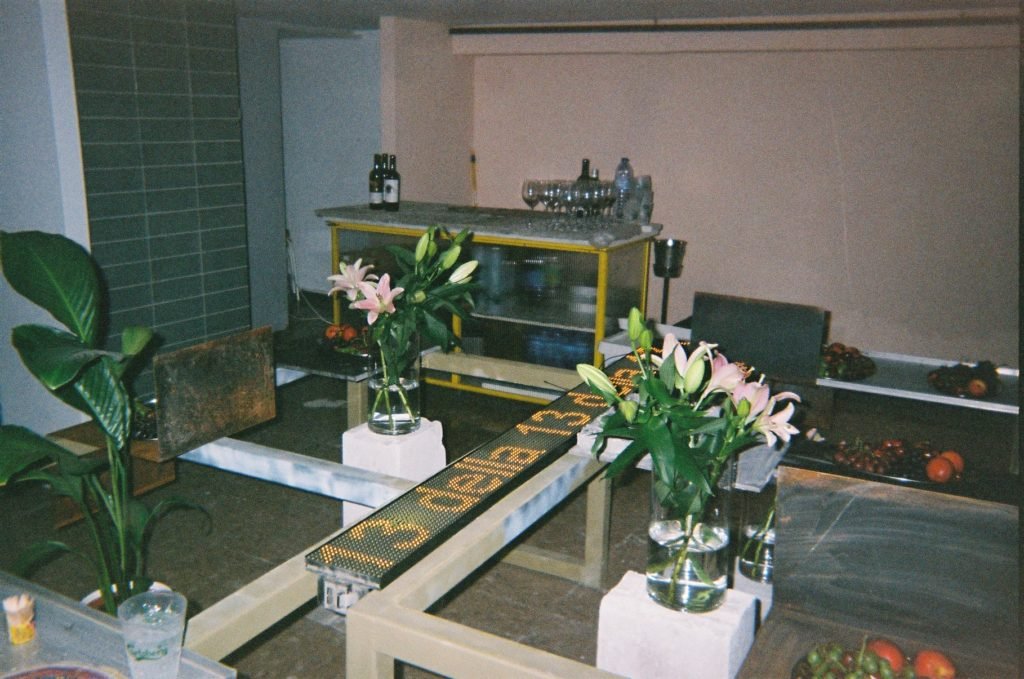
As an artist in Cyprus, how do you feel about the local environment when it comes to the arts?
First of all I want to thank ONEK (Youth Board of Cyprus) as they funded the EP. It’s very important to support the art scene.
That being said, I think we don’t nurture the younger generation enough to create original music. I love Fengaros High because they do – anything that promotes original music, I think is needed. When there are opportunities, you don’t have nearly as much turnout. If you were to host something like Fengaros High in the UK, you would have endless competition.
On the flip side, though, I think that, as artists, we complain that there isn’t funding for the arts, but I think a lot of artists I know don’t know how to write an artist application for funding.
What’s next for you now that ‘13’ is out?
In the fall, we are going to have a small European tour. We’re playing Fengaros on August 2, on Saturday in Kornos. We’ll announce a few more lives here and there with Alex, and I would love to have some with the full band as well, before we play at Fengaros.
I’ve been feeling very inspired. I want to keep writing. Maybe a song will be coming out as a single. Who knows?
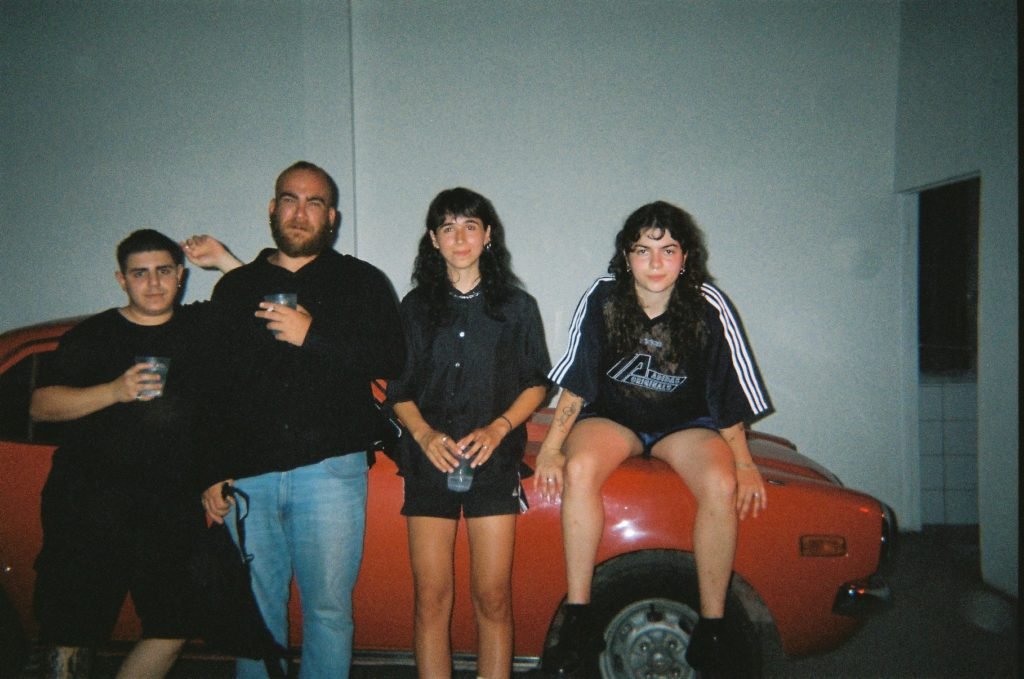
(Cover image source: Demetris Loutsios)

