


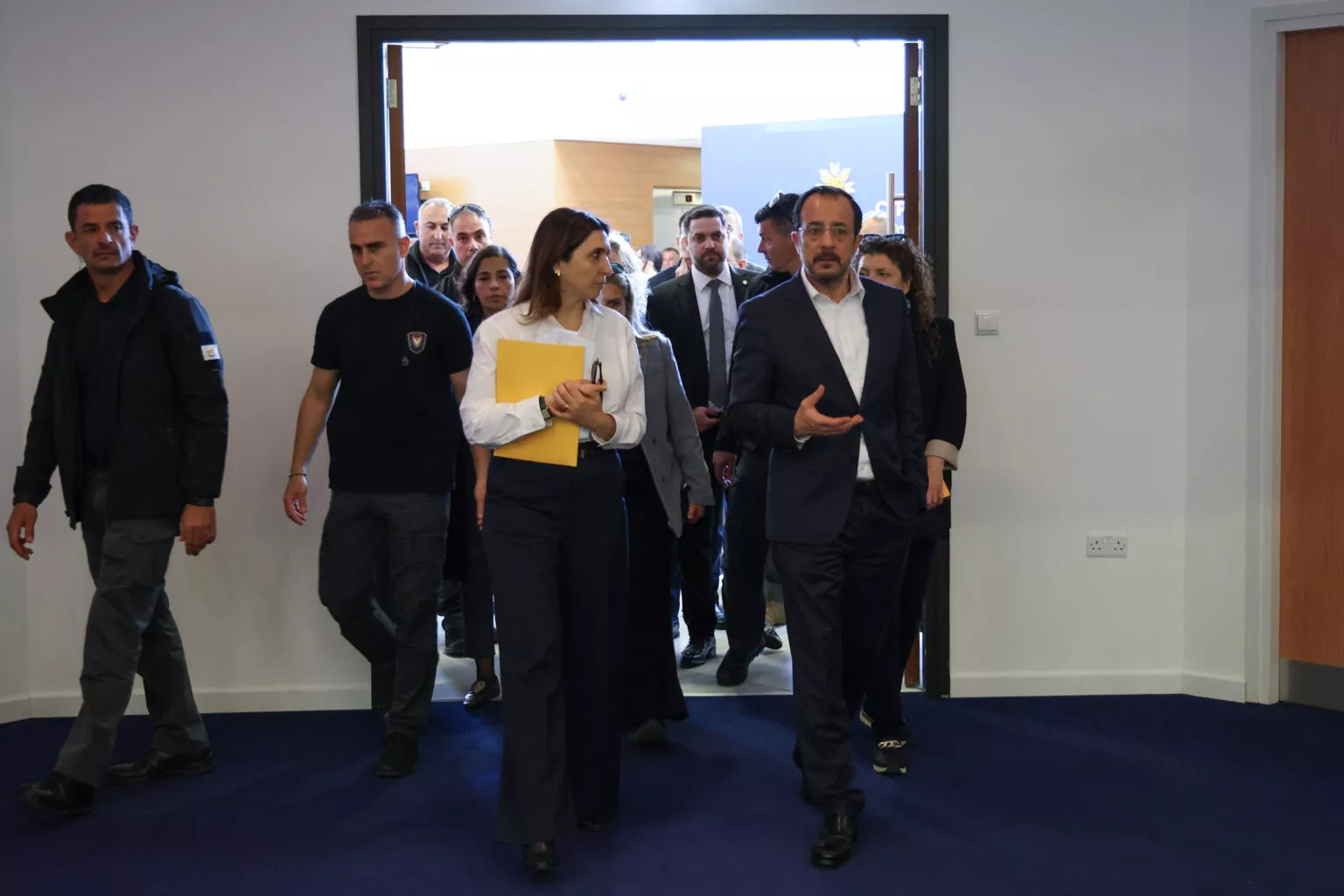
Cyprus is hosting the entirety of the European Union’s leadership for the first time in its history. During the two-day summit on 23–24 April 2026, leaders will draft a roadmap to address the crisis stemming from the war in Iran and EU defensive autonomy, while holding high-level talks with Arab neighbours regarding the wider Middle East.
The informal European Council marks the pinnacle of the Cypriot Presidency. The “27” aim to provide political direction on critical issues and prepare the ground for the formal European Council in June. All EU institutional heads and 26 national leaders—with the exception of Hungary’s Viktor Orban—are arriving on the island to establish the foundations for a stronger Europe on the global stage.
Marilena Raouna, Deputy Minister for European Affairs, described the event as a significant milestone, noting that the timing and agenda carry particular weight amidst intense geopolitical upheaval.
The Ayia Napa working dinner
The summit begins on the afternoon of Thursday, 23 April, at the Ayia Napa Marina. The agenda focuses on the shifting landscape created by the simultaneous wars in Ukraine and Iran.
President Christodoulides will receive the leaders at 6:00 pm. Viktor Orban is the only leader absent, citing the transition of power to a new Hungarian prime minister. The working dinner will commence with a video conference briefing from Ukrainian President Volodymyr Zelensky regarding developments in the war with Russia.
Discussions will then shift to the war in Iran and its energy and economic consequences. Cyprus intends to specifically raise the issue of mutual assistance among member states, exploring how Article 42(7) of the Lisbon Treaty could be activated in the event of a threat.
Antonio Costa’s invitation and Article 42.7
In his invitation to the leaders, European Council President Antonio Costa emphasized a dual focus: addressing the difficult geopolitical environment and providing political guidance for the 2028-2034 Multiannual Financial Framework (MFF) to ensure an agreement by year-end.
Costa highlighted the need for Europe to contribute to regional de-escalation and freedom of navigation. He specifically noted the impact of high fossil fuel prices on citizens and companies, while also indicating that readiness to respond to security threats might include aspects related to the mutual assistance clause under Article 42.7 of the TEU.
Ursula von der Leyen’s energy “toolbox”
European Commission President Ursula von der Leyen is expected to present a “toolbox” of interventions for the energy market during the Ayia Napa dinner. The EU, caught between two major conflicts, faces a severe energy crisis.
Following an emergency College of Commissioners meeting, von der Leyen spoke of accelerating the schedule for structural energy market packages to the summer of 2026. She revealed that in just 44 days, the cost of fossil fuel imports rose by over €22 billion without any additional energy being added to the system. The Commission plans to release a communiqué with immediate measures just days before the informal summit.
Nicosia sessions and the Arab partners
The second half of the summit will take place in Nicosia on Friday, 24 April, consisting of two distinct sessions. The first session will involve the EU-27 discussing the MFF, while the second will include invited regional leaders.
For the Cypriot Presidency, the MFF is the most critical file. Nicosia aims to present a mature negotiating framework with indicative figures by the end of its six-month term. This technical work is considered a vital precursor to final political negotiations.
Bridging Europe and the Middle East
Cyprus has invited four regional leaders and one head of a regional organisation to the Friday session:
- The Presidents of Egypt, Lebanon, and Syria.
- King Abdullah II of Jordan.
- The Secretary-General of the Gulf Cooperation Council (GCC), Jasem Mohamed Al-Budaiwi.
Raouna underscored that this expanded meeting carries substantial political weight, creating a direct channel for exchange between the EU and regional partners.
Cypriot Foreign Minister Constantinos Kombos has been a vocal advocate for linking Gulf and European security, a sentiment recently echoed by Qatar’s Minister of State, Al Khulaifi. Following a ceasefire agreement between the United States and Iran, Kombos noted that a “window of opportunity” has opened for the region, including Lebanon.
International recognition of Cyprus’s role was further highlighted during a visit by Portuguese Foreign Minister Paulo Rangel, who praised the Cypriot Presidency’s “remarkable performance” during a difficult period, describing Cyprus as a vital “bridge” to the rest of the world.

